
Astungkara Way
Bali, Indonesia
- Culture
- Rural
- Nature
- Hiking


Network of regenerative travel routes weaving through Balinese countryside
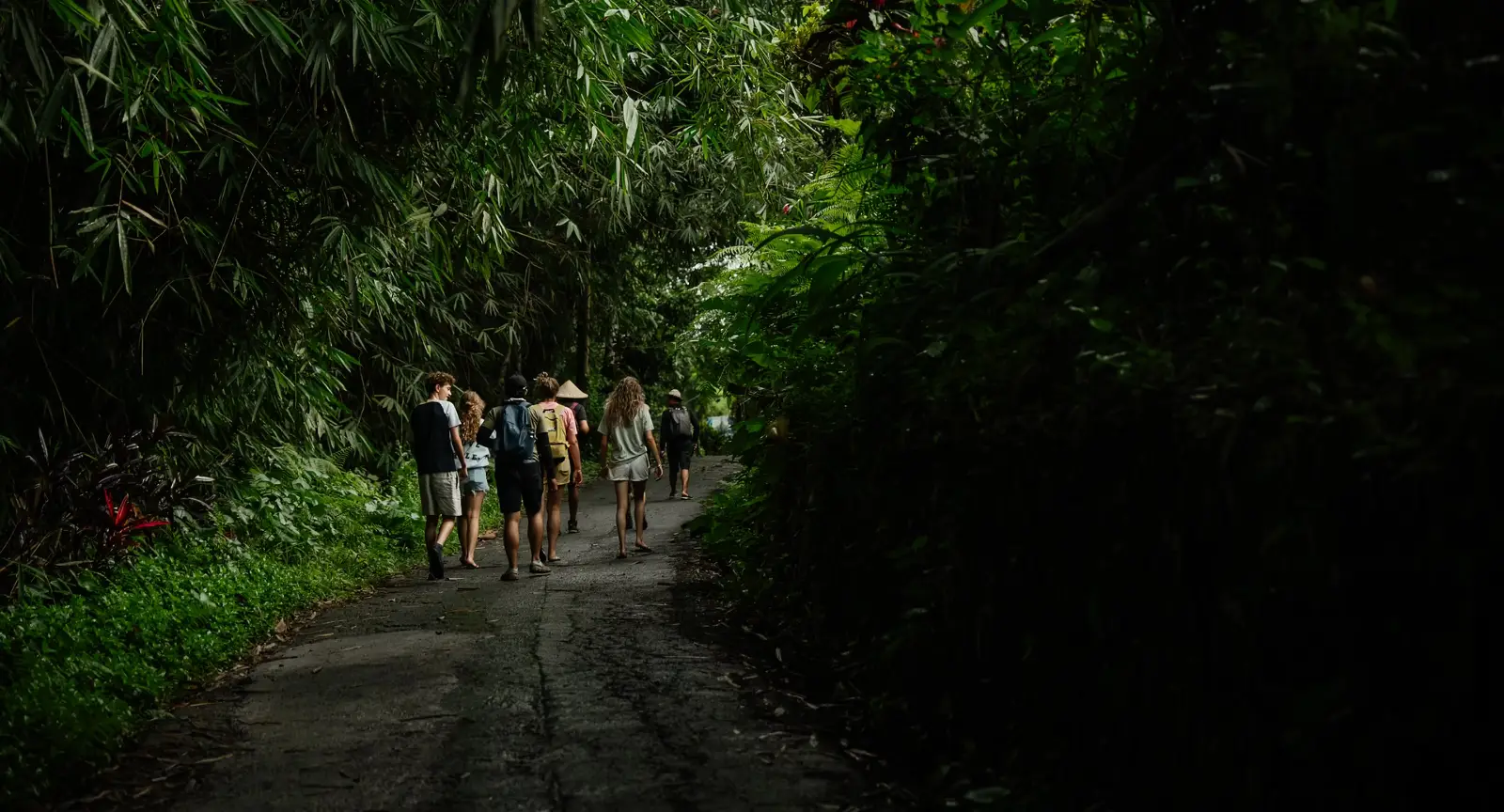
Astungkara Way is Bali's first coast-to-coast walking trail, a 136km route from Pererenan beach in the south to Seririt beach in the north, passing rice paddies, bamboo forests and jungle-draped peaks along the way. Walked in full it's a 10-day pilgrimage, though shorter three- and six-day sections cover specific stretches for those shorter on time. Nights are spent in traditional Balinese homestays, or sleeping on open bamboo platforms. Local guides in their twenties, several with degrees in agriculture, lead the way and double as farmers on the trail's own regenerative rice projects.
The trail exists to fund training farmers to swap chemical rice cultivation for regenerative methods, with paddies that have made the switch showing 23 times more microbial life and 60 per cent fewer pests within eight months. Walkers pass through Subak Uma Lambing, a 250-farmer cooperative now growing rice this way, and stop at the trail's own learning centres to see composting, mulching and intercropping in action.
Sustainability

Climate & conservation
- Runs what it calls Bali's largest paddy ecosystem restoration project, reviving degraded rice fields and rebuilding soil health
- Pioneered Complex Rice Systems, a regenerative method shown to outyield organic farms by 133% in East Java trials, and runs a Healthy Rice campaign selling chemical-free rice
- The core offering is a walking trail, on foot, with no vehicle-based touring

Community & culture
- Employs around a dozen Balinese staff directly
- Runs free regenerative farming training for local farmers, plus 3–6 month experiential courses for Balinese youth, students and corporate groups
- Built in direct partnership with Subak Uma Lambing, a cooperative of 250 rice farmers, and structured around their existing land and irrigation system
- Offers young Balinese people a paid alternative to leaving farming for tourism jobs
- Overnight stops are hosted inside traditional Balinese family compounds, and the route is built around Tri Hita Karana, the traditional philosophy of harmony between people, nature and the divine
- Connects participating farmers directly with hotels and restaurants for off-take agreements, and sells their produce on through the Healthy Rice campaign
- Trail fees fund free training and support for farmers transitioning away from chemical farming

Commercial
- Brokers direct off-take agreements between transitioning farmers and hotels/restaurants buying regenerative produce
- Trail and farm-experience income funds ongoing farmer training and the two Regenerative Farming Learning Centres
In brief
- Price bracket
- £
- Type of property
- Tour
- No. of rooms
- Homestays
- Max guests per room
- Usually up to 2
- Facilities
- Tours desk, Bicycle hire, Garden
- Activities
- Walking, Farming, Cooking class, Storytelling, Hiking
- Setting
- Countryside · Villages · Forest
Best time to visit
- Jan
- Feb
- Mar
- Apr
- May
- Jun
- Jul
- Aug
- Sep
- Oct
- Nov
- Dec
The best time to visit is during the dry season for more comfortable walking conditions.
Kids
Trails welcome ages 8 to 70 able to walk 4 to 5 hours a day; the 10 day coast to coast Astungkara Trail requires a minimum age of 12
Accessibility
Involves several hours of daily walking over rice paddies, forest and village paths, not suited to travellers with mobility restrictions, though routes stay close to main roads for emergency access and a nurse is on call

Bali, Indonesia
Guide price · £ <£100 · ££ £100–300 · £££ £300–800 · ££££ £800+ pp / night