
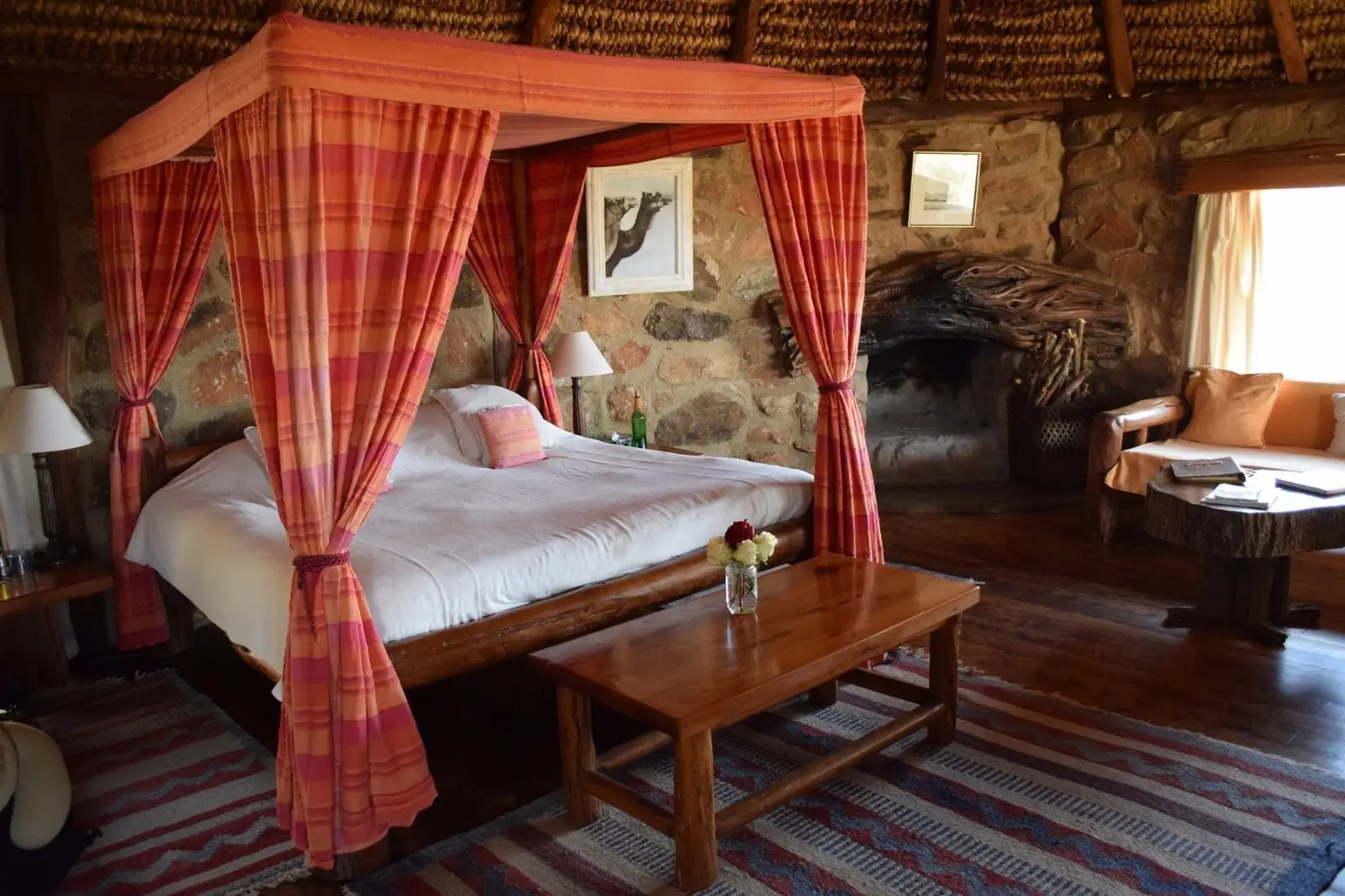
Borana Lodge
Borana, Kenya
- Rural
- Wildlife
- Luxury
- Family friendly
- Hiking


'%20font-feature-settings='normal'%20font-variant-alternates='normal'%20font-variant-caps='normal'%20font-variant-ligatures='normal'%20font-variant-numeric='normal'%20font-variant-position='normal'%20isolation='auto'%20mix-blend-mode='normal'%20paint-order='fill%20markers%20stroke'%20shape-padding='0'%20text-decoration-color='rgb(0,0,0)'%20text-decoration-line='none'%20text-decoration-style='solid'%20text-indent='0'%20text-orientation='mixed'%20text-transform='none'%20white-space='normal'/%3e%3c/svg%3e)

'%20stroke-width='1.9'%20stroke-linecap='round'%20stroke-linejoin='round'%3e%3c!--%20head%20--%3e%3ccircle%20cx='53.5'%20cy='20'%20r='6.2'/%3e%3c!--%20torso%20--%3e%3cpath%20d='M52.6%2027.6%20C50.6%2036.4%2048.4%2044.8%2046.4%2052.6'/%3e%3c!--%20backpack%20--%3e%3cpath%20d='M45.6%2031.4%20C41.6%2032.4%2038.6%2034.8%2037.8%2038.6%20C37%2042.6%2037.8%2046.6%2039.4%2049.4'/%3e%3cpath%20d='M45.2%2034.6%20C42.4%2035.6%2040.6%2037.4%2040.2%2039.8'/%3e%3c!--%20front%20arm%20to%20pole%20--%3e%3cpath%20d='M51.4%2033.4%20C56.4%2036.6%2061.6%2039.6%2066.4%2041.8'/%3e%3c!--%20back%20arm%20--%3e%3cpath%20d='M49.6%2036.6%20C47.4%2040.6%2045.6%2044.2%2044.6%2047.4'/%3e%3c!--%20walking%20pole%20--%3e%3cpath%20d='M69.2%2026.6%20C70.4%2045.2%2071.6%2063.8%2072.6%2082.4'/%3e%3c!--%20front%20leg%20--%3e%3cpath%20d='M46.4%2052.6%20C51.6%2057.4%2056.4%2061.6%2058.6%2066.4%20C60.4%2070.6%2060.6%2076.4%2060.4%2081.6'/%3e%3c!--%20back%20leg%20--%3e%3cpath%20d='M46.4%2052.6%20C42.4%2057.6%2038.4%2062.6%2035.2%2067.8%20C32.6%2072%2030.6%2076.6%2029.4%2081.4'/%3e%3c!--%20boots%20--%3e%3cpath%20d='M60.4%2081.6%20C62.6%2082.6%2065%2083%2067.4%2082.8'/%3e%3cpath%20d='M29.4%2081.4%20C31.8%2082.6%2034.4%2083.2%2037%2083'/%3e%3c!--%20ground%20--%3e%3cpath%20d='M22%2087.4%20C36%2086.4%2050%2086.2%2064%2086.6'%20stroke-width='1.5'%20opacity='0.65'/%3e%3cpath%20d='M70%2087%20C74.4%2087%2078.4%2087.2%2082%2087.6'%20stroke-width='1.5'%20opacity='0.65'/%3e%3c/svg%3e)
Pioneering rhino conservation through luxury and wilderness restoration
Eight stone-and-thatch cottages sit on a hillside above Hyena Valley dam on the 35,000-acre Borana Ranch, where elephant and black rhino come to drink below the verandas. The Dyer family has owned this land for three generations and the lodge was built in the early 1990s using stone quarried from the ranch itself, old fence posts for floorboards, and constructed entirely by local craftspeople without heavy machinery. The main lodge splits across two sites on either side of the hill: one with a pool overlooking the waterhole, the other a large thatched house with a long bar, fireplace and dining room for afternoon tea and pre-dinner drinks.
Since Borana dropped its boundary fence with neighbouring Lewa Conservancy in 2013, the combined 92,000 acres has become one of East Africa's most successful rhino habitats, home to more than 250 black and white rhino. Twenty-four per cent of every night's stay funds the conservancy's conservation budget, including a mobile clinic and a team of more than 130 rangers. Being a conservancy rather than a national park, guests can track black rhino on foot at first light or ride horses through zebra herds. Game drives are also available, as is horseriding, mountain biking and helicopter flights.
Sustainability

Climate & conservation
- Solar powered, 164 solar panels installed in 2018 supply nearly all of the lodge's electricity.
- Reduces waste / biodigester, Kitchen scraps either feed the lodge's chickens or fuel a biodigester that supplies cooking gas.
- Local or organic food, All food is grown on the lodge's own 440-acre farm.
- Sustainable build, Built in the early 1990s using stone quarried on the ranch, old fence posts for floorboards, and no heavy machinery.
- Wildlife protection, The combined Borana-Lewa landscape of 92,000 acres is one of East Africa's most successful rhino sanctuaries, with over 250 black and white rhino.
- Ecosystem preservation, Dropping the boundary fence with Lewa in 2013 restored wildlife corridors across the wider landscape.

Community & culture
- Community led, Three generations of the Dyer family have owned and managed the land, with deep roots in the local community.
- Employs local people, The conservancy employs more than 130 wildlife rangers drawn from local communities.
- Funds projects, 24% of every night's stay goes directly into the conservancy's conservation budget.
- Community conservation, The budget funds a mobile clinic serving local communities alongside the ranger programme.

Commercial
- Reinvests in community/environment, The 24% conservation levy is structural, built into every booking rather than optional.
- Certification, Long Run member.
- Transparent accounting, The 24% figure is published and specific, one of the clearest reinvestment commitments among the lodges you've researched.
In brief
- Price bracket
- £££
- Type of property
- Lodge
- No. of rooms
- 8 cottages
- Max guests per room
- 4
- Facilities
- Restaurant, Bar, Wifi, Pool, Fireplace, Laundry
- Activities
- Game drives, Bush walks, Horseback safaris, Wildlife viewing, Safari, Horseriding, Cycling, Hiking
- Setting
- Plains · Wildlife reserve
Best time to visit
- Jan
- Feb
- Mar
- Apr
- May
- Jun
- Jul
- Aug
- Sep
- Oct
- Nov
- Dec
Visit during the dry seasons from July to October and December to March for the best wildlife viewing.
Kids
Children of all ages are welcome, with kids under 5 staying free of charge and child rates applying to ages 5 to 15. Family cottages feature combined double and twin rooms as well as dedicated children's rooms.
Accessibility
Cottage Three is located very close to the main mess house and is wheelchair accessible.
'%3e%3cg%20transform='translate(60,60)'%20fill='none'%20stroke='%23676D41'%20stroke-linecap='round'%20stroke-linejoin='round'%3e%3c!--%20hairline%20stamp%20ring%20+%20fine%20dotted%20ring%20--%3e%3ccircle%20cx='0'%20cy='0'%20r='54'%20stroke-width='0.9'/%3e%3ccircle%20cx='0'%20cy='0'%20r='49'%20stroke-width='0.7'%20stroke-dasharray='0.5%203.6'%20opacity='0.9'/%3e%3c!--%20globe%20--%3e%3ccircle%20cx='0'%20cy='0'%20r='38'%20stroke-width='0.9'/%3e%3cg%20clip-path='url(%23stampGlobeClip)'%3e%3c!--%20graticule,%20very%20faint%20--%3e%3cpath%20d='M-38%200%20H38'%20stroke-width='0.45'%20opacity='0.5'/%3e%3cpath%20d='M-33%20-19%20C-16%20-14%2016%20-14%2033%20-19'%20stroke-width='0.45'%20opacity='0.4'/%3e%3cpath%20d='M-33%2019%20C-16%2024%2016%2024%2033%2019'%20stroke-width='0.45'%20opacity='0.4'/%3e%3cpath%20d='M0%20-38%20C-15%20-19%20-15%2019%200%2038'%20stroke-width='0.45'%20opacity='0.4'/%3e%3cpath%20d='M0%20-38%20C15%20-19%2015%2019%200%2038'%20stroke-width='0.45'%20opacity='0.4'/%3e%3c!--%20land:%20hairline%20coastlines,%20globe%20centred%20on%20Africa%20--%3e%3cg%20stroke-width='0.85'%3e%3c!--%20Africa%20--%3e%3cpath%20d='M-22.1%20-3.5%20L-20.7%20-8.0%20L-13.5%20-16.1%20L-5.3%20-16.2%20L2.8%20-13.0%20L7.3%20-12.5%20L14.5%20-0.6%20L19.1%20-1.1%20L13.6%208.0%20L12.6%2016.8%20L9.1%2021.0%20L2.7%2027.3%20L-1.1%2027.3%20L-5.0%2018.9%20L-7.2%208.4%20L-9.2%205.1%20L-17.8%204.4%20L-20.5%201.4%20Z'/%3e%3c!--%20Madagascar%20--%3e%3cpath%20d='M15.6%2013.4%20L17.2%2016.6%20L16.4%2020.4%20L14.6%2018.2%20Z'/%3e%3c!--%20Europe%20--%3e%3cpath%20d='M-14.7%20-16.9%20L-13.3%20-20.8%20L-10.1%20-23.3%20L-7.4%20-24.2%20L-5.6%20-27.5%20L-3.2%20-27.4%20L-0.8%20-25.9%20L0.3%20-28.2%20L3.3%20-28.3%20L7.5%20-26.2%20L11.9%20-23.0%20L9.8%20-20.5%20L7.3%20-19.2%20L4.0%20-18.5%20L1.6%20-16.7%20L-2.5%20-17.9%20L-3.7%20-20.8%20L-8.1%20-19.8%20Z'/%3e%3c!--%20Asia%20--%3e%3cpath%20d='M11.9%20-23.0%20L18.0%20-25.4%20L27.0%20-25.0%20L34.5%20-20.0%20L36.4%20-12.0%20L33.2%20-8.5%20L29.0%20-9.5%20L25.5%20-6.0%20L23.0%20-9.5%20L19.5%20-9.0%20L16.5%20-12.0%20L14.5%20-0.6%20L10.0%20-12.0%20L9.7%20-19.4%20Z'/%3e%3c!--%20Australia%20edge%20--%3e%3cpath%20d='M33.5%2014.0%20L36.0%2017.5%20L34.0%2022.0%20L30.5%2020.0%20Z'/%3e%3c/g%3e%3c/g%3e%3c/g%3e%3c/g%3e%3c/svg%3e)
Borana, Kenya
Guide price · £ <£100 · ££ £100–300 · £££ £300–800 · ££££ £800+ pp / night