
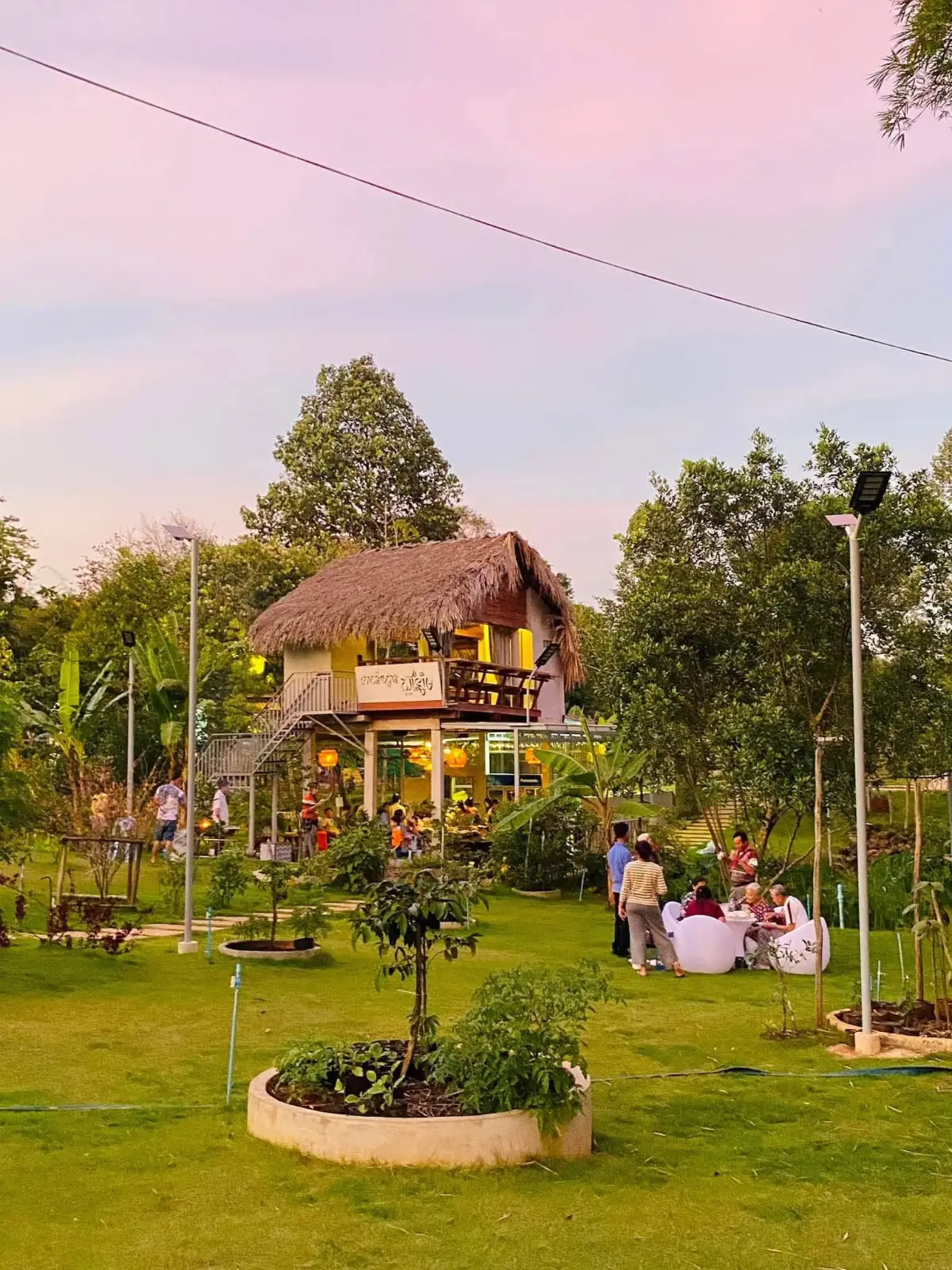
Chi Phat
Cardamom Mountains, Cambodia
- Rural
- Waterside
- Mountains
- Culture
- Wildlife


'/%3e%3c/svg%3e)


Trek, cycle or kayak staying with families swapped poaching for tourism
After Pol Pot's regime collapsed in 1979, fighters fled into the Cardamom Mountains and spent decades surviving on illegal logging, hunting and wildlife trafficking. In 2007 the NGO Wildlife Alliance worked with villager Leeheng and the wider community to build an alternative: a 20-strong Community Anti-Poaching Unit staffed by former hunters, and a network of homestays, guesthouses and trekking routes run by the village. And what a transformation. Forest burning in the area has dropped to zero, hunting by around 80 per cent, and elephants that fled into Thailand during the worst of the poaching years have started returning.
More than 200km of marked trails lead through the largest contiguous rainforest left in mainland Southeast Asia, past waterfalls, a bat cave and burial jar sites left over from the post-Angkorian period, with treks ranging from one day to a week sleeping in hammocks strung between trees. Guests can also join a ranger patrol directly, walking several days with the anti-poaching unit. Accommodation is either in a village homestay or custom-built guesthouse.
Sustainability

Climate & conservation
- Guides and community members assist in biodiversity monitoring and data collection for conservation partners.
- Reforesting former logging areas with native species
- Waste is minimised through a 'leave no trace' policy on all treks and prioritising local produce without plastic packaging.
- Energy use is low, reflecting traditional village life, with a shift toward small-scale solar power for lighting in community buildings.
- Natural greywater filtration to prevent water pollution

Community & culture
- Income for over 120 local families via a rotating roster
- Ongoing guide and hospitality training from Wildlife Alliance
- Community fund from tourism supports the local school
- Provisions sourced from local farmers and the village market
- Preserving local traditions through the community homestay model

Commercial
- Operating as a Community-Based Enterprise (CBE)
- Reinvesting all profits into community welfare and ranger patrols
- Founding partnership with the Wildlife Alliance
- A transparent financial model for community revenue
- The project has earned numerous international awards for its sustainable tourism model, reinforcing its commercial viability.
Sustainable Development Goals
- SDG 1: No Poverty
- SDG 8: Decent Work & Economic Growth
- SDG 11: Sustainable Cities & Communities
- SDG 12: Responsible Consumption & Production
- SDG 15: Life on Land
- SDG 17: Partnerships for the Goals
In brief
- Price bracket
- £
- Type of property
- Homestay
- No. of rooms
- Over 40 accommodation options
- Max guests per room
- Varies but generally 2 up to 4
- Facilities
- Tours desk, Bicycle hire, Boat hire, Laundry
- Activities
- Hiking, Cycling, Watersports, Birdwatching
- Setting
- Rural
Best time to visit
- Jan
- Feb
- Mar
- Apr
- May
- Jun
- Jul
- Aug
- Sep
- Oct
- Nov
- Dec
Dry season November to April is most comfortable for trekking and cycling
Accessibility
Based in a traditional village with rugged terrain, activities require a good level of fitness and are not suitable for guests with mobility issues.
'%3e%3cg%20transform='translate(60,60)'%20fill='none'%20stroke='%23676D41'%20stroke-linecap='round'%20stroke-linejoin='round'%3e%3c!--%20hairline%20stamp%20ring%20+%20fine%20dotted%20ring%20--%3e%3ccircle%20cx='0'%20cy='0'%20r='54'%20stroke-width='0.9'/%3e%3ccircle%20cx='0'%20cy='0'%20r='49'%20stroke-width='0.7'%20stroke-dasharray='0.5%203.6'%20opacity='0.9'/%3e%3c!--%20globe%20--%3e%3ccircle%20cx='0'%20cy='0'%20r='38'%20stroke-width='0.9'/%3e%3cg%20clip-path='url(%23stampGlobeClip)'%3e%3c!--%20graticule,%20very%20faint%20--%3e%3cpath%20d='M-38%200%20H38'%20stroke-width='0.45'%20opacity='0.5'/%3e%3cpath%20d='M-33%20-19%20C-16%20-14%2016%20-14%2033%20-19'%20stroke-width='0.45'%20opacity='0.4'/%3e%3cpath%20d='M-33%2019%20C-16%2024%2016%2024%2033%2019'%20stroke-width='0.45'%20opacity='0.4'/%3e%3cpath%20d='M0%20-38%20C-15%20-19%20-15%2019%200%2038'%20stroke-width='0.45'%20opacity='0.4'/%3e%3cpath%20d='M0%20-38%20C15%20-19%2015%2019%200%2038'%20stroke-width='0.45'%20opacity='0.4'/%3e%3c!--%20land:%20hairline%20coastlines,%20globe%20centred%20on%20Africa%20--%3e%3cg%20stroke-width='0.85'%3e%3c!--%20Africa%20--%3e%3cpath%20d='M-22.1%20-3.5%20L-20.7%20-8.0%20L-13.5%20-16.1%20L-5.3%20-16.2%20L2.8%20-13.0%20L7.3%20-12.5%20L14.5%20-0.6%20L19.1%20-1.1%20L13.6%208.0%20L12.6%2016.8%20L9.1%2021.0%20L2.7%2027.3%20L-1.1%2027.3%20L-5.0%2018.9%20L-7.2%208.4%20L-9.2%205.1%20L-17.8%204.4%20L-20.5%201.4%20Z'/%3e%3c!--%20Madagascar%20--%3e%3cpath%20d='M15.6%2013.4%20L17.2%2016.6%20L16.4%2020.4%20L14.6%2018.2%20Z'/%3e%3c!--%20Europe%20--%3e%3cpath%20d='M-14.7%20-16.9%20L-13.3%20-20.8%20L-10.1%20-23.3%20L-7.4%20-24.2%20L-5.6%20-27.5%20L-3.2%20-27.4%20L-0.8%20-25.9%20L0.3%20-28.2%20L3.3%20-28.3%20L7.5%20-26.2%20L11.9%20-23.0%20L9.8%20-20.5%20L7.3%20-19.2%20L4.0%20-18.5%20L1.6%20-16.7%20L-2.5%20-17.9%20L-3.7%20-20.8%20L-8.1%20-19.8%20Z'/%3e%3c!--%20Asia%20--%3e%3cpath%20d='M11.9%20-23.0%20L18.0%20-25.4%20L27.0%20-25.0%20L34.5%20-20.0%20L36.4%20-12.0%20L33.2%20-8.5%20L29.0%20-9.5%20L25.5%20-6.0%20L23.0%20-9.5%20L19.5%20-9.0%20L16.5%20-12.0%20L14.5%20-0.6%20L10.0%20-12.0%20L9.7%20-19.4%20Z'/%3e%3c!--%20Australia%20edge%20--%3e%3cpath%20d='M33.5%2014.0%20L36.0%2017.5%20L34.0%2022.0%20L30.5%2020.0%20Z'/%3e%3c/g%3e%3c/g%3e%3c/g%3e%3c/g%3e%3c/svg%3e)
Cardamom Mountains, Cambodia
Guide price · £ <£100 · ££ £100–300 · £££ £300–800 · ££££ £800+ pp / night