
Chumbe Island Coral Park
Zanzibar, Tanzania
- Coast
- Forest
- Wildlife
- Diving


Live out Robinson Crusoe fantasies on a private island marine sanctuary
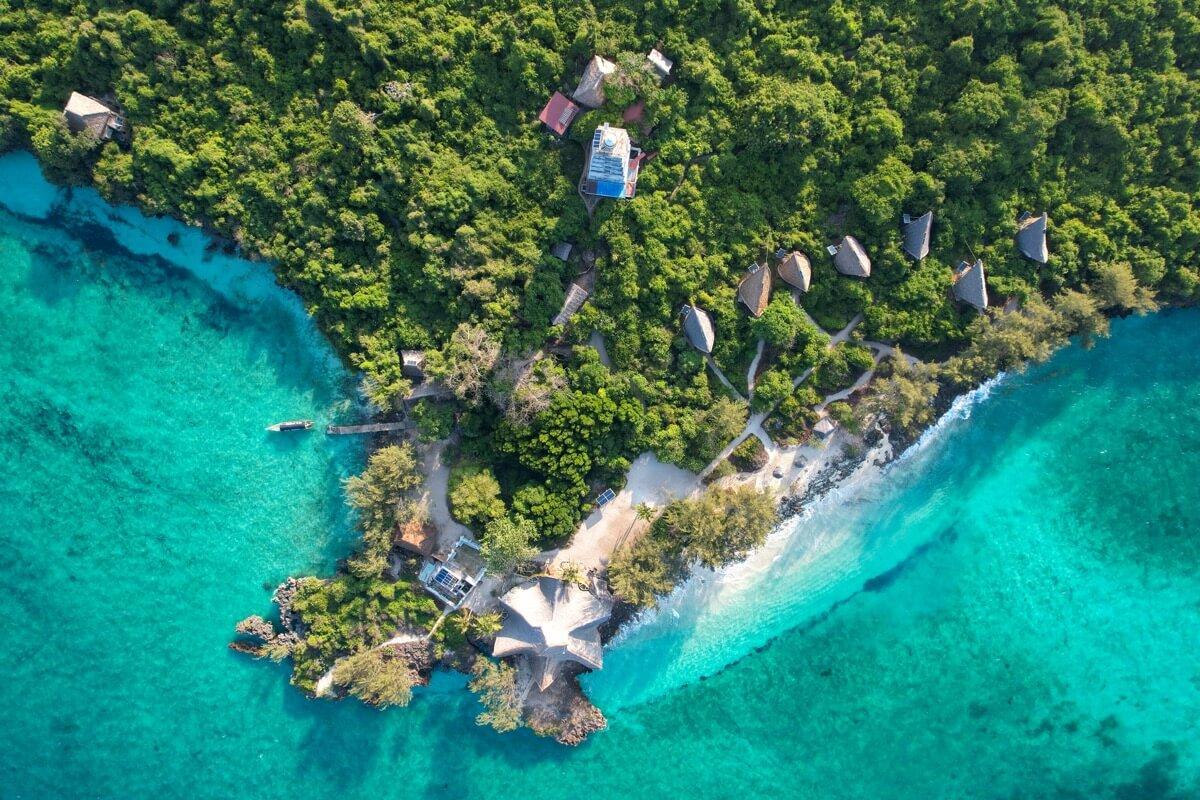
Chumbe Island is the world's first privately managed marine protected area, and is one of the most spectacular coral gardens anywhere in the world. The no-take sanctuary holds more than 90 per cent of all hard coral species recorded on East African reefs and over 470 species of fish. On land, the forest reserve shelters coconut crabs, the world's largest land crab, now locally extinct near most of Zanzibar's settlements, and the Aders' duiker, one of Africa's smallest and rarest antelopes.
The island is home to seven solar powered eco-bungalows, serviced by rainwater and composting toilets. A lighthouse and small mosque, both built around 1900 for the original Indian lighthouse keeper and his community, still stand. The mosque is used daily by Chumbe's own Muslim staff, and the lighthouse still guides shipping through the channel. Snorkelling is the only way into the reef itself, scuba diving isn't permitted inside the sanctuary, and thousands of local schoolchildren have visited free of charge through Chumbe's own environmental education programme. Tourism funds the island's entire conservation and education programme.
Sustainability
Climate & conservation
- World's first privately managed marine park, established 1991
- Protects 474 recorded reef fish species and a rare coral rag forest
- Rat eradication restored habitat for Ader's duikers and coconut crabs
- Eco-bungalows collect rainwater, run on solar power and manage all waste on site
- Single-use plastic eliminated from operations

Community & culture
- Employs former fishermen as marine park rangers
- Free environmental education excursions for local schoolchildren
- Chumbe Challenge Environmental Award encourages sustainability in schools

Commercial
- Not for profit, entirely self-financed through ecotourism for over 30 years
- First GER-certified Long Run Destination, 2011
- SKAL Sustainable Tourism Award winner, 2015
In brief
- Price bracket
- ££
- Type of property
- Eco resort
- No. of rooms
- 7 eco-bungalows
- Max guests per room
- Bungalows fit up to 2 adults and 2 children
- Facilities
- Restaurant, Beach access, Library
- Activities
- Snorkelling, Forest walks, Wildlife spotting, Conservation education
- Setting
- Island · Beach · Marine
Best time to visit
- Jan
- Feb
- Mar
- Apr
- May
- Jun
- Jul
- Aug
- Sep
- Oct
- Nov
- Dec
Visit during the long dry season from June to March for the best weather and calmest seas for snorkelling.
Kids
Children of all ages are welcome; those under 5 stay free and ages 5-15 pay a reduced day visitor levy
Accessibility
The island has natural, unpaved paths and the terrain can be uneven. Access to bungalows may involve steps.
'%3e%3cg%20transform='translate(60,60)'%20fill='none'%20stroke='%23676D41'%20stroke-linecap='round'%20stroke-linejoin='round'%3e%3c!--%20hairline%20stamp%20ring%20+%20fine%20dotted%20ring%20--%3e%3ccircle%20cx='0'%20cy='0'%20r='54'%20stroke-width='0.9'/%3e%3ccircle%20cx='0'%20cy='0'%20r='49'%20stroke-width='0.7'%20stroke-dasharray='0.5%203.6'%20opacity='0.9'/%3e%3c!--%20globe%20--%3e%3ccircle%20cx='0'%20cy='0'%20r='38'%20stroke-width='0.9'/%3e%3cg%20clip-path='url(%23stampGlobeClip)'%3e%3c!--%20graticule,%20very%20faint%20--%3e%3cpath%20d='M-38%200%20H38'%20stroke-width='0.45'%20opacity='0.5'/%3e%3cpath%20d='M-33%20-19%20C-16%20-14%2016%20-14%2033%20-19'%20stroke-width='0.45'%20opacity='0.4'/%3e%3cpath%20d='M-33%2019%20C-16%2024%2016%2024%2033%2019'%20stroke-width='0.45'%20opacity='0.4'/%3e%3cpath%20d='M0%20-38%20C-15%20-19%20-15%2019%200%2038'%20stroke-width='0.45'%20opacity='0.4'/%3e%3cpath%20d='M0%20-38%20C15%20-19%2015%2019%200%2038'%20stroke-width='0.45'%20opacity='0.4'/%3e%3c!--%20land:%20hairline%20coastlines,%20globe%20centred%20on%20Africa%20--%3e%3cg%20stroke-width='0.85'%3e%3c!--%20Africa%20--%3e%3cpath%20d='M-22.1%20-3.5%20L-20.7%20-8.0%20L-13.5%20-16.1%20L-5.3%20-16.2%20L2.8%20-13.0%20L7.3%20-12.5%20L14.5%20-0.6%20L19.1%20-1.1%20L13.6%208.0%20L12.6%2016.8%20L9.1%2021.0%20L2.7%2027.3%20L-1.1%2027.3%20L-5.0%2018.9%20L-7.2%208.4%20L-9.2%205.1%20L-17.8%204.4%20L-20.5%201.4%20Z'/%3e%3c!--%20Madagascar%20--%3e%3cpath%20d='M15.6%2013.4%20L17.2%2016.6%20L16.4%2020.4%20L14.6%2018.2%20Z'/%3e%3c!--%20Europe%20--%3e%3cpath%20d='M-14.7%20-16.9%20L-13.3%20-20.8%20L-10.1%20-23.3%20L-7.4%20-24.2%20L-5.6%20-27.5%20L-3.2%20-27.4%20L-0.8%20-25.9%20L0.3%20-28.2%20L3.3%20-28.3%20L7.5%20-26.2%20L11.9%20-23.0%20L9.8%20-20.5%20L7.3%20-19.2%20L4.0%20-18.5%20L1.6%20-16.7%20L-2.5%20-17.9%20L-3.7%20-20.8%20L-8.1%20-19.8%20Z'/%3e%3c!--%20Asia%20--%3e%3cpath%20d='M11.9%20-23.0%20L18.0%20-25.4%20L27.0%20-25.0%20L34.5%20-20.0%20L36.4%20-12.0%20L33.2%20-8.5%20L29.0%20-9.5%20L25.5%20-6.0%20L23.0%20-9.5%20L19.5%20-9.0%20L16.5%20-12.0%20L14.5%20-0.6%20L10.0%20-12.0%20L9.7%20-19.4%20Z'/%3e%3c!--%20Australia%20edge%20--%3e%3cpath%20d='M33.5%2014.0%20L36.0%2017.5%20L34.0%2022.0%20L30.5%2020.0%20Z'/%3e%3c/g%3e%3c/g%3e%3c/g%3e%3c/g%3e%3c/svg%3e)
Zanzibar, Tanzania
Guide price · £ <£100 · ££ £100–300 · £££ £300–800 · ££££ £800+ pp / night