
Community Baboon Sanctuary
Bermudian Landing, Belize
- Forest
- Waterside
- Rural
- Nature
- Wildlife



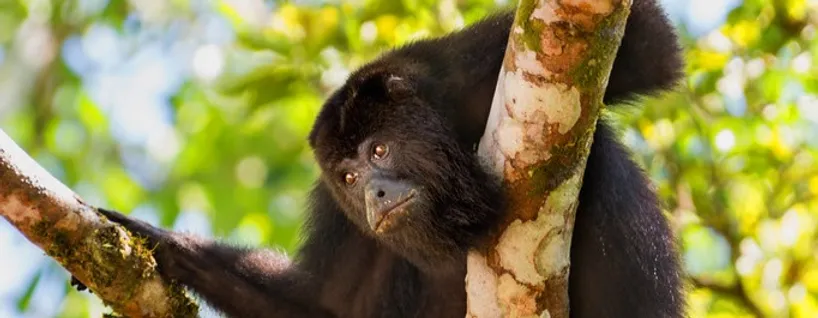
Watch black howler monkeys and learn about their ecology and behaviour
The Community Baboon Sanctuary began in 1985 when American primatologist Robert Horwich and local landowner Fallet Young persuaded 11 neighbouring farmers in Bermudian Landing to leave strips of forest standing on their own land for the black howler monkeys, known locally as 'baboons'. More than 200 landowners across seven villages now honour this voluntary agreement, and the howler population has grown from around 800 monkeys to an estimated 5,000, healthy enough that entire family groups have been relocated from here to repopulate Cockscomb Basin elsewhere in Belize. The voluntary pledge has since been copied by conservation projects worldwide.
Since 1998 the sanctuary has been run by the Community Baboon Sanctuary Women's Conservation Group, the first women-led conservation body in Belize, with one representative from each village managing guiding, grants and education programmes. Sightings of howler troops are close to guaranteed on guided walks, and canoe trips follow the same stretch of the Belize River used by the Maya and later generations of local families. There's no hotel as such. Visitors camp, stay with a local family, or book one of the informal homestays arranged through the village's small museum and visitor centre, Belize's first dedicated to natural history when it opened in 1989.
Sustainability

Climate & conservation
- Protects a population of 4,000 to 5,000 Yucatan black howler monkeys
- Reforesting private landholdings to maintain the canopy for wildlife
- Carbon-neutral guided canoe tours down the Belize River
- Protects 5,179 hectares for Morelet's crocodiles and 125 bird species

Community & culture
- Managed by 170 landowners from seven villages
- Employs trained and licensed local nature guides from the Belize River Valley
- Showcasing Kriol culture with cashew seed roasting and drumming
- Funds community scholarships in natural resource management and tourism
- Promotes local businesses, Tourism operations are fully integrated into the seven local villages, providing income via homestays and community-based services.

Commercial
- Reinvesting revenue into community health and school projects
- Recognised as an IUCN Category IV protected area
- Partners with the Nature Conscious Tourism Initiative
In brief
- Price bracket
- £
- Activities
- Wildlife watching, Nature walks, Birdwatching, Cultural experiences
- Setting
- Tropical forest · Riverine
Best time to visit
- Jan
- Feb
- Mar
- Apr
- May
- Jun
- Jul
- Aug
- Sep
- Oct
- Nov
- Dec
Visit during the dry season (Nov–May); birding is best from December to June.
Kids
Families welcome, all ages
Accessibility
Paths through the forest sanctuary may be uneven; no specific mobility information is available.

Bermudian Landing, Belize
Guide price · £ <£100 · ££ £100–300 · £££ £300–800 · ££££ £800+ pp / night