
Lungmar Remote Camp
Ladakh, India
- Mountains
- Wildlife
- Nature
- Luxury
- Snowsports


A heated winter camp built for tracking snow leopards in Ladakh
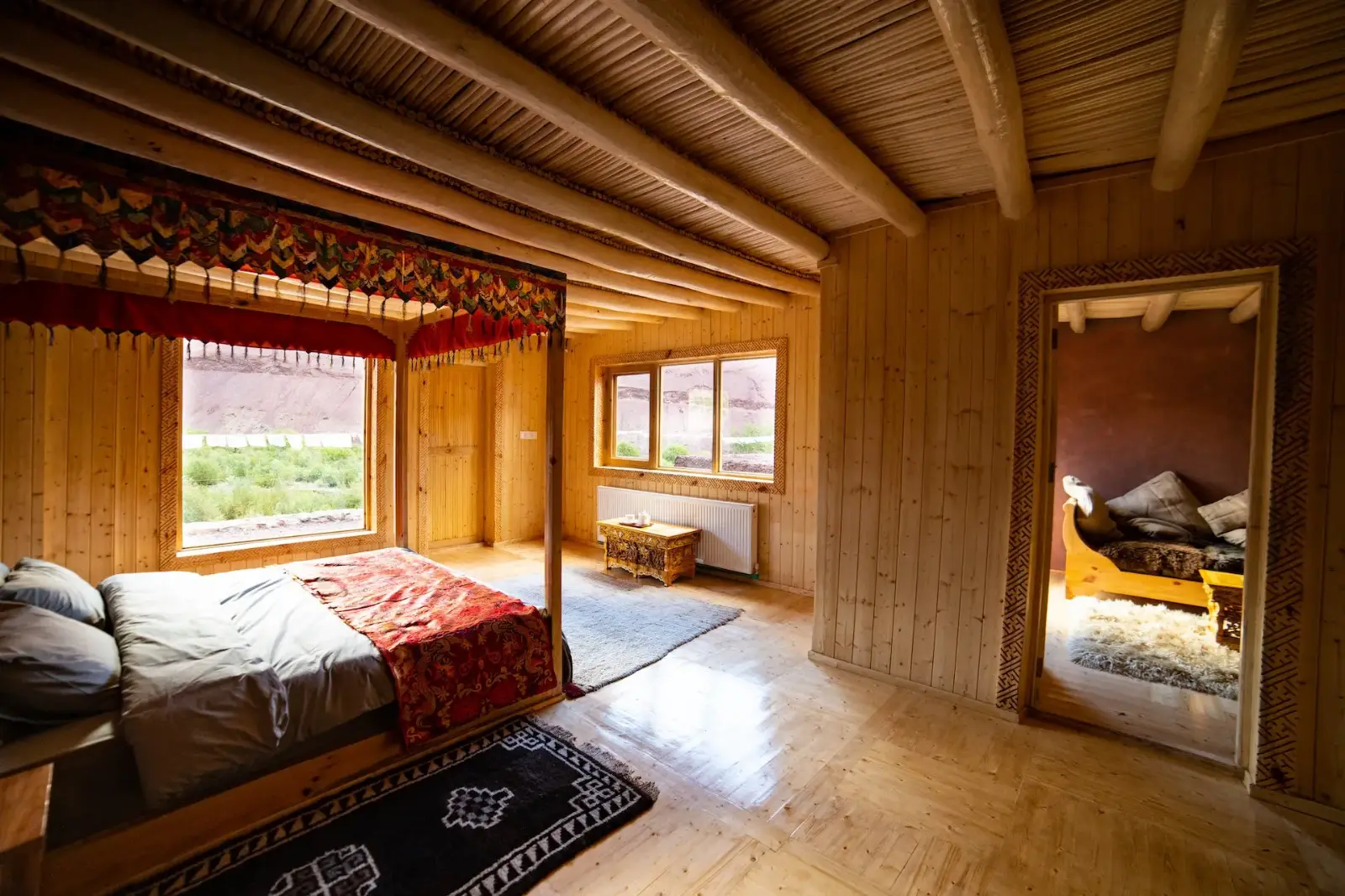
The Lungmar, red valley in Ladakhi, is a winter-only camp in the Ladakh Range, set at around 3,700 metres in the middle of 25,000 hectares of snow leopard habitat, past the last shepherding hamlets and Buddhist monasteries. There are twelve rooms in total: six Predator Suites on the upper floor of the Sumdo Sarai, a stone, earth and timber building at the meeting of three valleys, and six Kurkhang tents of hand-stitched canvas over layers of insulation, with a heated stone hammam for bathing. Outside, temperatures drop to minus twenty; inside there are hand-knotted rugs, wood-framed beds and Silk Road brocades.
Days are spent out with the camp's trackers, who have two decades of snow leopard fieldwork behind them and Swarovski optics to hand, scanning ridge lines for the grey ghost and for urial, blue sheep, ibex and wolf along the way. Evenings mean espresso, a small library and Silk Road cooking in the Sumdo Sarai. The camp runs November to April, with a seven-night minimum stay.
Sustainability

Climate & conservation
- Habitat protection, The camp operates within 25,000 hectares of prime snow leopard habitat and is built around conservation-led wildlife journeys.
- Renewable energy, Power comes from hydro and solar, with annual fossil fuel use lower than one return business-class flight from New York to Delhi.
- Sustainable build, Local red and green valley stone, earth plaster and poplar and willow roofs, with heated spaces kept deliberately small.
- Local or organic food, Barley comes from neighbours' glacier-fed fields and vegetables from the summer harvest.

Community & culture
- Employs local people, An expedition crew, trackers and kitchen team drawn from Ladakhi mountain communities, in employee ownership.
- Preservation of cultural heritage, Village walks and visits are part of the stay, and the buildings draw on Ladakhi caravanserai craft and Changpa weaving.
- Wildlife protection, Long-standing snow leopard conservationists lead the guiding, giving herding families a direct income from living cats.

Commercial
- Reinvests back into the community and or environment, The camp is employee owned, so returns from tracking stay with the team who do the work.
- Sustainable procurement along supply chain, Stone, timber, rugs and food are sourced from the valley and wider Ladakh.
In brief
- Price bracket
- ££££
- Type of property
- Camp
- No. of rooms
- Small (12 rooms)
- Max guests per room
- Up to 4 guests in the Shan Suite
- Facilities
- Restaurant, Bar
- Activities
- Wildlife watching, Photography, Hiking, Cultural visit
- Setting
- Mountains · Snow or ice
Best time to visit
- Jan
- Feb
- Mar
- Apr
- May
- Jun
- Jul
- Aug
- Sep
- Oct
- Nov
- Dec
Open November to April only. February and March are the classic snow leopard window, when cats come lower down the valleys. Minimum stay is seven nights.
Kids
Better suited to older teenagers and adults, given long cold days in the field.
Accessibility
A remote high altitude winter camp with long days on rough, frozen ground, so it is not suitable for guests with limited mobility.

Ladakh, India
Guide price · £ <£100 · ££ £100–300 · £££ £300–800 · ££££ £800+ pp / night