
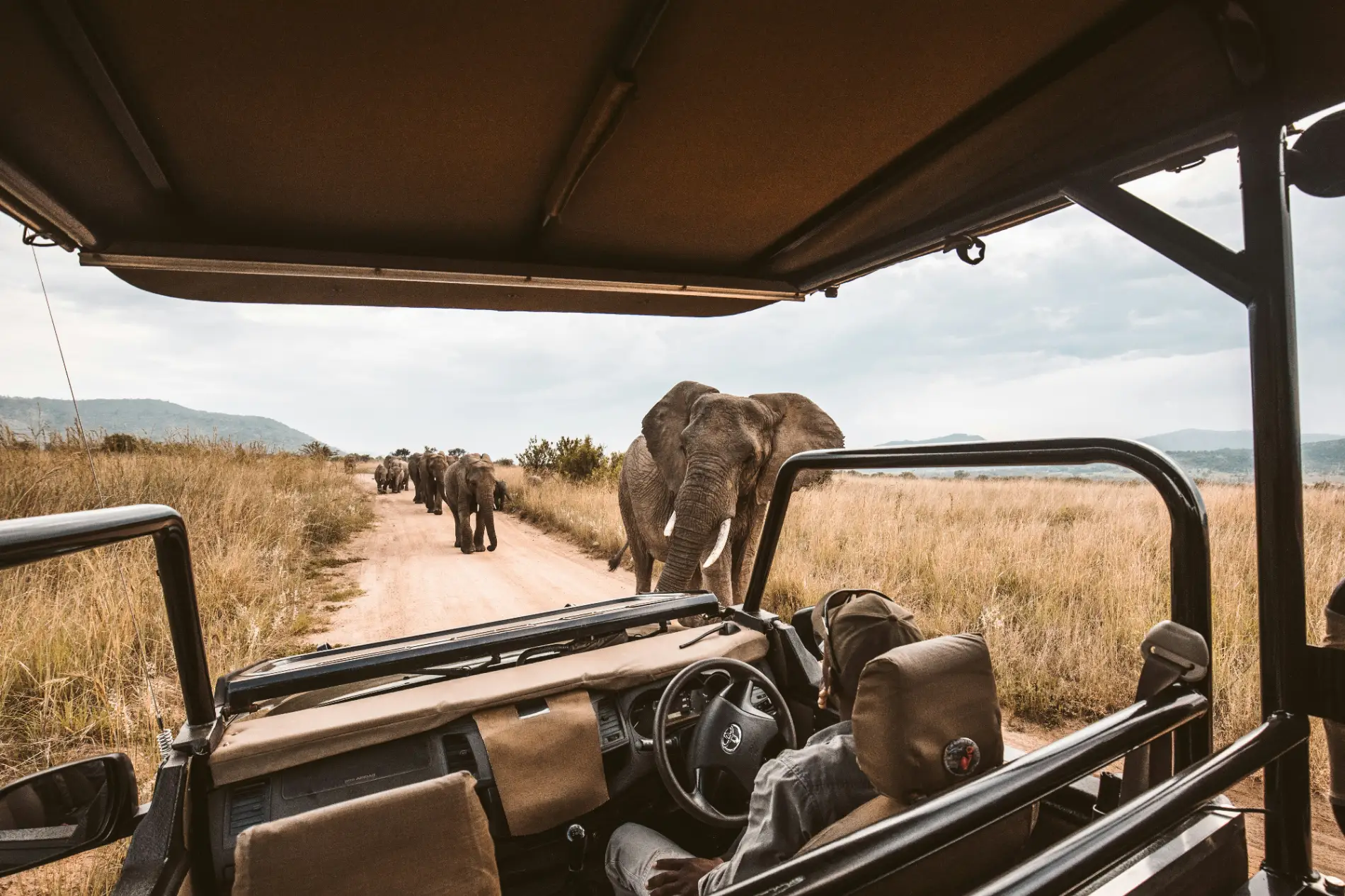
Nine things to look for in an ethical wildlife experience
Wildlife tourism can pay for protection and give communities a reason to live alongside wild animals, or it can stress wildlife and short-change local people. Here's how to tell the difference before you book.
1. Ask who benefits financially
Start with ownership. Wildlife is only protected over the long term when living alongside it pays. If a community earns a fair income from the animals on its land, there is a reason to defend them. Problems arise if people bear the cost, such as crop damage, livestock losses and restricted access, while someone else collects the profit.
The problem is that a lot of tourism money never reaches the places it is spent in. Economists call this leakage: money that flows out to foreign owners, imported food and fuel, and head-office overheads. A recent study of two of Zambia's best-known safari parks, Kafue and South Luangwa, found that between 43 and 69 per cent of potential local benefit escaped the area, largely because of non-local ownership and supply chains that relied on imports. South Luangwa kept noticeably more money locally, helped by a revenue-retention mechanism and visible community programmes. Even where leakage is high, what does stay matters. A study in rural Uganda found that despite more than 75 per cent leakage, the tourism money retained still exceeded every other source of income to the area combined.
Il Ngwesi, in Laikipia in northern Kenya, shows what full community ownership looks like. In the mid-1990s Maasai elders set aside much of their grazing land for wildlife and, with support from neighbouring Lewa and donors, built an eco-lodge that the community owns, manages and staffs itself. Decisions are approved at the community's annual general meetings, and lodge income funds school bursaries, water projects and clinics. Il Ngwesi's rangers protect reintroduced black and white rhino, and its success helped inspire the wider network of community conservancies across northern Kenya.
Questions to ask
How many staff come from nearby villages? Does the community hold equity, receive a share of profits or get a fee per guest night? Are guiding and management roles open to local people? Where do you buy your food and supplies?
2. Check that visitor numbers are limited on purpose
Wildlife needs space and quiet, and the clearest sign of a well-run operation is that it restricts its own numbers. Good operators cap how many vehicles can be at a sighting, set a maximum group size and limit the time spent with each animal. Poor ones let demand set the pace. In July and August 2025, footage from Kenya's Maasai Mara National Reserve showed dozens of safari vehicles crowding the Mara River during the Great Migration. Herds that had gathered to cross scattered in panic, and in one widely shared clip tourists stood on the riverbank, forcing wildebeest back into the crocodile-filled water. Tanzania's park authority also criticised vehicles blocking the herds in the Serengeti that season.
The community conservancies bordering the reserve take a very different approach. In Mara Naboisho, no more than four vehicles are allowed at a sighting. In Mara North the limit is five, and only guests staying inside the conservancy can drive there. Many Mara conservancies also cap the number of beds, at roughly one tent per 700 acres. Even inside the busier reserve, Mara Triangle rules limit viewing to 10 minutes once more than five vehicles are waiting, with others held back 100 metres.
If a lodge or operator can't tell you what its limits are, assume there aren't any. A short, specific answer, such as "no more than four vehicles at a sighting", is a good sign. A vague answer about "respecting the animals" isn't.
Questions to ask
How many vehicles are allowed at a sighting, and is there a time limit? Is there a cap on guest numbers or beds in the area? What do your guides do when a sighting gets crowded, for example at a river crossing?
3. Check that tourism actively protects and restores nature
Doing less harm is the starting point, not the goal. The most impressive places to stay go further and leave nature in better shape than they found it. They buy or lease land and manage it for wildlife, replant forests, clear invasive species, protect reefs from overfishing and help create new protected areas. With governments committed to protecting 30 per cent of the planet's land and sea by 2030, this kind of private and community-led protection matters more than ever.
Chumbe Island, Zanzibar
In the early 1990s a small, uninhabited island off Zanzibar became Chumbe Island Coral Park, the first privately managed marine park in the world to pay for itself through ecotourism. A seven-bungalow eco-lodge funds the whole operation, including rangers recruited from local fishing families who patrol the reef and forest day and night, and an education programme for schoolchildren and fishers that has run since 1996. Chumbe's reef is now one of the best preserved in the region, and the protected area helps restock nearby fishing grounds.
Grootbos, South Africa
Grootbos started in 1991 as a 123-hectare farm in the Cape Floral Kingdom, one of the richest plant regions on Earth. It now protects around 2,500 hectares, cleared of invasive alien plants and managed for its fynbos. It also helped found the Walker Bay Fynbos Conservancy in 1999, which brings 49 landowners together to protect more than 21,000 hectares. Its foundation employs teams of local women to clear invasive plants from the dunes of a neighbouring state nature reserve.
Questions to ask
Does the lodge own, lease or fund any protected land or sea, and how much? Is it restoring anything, such as forest, grassland or reef? Can it show results, like hectares restored or species returning? Is it part of a wider conservancy or protected-area network? What share of its income goes to conservation?
4. Look for research and monitoring partnerships
Tourism can do more than fund protection. At its best it adds to scientific understanding, and that is how we know whether a wildlife population, and the tourism around it, is actually doing well. Look for operators that host researchers, help with camera traps and population counts, feed sightings into a shared database or publish what they learn. It makes for a better trip too: guides who contribute to monitoring tend to know their animals as individuals, with names, family histories and favourite haunts.
Jaguars in Brazil's Pantanal
At Caiman Ecological Refuge, the Onçafari project has spent more than a decade slowly habituating wild jaguars to vehicles so guests can watch them behave naturally. Every sighting doubles as data. Since 2011 the team has recorded more than 3,400 jaguar sightings, identified over 300 individuals by their spot patterns and fitted 50 with collars. The habituation work is monitored by CENAP, the Brazilian government's carnivore research centre, and the project is upfront that sightings can't be guaranteed because the cats' needs come first. Some trips let guests join the researchers as they check camera traps and track collared animals.
Questions to ask
Which researchers or organisations do you work with? What have you learned, and is it published anywhere? Can guests take part, for example by submitting photos or joining a monitoring session?
5. Be wary of guaranteed close encounters
Wild animals don't perform on schedule. If an operator guarantees you'll see a particular species, or promises to put you within touching distance of one, ask how. The answer often involves baiting, feeding, restraining or training the animals, none of which is good for them and some of which is dangerous for you. The best operators set realistic expectations: "we'll do our best, but there are no guarantees." The same goes for anything that lets you ride, bathe, hold or take selfies with wild animals. The word "sanctuary" isn't regulated, so anyone can use it. Warning signs include breeding baby animals, hands-on contact, photo opportunities and buying or selling animals. Look for GFAS accreditation, or a clear observation-only policy.
Elephants in Thailand
Elephant riding has fallen sharply, but much of the industry has simply rebranded. World Animal Protection assessed 2,849 elephants at 236 Thai tourism venues in 2024–25 and found 69% living in poor conditions, with only 5 per cent in the best possible captive conditions. More than half of the elephants were at venues offering bathing, feeding or caretaker activities, which still rely on restraint and compliance training. Venues offering rides or shows scored worst, and observation-only venues scored best. A good sanctuary lets you watch elephants from a distance as they forage, bathe and socialise on their own terms.
Lion cubs in South Africa
Cub petting, walking with lions and volunteer programmes raising cubs for supposed release have long been tied to South Africa's captive lion industry. When the cubs grow too big to handle, many end up in canned hunting or the lion bone trade. The government has moved to close the industry; in 2025 it finalised a notice banning new captive lion breeding facilities. Existing facilities still operate, so avoid any venue that lets you touch a big cat.
Whale sharks in the Philippines
At Oslob in Cebu, boatmen feed whale sharks every day so tourists can swim with them. Researchers found that compliance with the two-metre minimum distance rule was almost non-existent, with breaches rising from 79 per cent of encounters in 2012 to 97 per cent by 2014. Later work found that daily feeding has changed the sharks' behaviour, including making them less wary of boats and people. Compare that with places where whale sharks gather naturally, such as the Maldives, Ningaloo in Western Australia or Donsol in the Philippines, where sightings are seasonal and never promised.
Questions to ask
What happens if we don't see the animal? Are animals ever fed, baited or called in? Can guests touch, feed or bathe them? Where did the animals come from, and does the venue breed them?
6. Favour places with conservancy or protected-area ties
Wildlife needs land, and land needs funding. Stays that sit inside, or pay into, a community conservancy or protected area help keep that land intact, which is the single biggest thing wildlife needs.
A community conservancy is land owned or held by local people that they choose to manage for wildlife, usually alongside their own livestock and livelihoods. Instead of fencing, ploughing or selling the land, communities earn from it through tourism, either by running lodges themselves or by leasing land to operators who pay per acre, per guest night, or both. Animals then become an asset rather than a cost.
Namibia
After independence, Namibia gave rural communities the legal right to manage and benefit from wildlife on communal land. The first conservancies were registered in 1998. By 2022 there were 86, covering about 166,000 km², around a fifth of the country and more than its national parks. Many earn through joint ventures with lodge operators, and a study of conservancy income found photographic tourism earned far more than hunting where both were possible. Namibia's elephant numbers and free-roaming lion population have grown alongside the model.
Kenya's Maasai Mara
When Maasai group ranches around the reserve were divided into individual plots, the land that wildlife migrates through began turning into farms and fences. Conservancies reversed that. In Ol Kinyei, landowners are paid per acre leased plus a fee per bed night, and 90 per cent of camp staff come from the community. In Olare Orok, lease payments in 2012 averaged about US$2,000 a year per family. By 2019 Mara landowners were collectively earning more than US$7.5 million a year in lease payments, and conservancies covered over a third of the wider ecosystem.
However, not every conservancy is equal. The model works best when communities have genuine control. In January 2025 a Kenyan court ruled that two conservancies in Isiolo, set up under the Northern Rangelands Trust, had been established without proper public participation and were unconstitutional.
Questions to ask
How much of my fee goes directly to the conservancy or landowners? Is the arrangement a long-term lease or a one-off payment? Do community members sit on the board, and do they have a say in how the land is managed?
7. Ask what protection looks like year-round
Wildlife doesn't disappear when the tourists do. Poaching, habitat loss and human-wildlife conflict continue through the low season, so a good operator's commitment should too. The pandemic showed how fragile tourism-funded conservation can be. In 2020, with almost no visitors in the Maasai Mara, landowners faced losing more than half their income, and with it their reason to keep land open for wildlife. Some conservancies came close to collapse, but in Mara North the member camps kept paying landowners through the worst of it. Conservation International and the Maasai Mara Wildlife Conservancies Association set up a US$5 million rescue fund to cover lease payments until visitors returned (AFAR).
Questions to ask
Does the lodge fund rangers, patrols or community programmes outside peak months? Did it keep paying staff and partners during the pandemic? Is any of my fee set aside in a fund for lean years? Does it run a low-season or green-season rate to keep visitors coming?
8. Choose local guides
A good guide will elevate any wildlife trip. Local guides know the animals, the terrain and the history better than anyone, and they have the most to gain from wildlife staying healthy. They also tend to be the best part of the experience, with stories, identification skills and context you can't get from a book. Employing local guides is also one of the clearest ways of making sure tourism income stays in the community.
The Koiyaki Guiding School in the Maasai Mara was founded in 2005 after it became clear that fewer than 20 per cent of people working in the Mara's tourism industry were Maasai. Now called the Wildlife Tourism College of Maasai Mara, it trains young Maasai to sit Kenya's national guide exams, alongside driving, mechanics, languages and IT. Around a third of each class tend to be women, and camps such as Basecamp sponsor students and hire graduates, including some of the first Maasai women driver-guides in the Mara. Fewer than 10 per cent of safari guides in Africa are women, but a handful of operators are changing that. In Botswana, Desert & Delta's Chobe Game Lodge hired its first female guide in 2004, when there were only around five in the whole country. By 2012 its entire guiding team, known as the Chobe Angels, were women, and around 55 of Botswana's 70 to 80 female guides have worked there. African Bush Camps launched a fully funded Female Guides Programme in Botswana in 2021, later extending it to Zambia. It has accepted 24 women so far, with its first graduate qualifying in 2025, and it aims for at least a quarter of its guides to be women by 2030.
Questions to ask
Are your guides from the area? How are they trained and paid? Is there a route for local staff into senior guiding and management roles? Do you employ and train women as guides?
9. Keep your group small and your vehicle count low
Smaller groups mean less disturbance and a better experience. You'll see and hear more, the guide can give you proper attention and the animals are less likely to be stressed. Mountain gorilla trekking in Rwanda and Uganda is one of the strictest wildlife experiences anywhere, and one of the most celebrated. Each habituated gorilla family can be visited by one group of no more than eight people a day, for a maximum of one hour. Visitors keep at least seven metres away in Rwanda, and anyone with a cold or stomach bug is turned back, because gorillas are vulnerable to human diseases. Permits are expensive and limited but for good reason, the fees fund protection, and the limits protect the animals. If you arrive at a sighting and find a dozen vehicles around one animal, you're part of the problem. Move on, and say something to your guide.
Questions to ask
How many guests share a vehicle, and is everyone guaranteed a window seat? What is the maximum group size on walks or boat trips? Can I book a private vehicle or guide?
Where to stay
Our wildlife-focused great escapes aim to be ethical, nature-positive or invest in habitat and wildlife protection and conservation. For options owned and run by local communities, head here. Every listing on Great Escapes is vetted against criteria that include community benefit and conservation impact, and you can read how we choose them here.
'%3e%3cg%20transform='translate(60,60)'%20fill='none'%20stroke='%23676D41'%20stroke-linecap='round'%20stroke-linejoin='round'%3e%3c!--%20hairline%20stamp%20ring%20+%20fine%20dotted%20ring%20--%3e%3ccircle%20cx='0'%20cy='0'%20r='54'%20stroke-width='0.9'/%3e%3ccircle%20cx='0'%20cy='0'%20r='49'%20stroke-width='0.7'%20stroke-dasharray='0.5%203.6'%20opacity='0.9'/%3e%3c!--%20globe%20--%3e%3ccircle%20cx='0'%20cy='0'%20r='38'%20stroke-width='0.9'/%3e%3cg%20clip-path='url(%23stampGlobeClip)'%3e%3c!--%20graticule,%20very%20faint%20--%3e%3cpath%20d='M-38%200%20H38'%20stroke-width='0.45'%20opacity='0.5'/%3e%3cpath%20d='M-33%20-19%20C-16%20-14%2016%20-14%2033%20-19'%20stroke-width='0.45'%20opacity='0.4'/%3e%3cpath%20d='M-33%2019%20C-16%2024%2016%2024%2033%2019'%20stroke-width='0.45'%20opacity='0.4'/%3e%3cpath%20d='M0%20-38%20C-15%20-19%20-15%2019%200%2038'%20stroke-width='0.45'%20opacity='0.4'/%3e%3cpath%20d='M0%20-38%20C15%20-19%2015%2019%200%2038'%20stroke-width='0.45'%20opacity='0.4'/%3e%3c!--%20land:%20hairline%20coastlines,%20globe%20centred%20on%20Africa%20--%3e%3cg%20stroke-width='0.85'%3e%3c!--%20Africa%20--%3e%3cpath%20d='M-22.1%20-3.5%20L-20.7%20-8.0%20L-13.5%20-16.1%20L-5.3%20-16.2%20L2.8%20-13.0%20L7.3%20-12.5%20L14.5%20-0.6%20L19.1%20-1.1%20L13.6%208.0%20L12.6%2016.8%20L9.1%2021.0%20L2.7%2027.3%20L-1.1%2027.3%20L-5.0%2018.9%20L-7.2%208.4%20L-9.2%205.1%20L-17.8%204.4%20L-20.5%201.4%20Z'/%3e%3c!--%20Madagascar%20--%3e%3cpath%20d='M15.6%2013.4%20L17.2%2016.6%20L16.4%2020.4%20L14.6%2018.2%20Z'/%3e%3c!--%20Europe%20--%3e%3cpath%20d='M-14.7%20-16.9%20L-13.3%20-20.8%20L-10.1%20-23.3%20L-7.4%20-24.2%20L-5.6%20-27.5%20L-3.2%20-27.4%20L-0.8%20-25.9%20L0.3%20-28.2%20L3.3%20-28.3%20L7.5%20-26.2%20L11.9%20-23.0%20L9.8%20-20.5%20L7.3%20-19.2%20L4.0%20-18.5%20L1.6%20-16.7%20L-2.5%20-17.9%20L-3.7%20-20.8%20L-8.1%20-19.8%20Z'/%3e%3c!--%20Asia%20--%3e%3cpath%20d='M11.9%20-23.0%20L18.0%20-25.4%20L27.0%20-25.0%20L34.5%20-20.0%20L36.4%20-12.0%20L33.2%20-8.5%20L29.0%20-9.5%20L25.5%20-6.0%20L23.0%20-9.5%20L19.5%20-9.0%20L16.5%20-12.0%20L14.5%20-0.6%20L10.0%20-12.0%20L9.7%20-19.4%20Z'/%3e%3c!--%20Australia%20edge%20--%3e%3cpath%20d='M33.5%2014.0%20L36.0%2017.5%20L34.0%2022.0%20L30.5%2020.0%20Z'/%3e%3c/g%3e%3c/g%3e%3c/g%3e%3c/g%3e%3c/svg%3e)
Common questions about responsible wildlife tourism
- Is wildlife tourism bad for animals?
- It can be, particularly when numbers are unmanaged or animals are fed, handled or baited. Well-managed tourism, with limited visitor numbers and money going to protection and local communities, can support conservation.
- How can I tell if a safari operator is responsible?
- Ask who owns it, how many vehicles and guests it allows, whether it works with researchers or a conservancy, and whether guides are local. Specific answers are a good sign. Vague ones are a warning.
- Are animal interactions like riding or touching ever ethical?
- Generally not. Direct contact such as riding, bathing, petting or posing for photos usually relies on training or restraint. Look for experiences where you observe wild animals without interfering.
- How do I know if a sanctuary is genuine?
- A genuine sanctuary doesn't breed animals for display, doesn't buy or sell them and doesn't allow hands-on contact. Look for accreditation from the Global Federation of Animal Sanctuaries, or a clear observation-only policy.


Poste restante
Greater escapes in your inbox
New stays, thoughtful stories and travel ideas. Unsubscribe whenever.