
The revival of ancient silk weaving in Cambodia
How the almost-vanished craft of handwoven Cambodian silks is being brought back to life
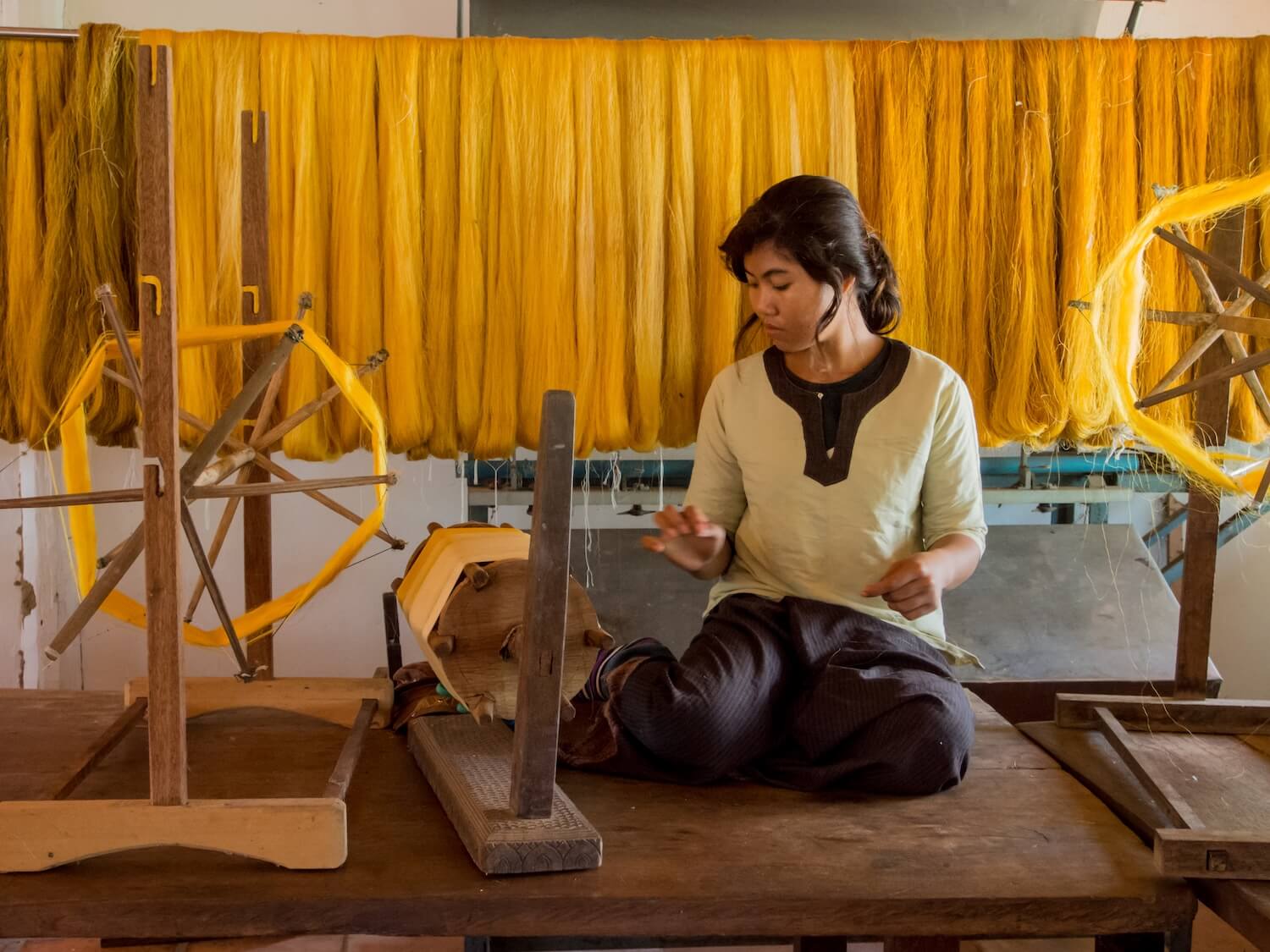
Early morning in Chot Sam village, just outside the temples of Angkor, sunlight catches the golden silk draped across a drying rack. A weaver’s hands move with practiced certainty, tying intricate knots that will resist coloured dye and create intricate patterns on the thin thread, innate knowledge that has been passed down through generations.
A thousand years ago, Cambodian silk weaving was once a major form of livelihood and among some of the world’s finest, so revered that royalty coveted garments made from its gossamer-fine threads. Sitting at the heart of the maritime silk road between China and India, the Khmer Empire was one of the world's finest producers of silk, or sericulture. Known for its ikat weaving, an intricate form of dyeing and weaving, resulting in beautifully blurred patterns often featuring traditional motifs, Cambodia used its indigenous golden silkworm to produce a naturally yellow silk that was particularly lustrous and distinct, and forming a vital part in the nation's textiles and artisanal weaving heritage.
However, the traditional practice of handwoven Cambodian silk was nearly lost due to the brutal genocide. War decimated Cambodia's arts and crafts along with a fifth of its population. Almost all artisans and intellectuals perished during the Khmer Rouge years along with their cultural knowledge and skills. By the war's end, few under the age of 50 had mastered weaving and dyeing. The traditional kasuri patterns, estimated to number more than 200, were being lost along with the people who carried their memories in their hands.
Other factors accelerated the loss. Natural dyes were replaced with chemicals, traditional looms shunned for bigger machines that produced less intricate patterns, and middlemen controlled what little production remained. Cheap silk was imported from Vietnam instead of being homegrown. And just 47 acres of mulberry trees, the native golden silkworm’s food source, remained in the entire country, cut down during the war to make way for rice plantations.
A love of textiles and tradition
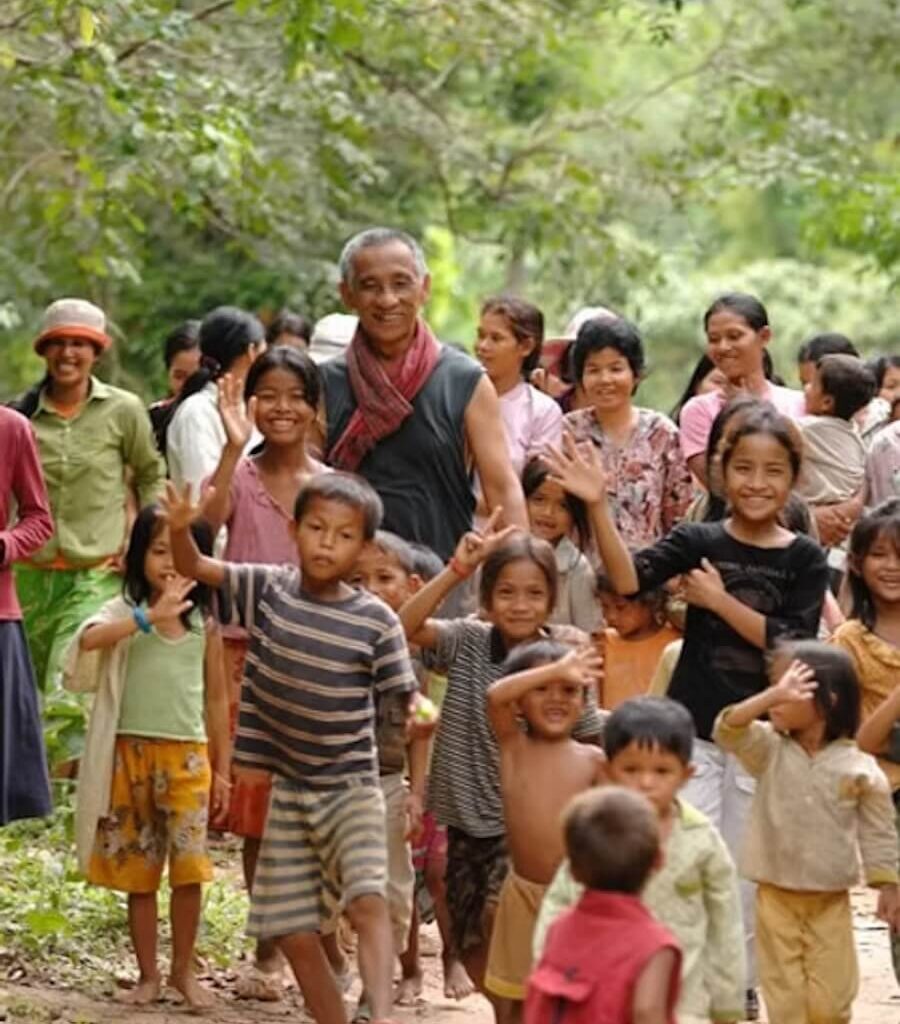
Two people have helped the revival of this ancient craft. The late Kikuo Morimoto, a Japanese textile specialist and silk painter, encountered Cambodian weaving for the first time whilst volunteering for the textile school at a Thai refugee camp in Ubon Ratchathani. When UNESCO commissioned him to research the state of Cambodian weaving in the 1990s, it changed the path of his life.
"One day I visited the village and saw their traditional textiles, and for the first time I came across yellow raw silk," Morimoto recalled in an interview with Klaus Rink for Soul of Silk. "I used to be a kimono maker in Kyoto, and I had always thought silk was white, but here were these very beautiful yellow cocoons, which villagers handspun into yarn and then wove cloth.”
“I wanted to help people bring their silk tradition back to life. This silk was made entirely by hand. There was so much heart and motivation in this process. The motivation to weave comes from inside, from the heart. This silk is like a human body; the emotions of the weavers find their way into the cloth.”
In Morimoto’s book, Bayon Moon, he writes that: “textiles woven by people who felt such attachment to their raw materials and tools are proof of the spirit that existed in this country, that revered textiles as culture and tradition at the heart of daily life.”
Morimoto began touring the country to find women who still knew the art of Khmer weaving, the “silk grandmothers”, as they came to be called. Very few remained. Finally, he discovered a grandmother and master weaver named Om Chia who, over time, began to trust Morimoto and his intentions of producing silk in the ancient way, and so she shared her weaving knowledge with him and younger generations of Cambodian women.
Weaving nature and heritage together
In 1996, Morimoto founded the Institute for Khmer Traditional Textiles (IKTT) in Phnom Penh, before moving operations to Siem Reap in 2000, and in 2002 he purchased land for what would become an ambitious experiment in cultural and ecological restoration. In 2003, IKTT began clearing wasteland, building huts, digging wells, and cultivating mulberry trees. They raised silkworms and planted species used to harvest natural dyes, establishing a craft village capable of self-sufficient production over time.
"In the beginning, it was like a wasteland," Morimoto said, speaking to National Geographic. "But I planted trees, built a house, dug a well, and made a road and a farm—everything. People thought I was crazy. To me, it seemed like a reality, something possible to realise."
Today, IKTT employs around 800 people, has trained over 400 people and provides means of support for families across Cambodia. The project site has now grown into a government-approved village where approximately 150 people live across 50 homes. The village houses a school, vegetable gardens, and workshops where different groups specialise in various crafts such as bamboo work and pottery. Even carpenters create looms similar to those used many generations ago, training younger apprentices so skills are not lost. Children are encouraged to paint to spark a love for creativity and artistry.
Morimoto, who passed away in 2017, grasped the inseparable link between culture and ecology. "We have learned that a tradition always exists with nature," he told Soul of Silk. "Richness in tradition cannot stand without richness in nature." The regenerating forest at Chot Sam stands as testament to this belief, that protecting nature restores tradition, and that both must flourish together.
The village continues working toward complete sustainability, planning to switch from propane and electric generators to biogas and small hydro-electric power using excess rainy season water. Visitors can tour the workshop, learn about natural dyeing, walk through the regenerating forest, and observe silkworm farming. An IKTT shop offers the finished textiles to those who wish to purchase the silks.
Golden silk
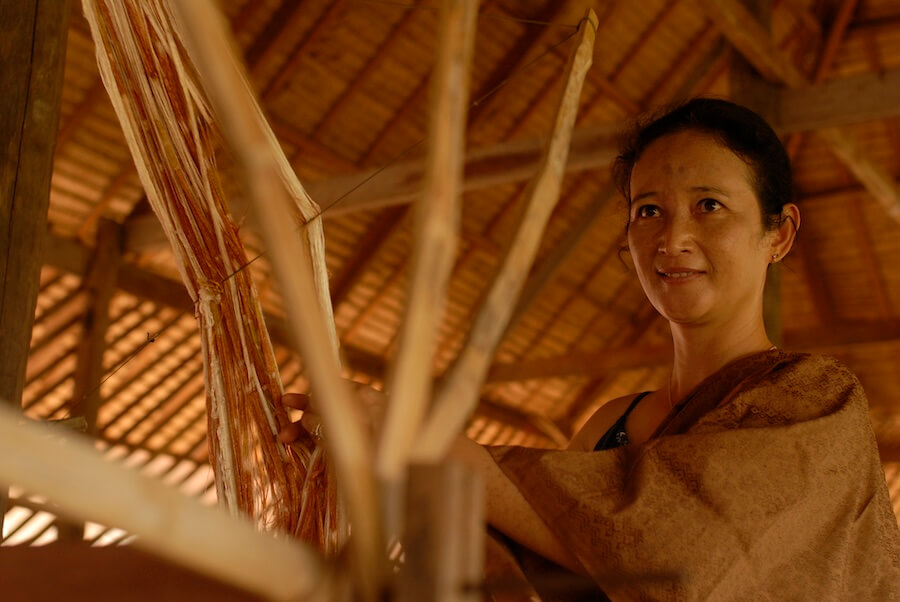
Also located in Siem Reap province is Golden Silk Pheach, established by Oum Sophea Pheach in 2002. Her mission is twofold: to preserve Cambodia's ancient silk weaving traditions and to provide vital employment. Not only does the organisation create beautiful, traditional silk garments, but it also serves as a critical source of income for disadvantaged rural people and former orphans.
For Pheach, the enterprise is fundamentally about creating sustainable livelihoods for those whose lives were severely disrupted by war. The organisation now employs over 100 people on its plantation, predominantly women, many of whom came from backgrounds with no family, home, or means of survival.
The daughter of a diplomat, Pheach returned to Cambodia after applying for asylum in France during the war. Following the 1991 Paris Peace Agreement, which brought home thousands of refugees, including many orphans, Pheach established the Sovanaphoum Komar village for orphaned children in 1992, laying the groundwork for her later employment initiatives.
As former director of Cambodia’s National Silk Centre, she was determined to ensure that Cambodian silk making continued using the native golden silk rather than imported white varieties. She explained the importance of her work to the BBC, stating: "We have a particular biodiversity here that supports this very rare and precious golden silk and a tradition of weaving that spans centuries. When I came back, I wanted to protect this biodiversity and to keep this unique tradition alive."
This commitment required immense dedication. It took ten years of research for Pheach to fully deepen her knowledge of Cambodian ikat silk weaving, which involved studying old fabric samples and the intricate patterns found on temple carvings. She has since spent more than 20 years passing this expertise on, teaching others the art of ikat weaving.
A unique process
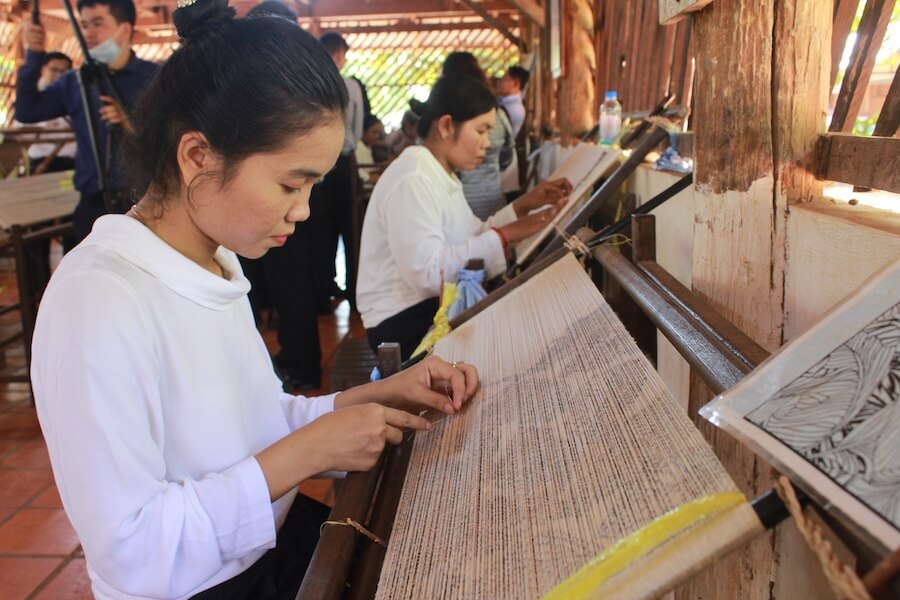
The silk production follows methods virtually unchanged for centuries. Golden silkworms feed on mulberry leaves before spinning their distinctive yellow cocoons from which the silk is extracted. A spindle reels out the silk in one continuous motion. The inner part of the thread is the finest quality and needs to be separated out. The thread is then washed, stretched, and softened by hand before being spun onto bobbins.
The ikat technique itself is also painstakingly precise and the whole process can take years to master, as can the garment making. Threads are tied onto a frame in regular patterns with banana leaf fibres to replicate designs. When soaked in natural dye, the knots resist the colour. Unwrapped, they reveal highly detailed patterns that are then woven on traditional looms similar to those used in the 12th century. The natural dyes create colours of extraordinary depth and subtlety that chemical dyes cannot replicate. Reds, golds, and browns emerge in exquisite variations, their subtle colour shifts changing with the light.
The challenge of sustainability
Today, more pockets of the country are coaxing this important tradition back into being. Yet challenges remain. Cheaper foreign imports provide stiff competition. Cambodia still imports significant amounts of silk because there are still only a few farms who raise silkworms in the country. Handwoven products are also expensive and struggle to compete with mass-produced goods of much lower quality. Demand has also declined as younger generations turn to other work, creating a cycle where decreased production leads to decreased use.
Speaking to Asia News Network, Khuy Chansou of another handwoven silk organisation, SouKabas Cambodia, said: “The pain of seeing traditional designs copied and sold cheaply cuts deep. It hurts to see people copying Khmer silk and selling it freely. The livelihood of the weavers is at stake. They weave with all their heart."
Threads of hope
In an interview with Rolex, the late Morimoto said: “We hope the next generation will take over this place. In the past, Cambodia ikat textile was the best in the world and if we can revive it, I am certain everyone will benefit.”
Beyond creating extraordinary pieces of silk, both IKTT and Golden Silk Pheach want to ensure this ancient Cambodian craft continues, techniques are passed on and the indigenous silk industry is re-established for decades to come. Cambodian silk represents resilience, creativity and hope in the face of hardship.
All photos copyright Golden Silk Pheach, except image of IKTT founder Kikou Morimoto, which is copyrighted to IKTT.




Poste restante
Greater escapes in your inbox
New stays, thoughtful stories and travel ideas. Unsubscribe whenever.