
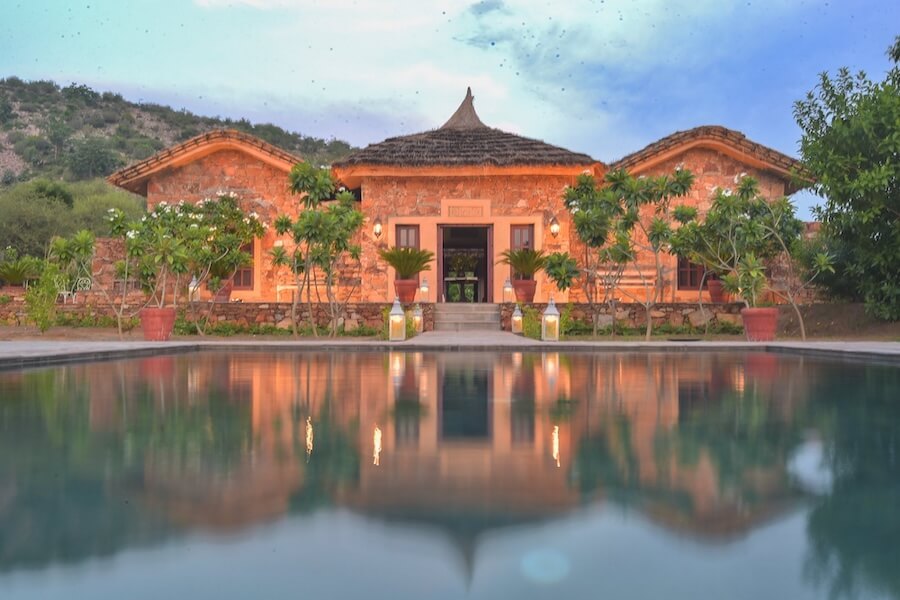
The best eco places to stay in Rajasthan
From a fortress on a sacred desert dune to a leopard camp where big cats and herdsmen have coexisted for centuries, here are 18 eco friendly properties across Rajasthan to stay in
Rajasthan is India's largest state by area. It stretches across the northwestern corner of the subcontinent, from the Thar Desert in the west to the ancient Aravalli Hills in the east, and from the salt flats of the border region in the north to the forested valleys of the south. Travellers come here for the iconic cities. Jaipur, the Pink City, with its palaces and extraordinary bazaars. Jodhpur, the Blue City, whose indigo-washed old town tumbles down from the towering Mehrangarh Fort. Udaipur, the City of Lakes, where palace domes are mirrored in the still surface of Lake Pichola. But between and beyond them lies a Rajasthan that rewards slower, more curious travel. The Shekhawati region, north of Jaipur, is a largely unvisited open-air museum of frescoed merchants' mansions whose painted ceilings, depicting mythological scenes, early railways, and colonial encounters, are among the most extraordinary art in India. The Jawai hills, midway between Jodhpur and Udaipur, are home to wild leopards and Rabari herdsmen in an ancient and unexplained coexistence. The town of Deogarh, in the Aravalli hills is a pretty, rural spot. And the Chambal badlands, containing ravines, river dolphins, and ancient fort ruins, near the town of Karauli in eastern Rajasthan remain almost entirely unknown to international visitors.
Wildlife is another of Rajasthan's underplayed strengths. Ranthambore, in the east, is India's most celebrated tiger reserve, a dramatic, forest-covered region, and charged with the specific thrill of a landscape where apex predators roam freely. The Jawai hills harbour one of the world's most accessible wild leopard populations. Keoladeo National Park near Bharatpur, easily visited in conjunction with Ranthambore or the Karauli region, is a UNESCO-listed bird sanctuary of international significance.
The state's heritage hotel movement has produced, at its best, stays that preserve irreplaceable architecture, support local communities, and operate with genuine environmental awareness. The properties below range from grand luxury camps to family-run fort homestays, but all share a commitment to doing something more meaningful than simply providing a comfortable night.
The best places to stay
Chandelao Garh, Shekhawati Region, near Jodhpur
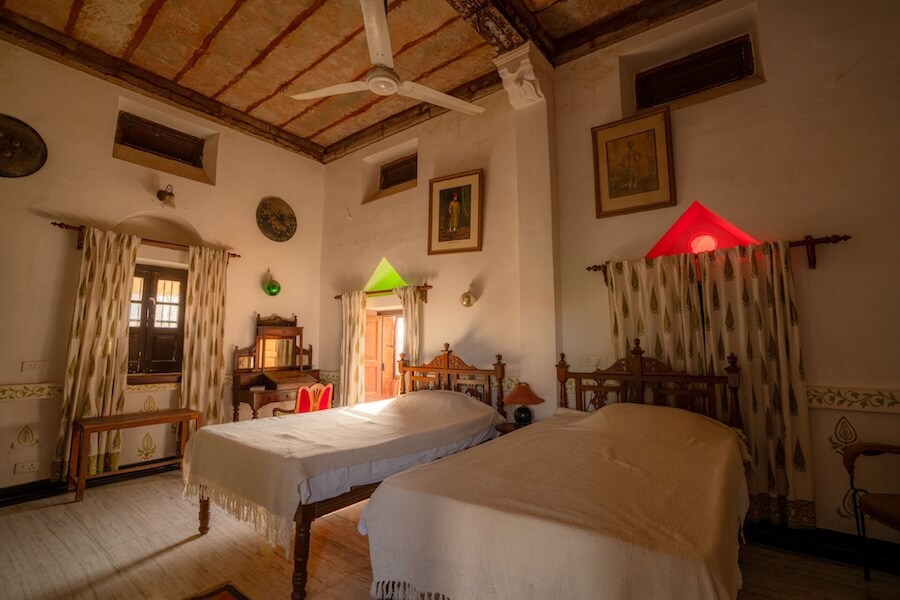
Forty kilometres from Jodhpur, in a village almost entirely off the tourist map is Chandelao Garh. Built in 1744 as the ancestral seat of the Thakurs of Chandelao, the fortress-style red sandstone property has been in the same family for sixteen generations. The current owner, Thakur Praduman Singh, the 16th Thakur of the line, manages the property himself with his son and daughter-in-law, and his presence lends a warmth and authenticity that larger properties sometimes lack.
The 23 rooms range from simple doubles to more spacious suites, all decorated with period furniture and arranged around a colonnaded sandstone courtyard. Evenings are spent on the terrace with a drink from the stocked bar and dinner of traditional Rajasthani cooking, food that reflects the cuisine of this specific region. Breakfast is made to order with ingredients from the organic garden. The surrounding village rewards exploration: potters, weavers, and dusty lanes where peacocks perch on walls and children play cricket. The Sunder Rang craft centre, directly adjacent to the property, is worth an hour of any itinerary.
Why it's responsible: Chandelao Garh is a pioneer of community-based tourism in Rajasthan. The adjacent Sunder Rang craft centre, founded in 2007, employs women from the village and surrounding area to produce high-quality textiles and handicrafts using traditional Rajasthani techniques and providing a sustainable income for women with otherwise limited options. A solar-powered computer centre on site is free to all children in the village, with subsidised educational programmes (free for girls, discounted for boys) designed to address inequality in local access to education. Around 70 per cent of grey water is recycled, rainwater harvesting supports both the building and neighbouring villagers, and approximately 80 per cent of staff are from the local community.
_From approx. £55 per night
Ramathra Fort, a heritage fort homestay in Karauli, Eastern Rajasthan
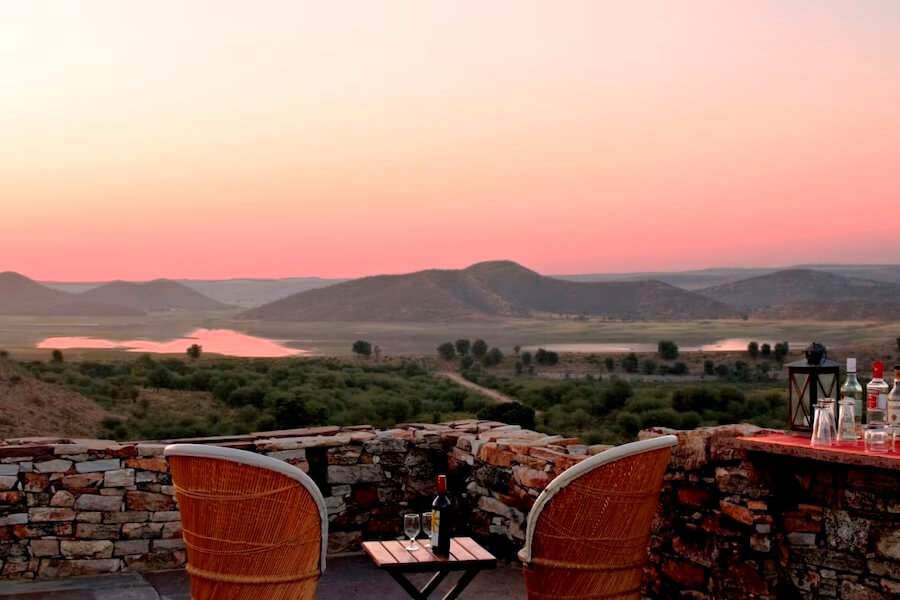
Ramathra Fort sits in one of Rajasthan's least-visited corners above Kalisil Lake near the town of Karauli, a region closer in landscape and atmosphere to Madhya Pradesh than to the tourist circuit of western Rajasthan. The fort was granted as a fiefdom in 1645 to Thakur Bhoj Pal by the Maharaja of Karauli, and the current owners, Ravi Raj Pal and Gitanjali, are direct descendants. They live at the fort for much of the year and manage every aspect of the stay, giving Ramathra the intimate quality of staying with an exceptionally well-connected family in an extraordinary home.
Accommodation spans six rooms and suites in the restored palace, plus tented options. The setting is striking: wide ramparts overlooking forested hills, farmland, and the lake below. One of the turrets has been converted into a jacuzzi, arguably the best sunset spot in eastern Rajasthan. Activities include night safaris (jackals, foxes, hyenas, and occasional leopard have all been spotted), boat trips and kayaking on the lake, village walks, bird watching, and treks into the Chambal ravines. The fort sits midway between Ranthambore and Keoladeo Bird Sanctuary, making it an ideal stop on a wildlife-focused Rajasthan itinerary.
Why it's responsible: Owned by the same family for over ten generations, Ramathra has been restored using local materials and traditional artisan techniques, with antique furniture throughout. Single-use plastic is banned, grey water is recycled, solar water heaters and energy-efficient lighting are standard. The fort received the District Level Wildlife Conservation Award in 2022 for its habitat restoration work. Staff are drawn from the local community and trained in hospitality; vegetables are grown on-site or sourced from nearby farms. Guests are invited to support a village school and local medical dispensary through guest contributions.
From approx. £160 per night
Savista Retreat, an eco heritage mansion retreat in Sanjharia village, near Jaipur
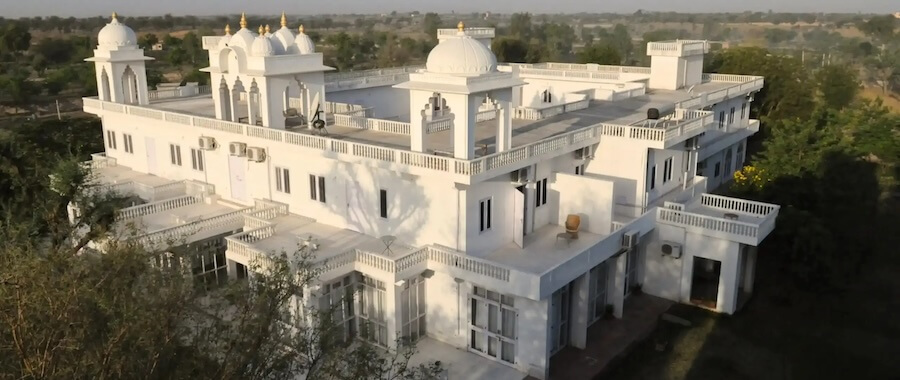
Twenty-two kilometres from Jaipur on the Ajmer road, the white walls of Savista Retreat rise from farmland, orchards, and gardens. This is a restored Rajput haveli, a courtyard mansion, set on a 12-acre estate and designed around the principle that luxury and ecological responsibility are not opposites. The 12 rooms are decorated with hand-crafted Rajasthani furniture, antique textiles, and individual colour schemes, each named for a plant or natural element. The central courtyard pool is chemical-free. The grounds contain a library, sauna, tennis court, and walking trails through kitchen gardens and fields.
Food is entirely vegetarian, grown on the estate without pesticides or chemical fertilisers, and cooked in a home style that reflects the traditions of this corner of Rajasthan. Drinking water is drawn from the property's own deep bore wells. Savista works well as a base for exploring Jaipur (30 minutes away) while retreating each evening to clean air, quiet, and a functioning small farm. Block printing workshops in nearby Bagru, cycling in the countryside, and visits to heritage sites around Jaipur are all available through the property.
Why it's responsible: Savista was restored using local, environment-friendly materials and traditional masonry expertise. The property runs on solar power, operates water recycling and rainwater harvesting systems, and reuses pool water for irrigation. All staff are local, with a particular emphasis on employing women. The estate grows indigenous varieties of grasses, crops, and trees, and is actively integrated with the surrounding village through produce-sharing and cultural engagement. Founder Dr Bhanwar Rishyasringa has described sustainability and community as inseparable from the property's reason for existing.
From approx. £80 per night
Chanoud Garh, a heritage palace homestay between Jodhpur and Udaipur, Pali District
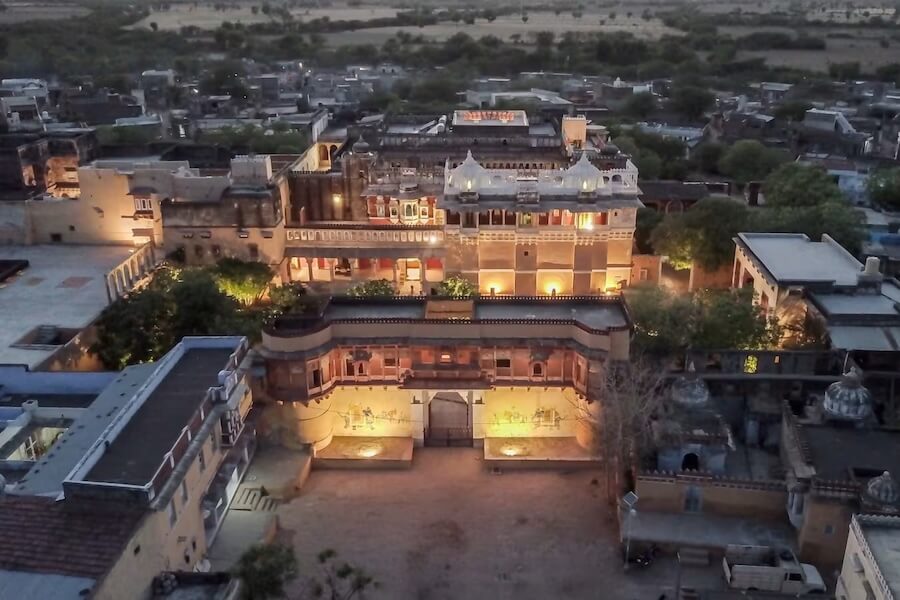
Chanoud Garh describes itself, accurately, as 'a homestay where the home is a 300-year-old palace.' Set in a small village between Jodhpur and Udaipur, this seven-suite property has been in the same Rajput family for thirteen generations and is still managed by the royal family itself. The interiors, containing marble-pillared corridors, stone jharokhas (carved window balconies) and expansive courtyards, have been meticulously renovated to retain their original character while providing modern comfort. Parrots and peacocks share the lawns.
Guest numbers are kept deliberately small, creating an atmosphere of genuine intimacy. The food draws on the culinary traditions of the Godwar region, a distinct subset of Rajasthani cooking that most visitors to Jaipur or Jodhpur never encounter. Outside the property, guided walks to the Chanoud salt flats, sunrise boats on the nearby lake, and visits to Rabari encampments offer a flavour of rural life that is entirely unscripted. The property makes an excellent overnight between Jodhpur and Udaipur for travellers wanting to spend a night somewhere that is not a tourist destination.
Why it's responsible: The property's small scale means tourism income flows directly to the family and community rather than into corporate structures. Local staff are employed across all operations, local produce fills the kitchen, and the family's stewardship of the heritage building preserves architecture that would otherwise face slow decay. The rural location, between two of Rajasthan's major tourist hubs yet known to very few international visitors, distributes economic benefit to an area that rarely sees it.
From approx. £110 per night
Khem Villas, a green jungle camp next to Ranthambore National Park
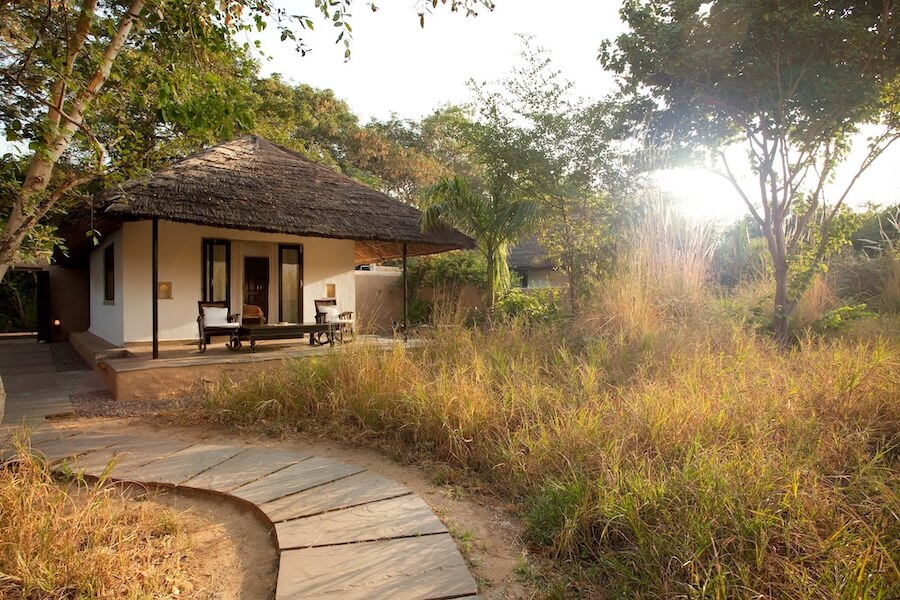
Khem Villas began in 1989 as barren grassland on the boundary of what would become Ranthambore National Park. Over 35 years, the Rathore family, whose patriarch Fateh Singh Rathore was one of the founding fathers of the park, have nurtured those acres into a dense, diverse habitat of indigenous trees, small water bodies, and grassland that now functions as a natural extension of the reserve. Jackals, jungle cats, hyenas, desert fox, and crocodiles all move through the grounds and a pair of resident crocodiles in the small lake are a fixture of the view from morning breakfast.
Accommodation spans eight cottages, seven safari-style tents, and four rooms, all thatched, teak-furnished, and built to merge with the landscape. The private villas, elevated above the grassland with open jacuzzis overlooking the hills, are the standout option. Food is entirely vegetarian and grown in the camp's own gardens. Evenings gather around the campfire, where owner Goverdhan Rathore holds court with stories of the tigers of Ranthambore that are worth the trip on their own. Morning and evening jeep safaris into the park operate directly from the property; the camp is 4km from the park gate, as close to the action as anywhere in Ranthambore.
Why it's responsible: Conservation and community are inseparable at Khem Villas. A seedling nursery on site distributes over 50,000 saplings of indigenous tree species annually to local farmers, providing alternative fuel wood sources that reduce pressure on the park. A biogas project converts cow dung from surrounding villages into methane energy. An employment programme for local women reduces economic dependency on the park, a key driver of poaching. The property also supports Tiger Watch, the conservation organisation founded by Fateh Singh Rathore, which works to monitor and protect the park's tigers.
From approx. £150 per night
SUJÁN Sher Bagh, a luxury tented camp near Ranthambore National Park
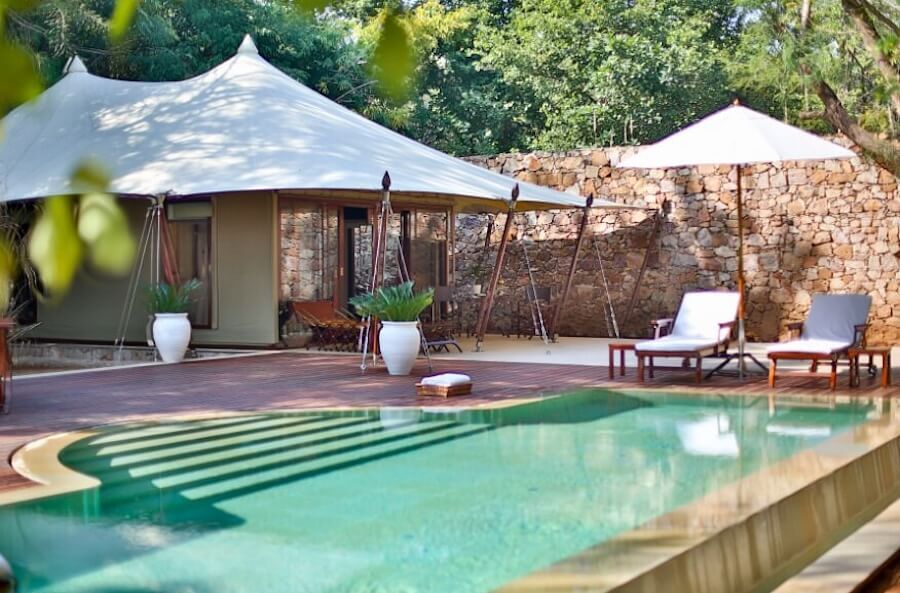
Built in 2000 by a family of wildlife filmmakers, SUJÁN Sher Bagh was among India's first luxury tented camps and remains one of its finest. Set on the boundary of Ranthambore National Park, the twelve hand-stitched canvas tents evoke the grand safari encampments of the 1920s, rosewood campaign furniture, brass bathtubs, stone showers, and private verandas looking into the forest. Two suites stand apart from the rest: the Royal Sher Suite, with its own heated plunge pool, outdoor fireplace, and tree shower, and the Imperial Raj Bagh Suite, a two-bedroom arrangement with a sweeping pool deck and uninterrupted views of the reserve.
The food here draws on the property's own organic kitchen garden, farm, and dairy, with menus changing daily and dinners cooked in outdoor clay ovens in the Anglo-Indian tradition. The guides and naturalists have a combined experience exceeding 150 years in Ranthambore specifically, and the tiger sighting record is among the best of any camp in the area. Membership of Relais & Châteaux, a spot in the Tatler 101 Best Spas, and three Michelin Keys confirm the standard. The camp operates seasonally: open from October to mid-May.
Why it's responsible: SUJÁN Sher Bagh has contributed over USD 2.1 million to Ranthambore National Park through gate receipts since opening. The group has adopted schools across Rajasthan, providing additional teaching staff and improving sanitation facilities. It supports Dastkar Ranthambore, a non-profit founded in 1989 that empowers women from park-boundary villages through sustainable craft production. The organic farm-to-table kitchen operates with zero compromise: all produce is grown or sourced locally, and menus celebrate regional culinary traditions.
From approx. £700 per night, all-inclusive
Brij Lakshman Sagar, a heritage eco lodge in Pali, between Jodhpur and Ajmer
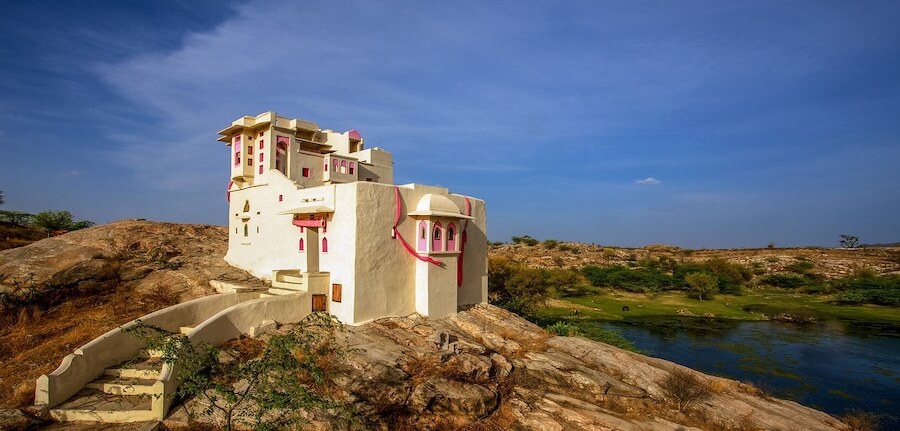
Originally built in the late nineteenth century as a hunting lodge by the Thakur of Raipur, Brij Lakshman Sagar sits on 32 acres of Aravalli landscape in the Pali district, an area that most Rajasthan itineraries bypass entirely. The 12 individual cottages are arranged around a large man-made lake, built using locally sourced stone, wood, and mud, with henna stems thatching the roofs for natural insulation. Each cottage has a private plunge pool. The property's centrepiece is a swimming pool hand-carved from a single monolithic rock by thirty-six craftsmen over six months.
Food follows a genuine zero-kilometre philosophy: the organic kitchen garden produces vegetables, herbs, and fruit, straws come from papaya and bamboo grown on site and restaurant lighting uses recycled milk cans. Menus reflect the traditional cuisine of the Raipur family and neighbouring villages, including hunting recipes passed down across generations. Guests can walk with naturalists through the surrounding scrub jungle, which is extraordinarily bird-rich, attend folk music evenings with local musicians, take pottery and spice-mixing lessons, or canoe on the lake.
Why it's responsible: Brij Lakshman Sagar operates on what it calls 'zero-kilometre design'. Every material, from stone washbasins to roof thatch, is sourced from the surrounding landscape. The resort is solar-powered, all waste is composted or recycled and there are no single-use plastics on the property. Ongoing reforestation projects, birdhouses, butterfly gardens, and native seed banks address the ecology of the Aravalli Hills. A cultural exchange programme connects guests directly with traditional crafts, folk music, and the communities that maintain them, channelling tourism revenue into local livelihoods.
From approx. £190 per night
Mihir Garh, a luxury fortress in the Thar Desert, near Jodhpur
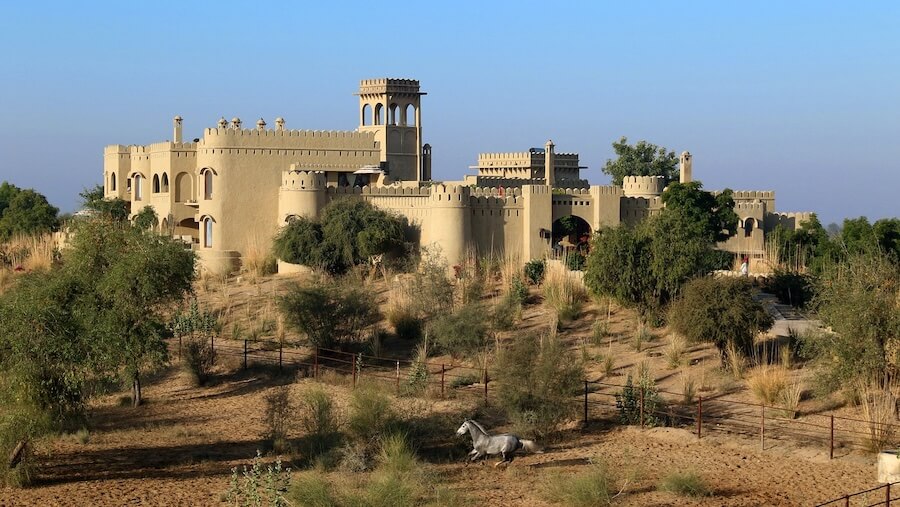
'Fort of the Sun' is the literal translation of Mihir Garh, and it earns the name. Built in the early twenty-first century by Thakur Sidharth Singh, the 14th Thakur of Rohet, on a sacred dune in the Thar Desert, this nine-suite boutique fortress looks as though it has stood for centuries. More than 100 local artisans and craftsmen contributed to the build. Fireplaces in every suite were made by women from neighbouring villages. All nine suites exceed 1,700 square feet, each with private plunge pool or jacuzzi, making Mihir Garh genuinely one of the most luxurious small hotels in India.
The equestrian programme is exceptional. The House of Rohet maintains what is widely regarded as the finest stable of Marwari horses in India, a breed known for its beauty, endurance, and distinctive inward-turning ear tips, and riding safaris through the surrounding villages, salt flats, and scrubland are the defining Mihir Garh experience. The desert around the property is richer in wildlife than its appearance suggests: black buck, blue bull antelope, chinkara, and over 200 bird species have all been recorded. Jodhpur is 40 minutes away for those who want the city's fort and markets.
Why it's responsible: Mihir Garh is eco-friendly by design: rainwater is harvested, grey water is recycled for the gardens, and solar panels provide electricity throughout. The Village Welfare Fund invites guests to donate to community projects; the property has helped build school infrastructure, installed cisterns for clean water in local villages, and runs educational medical camps covering ophthalmology, epilepsy, and women's health. Mihir Garh plays an active role in the Marwari Horse Society, working to conserve an indigenous breed under increasing pressure.
From approx. £320 per night
RAAS Jodhpur, a boutique luxury hotel in Jodhpur 's Old City
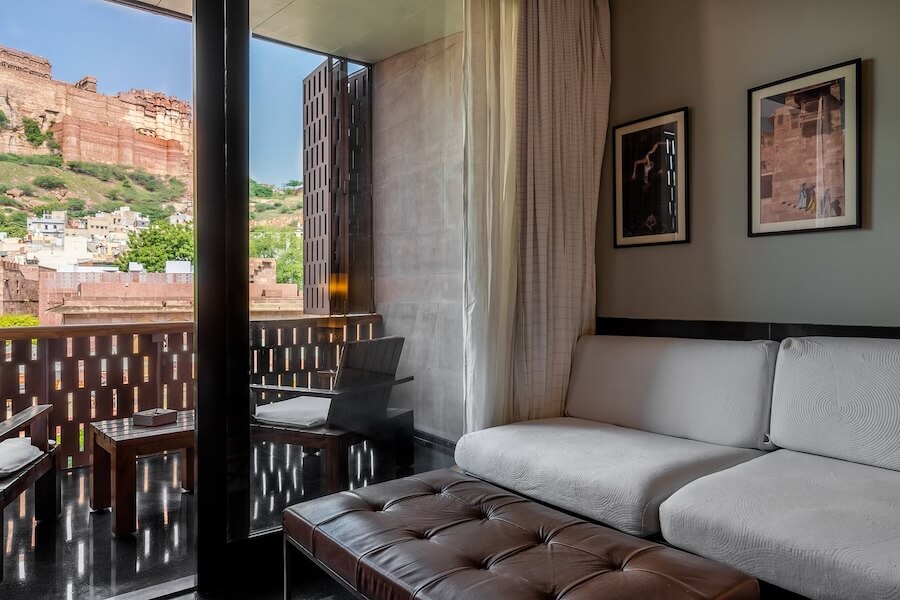
In the shadow of Mehrangarh Fort, in the narrow lanes of Jodhpur's old walled city, RAAS occupies a restored 18th-century haveli expanded with contemporary buildings using Jodhpur's own red sandstone. Traditional carved latticing and geometric patterns are applied to modern spaces, with 40 rooms that combine the bones of a Rajput mansion with the precision of contemporary design. Most rooms have fort views; the heated pool, lined with cabanas, is the social heart of the property; the two restaurants, Darikhana, upstairs with fort views, and Baradari, poolside, cover regional Indian and international cooking with equal competence.
RAAS also undertook the restoration of the adjacent 18th-century Toorji Ka Jhalra stepwell, a three-year project that returned a beautiful historic water body to Jodhpur, stimulated a small economy of rooftop cafes around it, and created a cultural events space used by the city's residents throughout the year. It is a significant act of heritage stewardship by a private company, and one of the more visible examples of hotel-led community benefit in Rajasthan. The stepwell now draws visitors in its own right.
Why it's responsible: RAAS sources 70 per cent of materials and labour from within a 30km radius of each hotel. Water is heated by solar power and air-conditioning runs on a Platinum LEED-rated system. Single-use plastic has been absent from all RAAS properties since 2016. Each hotel maintains its own kitchen garden and produce not grown on site is sourced locally. Staff salaries and local business spending channel revenue directly into the surrounding economies. The Toorji Ka Jhalra stepwell restoration is the group's most visible contribution to Jodhpur's heritage and civic life.
From approx. £190 per night
SUJÁN Jawai, a luxury wilderness camp in the Jawai Hills, between Jodhpur and Udaipur
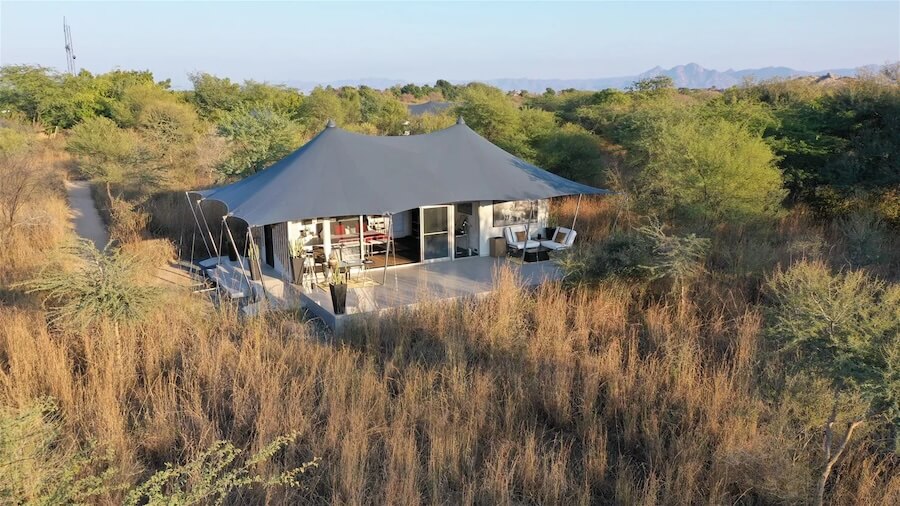
Jawai is one of India's most distinctive wildlife landscapes: ancient granite outcrops, shallow rivers, and agricultural land where leopards and Rabari herdsmen have co-existed for centuries. The cats are semi-habituated to human presence, and the sighting rate here is extraordinary; this is among the most reliable leopard destinations in the world. SUJÁN Jawai is the most refined camp in the area, with ten tents set among granite boulders and riverbeds, each positioned to make the most of the light at dawn and dusk.
Twice-daily wilderness drives cover the granite hills and river valleys, with guides expert at reading both the landscape and the cats' movement. Beyond leopards, the Jawai reservoir supports over 245 bird species, including flamingos, demoiselle cranes, bar-headed geese, and rare raptors, and the area is dotted with ancient temples that the Rabari consider sacred. Marwari horse safaris, guided birdwatching expeditions, and visits to Rabari communities are also available. The camp's organic garden and dairy supply food that matches the quality of the best properties in the SUJÁN portfolio.
Why it's responsible: The leopard population of Jawai owes its survival to the Rabari community's refusal to persecute the cats despite livestock losses, a cultural relationship with wildlife that responsible tourism here reinforces economically. SUJÁN's community visits are part of every guest itinerary, with proceeds supporting village welfare projects. The camp's naturalists contribute to conservation monitoring across the region. The group adopts schools throughout Rajasthan and supports environmental education and sanitation programmes in all communities around its properties.
From approx. £600 per night, all-inclusive
Dev Shree, a heritage family homestay in Deogarh, Aravalli Hills
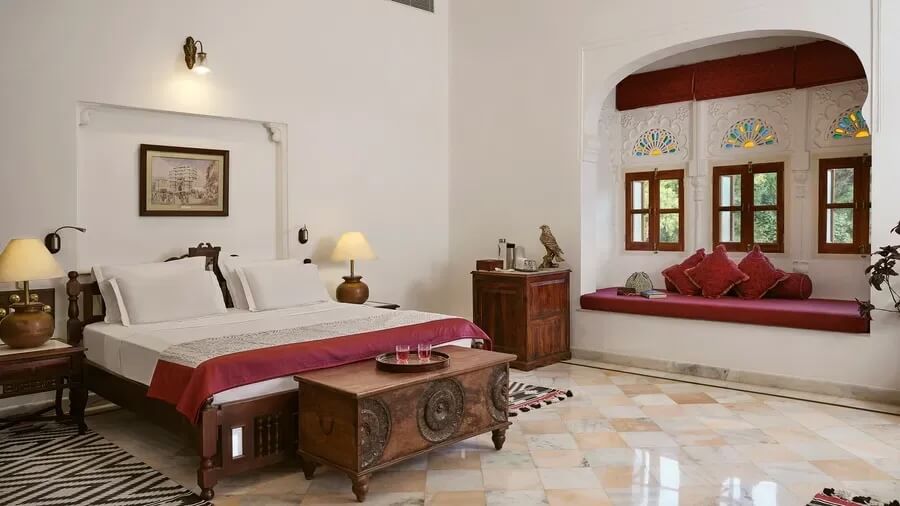
Deogarh is a small Aravalli hill town whose magnificent hilltop palace draws the occasional passing visitor but whose surrounding countryside, lakes, ancient step wells, temples, forested ridges, remains almost entirely untoured. Dev Shree is the personal residence of the scion of the Deogarh family, run as an intimate heritage guesthouse with a lack of commercial gloss that is entirely in keeping with this unhurried corner of Rajasthan. Food is cooked by the family's own cooks using grain and produce from the family farms. The watery setting, looking across Ragho Sagar Lake, is genuinely beautiful.
Deogarh town itself is well worth exploring. Medieval temples, painted havelis, and the main Deogarh Palace (a separately run heritage hotel) provide architectural interest. The surrounding Aravalli landscape offers cycling, horse riding, and birdwatching through terrain very different from the desert areas to the west.
Why it's responsible: Dev Shree's community investment is extensive and long-standing. The property's charitable trust supports 40 schools, providing educational resources to approximately 3,000 children. A girls' school in Deogarh was built with over 60 per cent of its construction costs funded by the property, in collaboration with a Swedish architectural firm and the Ottakars Foundation (UK). All food comes from the family's own farms, staff are local, and the heritage building is maintained as a living cultural asset rather than a museum piece.
From approx. £65 per night
Rawla Bisalpur, a heritage rural manor near Pali
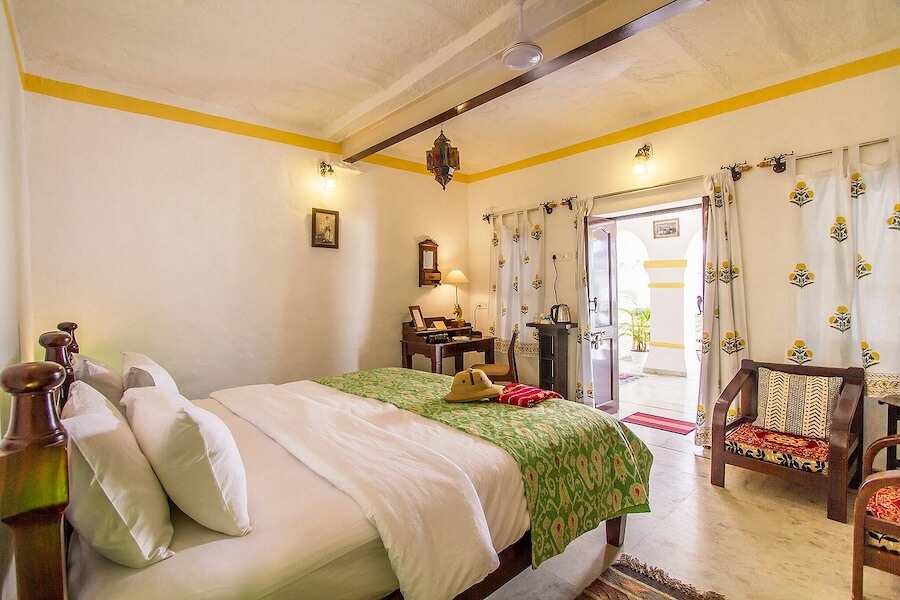
Rawla Bisalpur is a working heritage homestead in the Pali district, a fortified manor house whose family still farms the surrounding land and manages the property. Guests stay in restored rooms within the rawla, surrounded by agricultural fields and within easy reach of the Jawai hills to the south and the Brij Lakshman Sagar estate to the east. The appeal here is the local environment: village walks, farm activities, and interactions with the family and community give stays a genuinely welcoming feel that hotels, however excellent, cannot easily offer. Rawla Bisalpur works particularly well in combination with the Jawai camps, two or three nights here, arriving from Jodhpur or Udaipur and departing for the leopard country.
Why it's responsible: As a family-run heritage property in a region with minimal tourism infrastructure, Rawla Bisalpur channels every rupee of revenue directly into the family and immediate community. Local produce and local staff are givens and the maintenance of the heritage building preserves vernacular architecture that would otherwise decay. The family's continued presence on the land, farming and managing the estate as they have for generations, makes this a real community-rooted experience.
From approx. £70 per night
Castle Khandela, a heritage palace in Khandela, Shekhawati
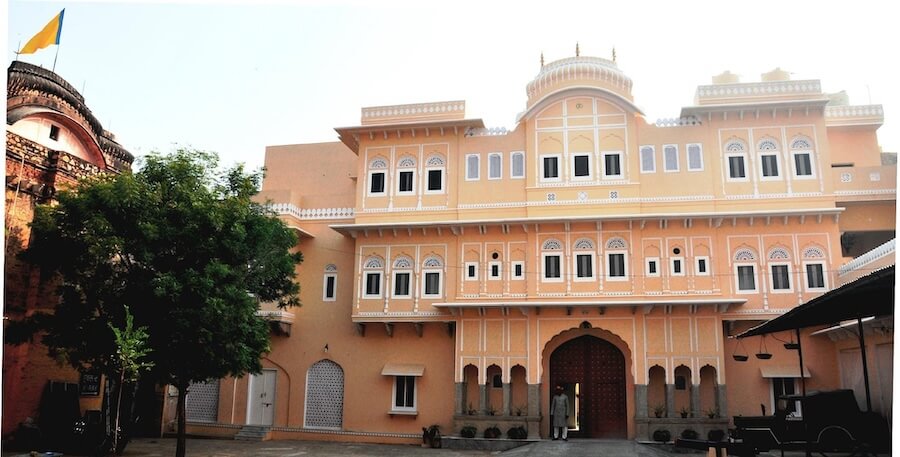
The town of Khandela, in the Shekhawati region north of Jaipur, was a prosperous trading centre for several centuries, and the frescoed havelis whose painted ceilings survive here, depicting mythological scenes, early trains, and colonial encounters, are some of the most extraordinary examples of folk art in India. Castle Khandela was the palace of the rulers of Khandela for some 500 years and is now run as a heritage hotel by a direct descendant of those rulers. The 17 rooms retain period antiques and original architectural details, and meals are served in the traditional thikana style of the royal kitchen, using heirloom recipes. Khandela is primarily a base for exploring Shekhawati's extraordinary legacy of painted architecture. The towns of Nawalgarh, Mandawa, Fatehpur, and Jhunjhunu, each with their own concentration of frescoed buildings, are all within range.
Why it's responsible: The owner, Dr Raisal Singh, runs a free hospital adjacent to the castle, an act of community investment in a town with limited healthcare provision. The heritage preservation of a 500-year-old royal building is in itself an act of cultural responsibility. Without family-managed heritage hotels like this one, many such properties would face neglect or inappropriate redevelopment. Local staff, local produce, and accessible pricing make the property available to a wide range of travellers.
From approx. £50 per night
Anopura, a farm eco retreat on the outskirts of Jaipur
Opened in 2012, Anopura is a 14-room retreat on 60 acres of farmland on the outskirts of Jaipur, designed from the ground up around sustainability principles. The architecture prioritises natural light and cross-ventilation, private pool villas offer seclusion, and farm-to-table dining under the stars, using produce grown on the estate, comes as standard. The property is an excellent base for exploring Jaipur's monuments while sleeping in substantially cleaner air and quieter nights than the city itself can offer.
Guests can join organic farming and pottery workshops, explore guided nature trails through the estate and the adjoining Aravalli slopes, or simply spend time in a working rural landscape on the fringes of a rapidly expanding city. The naturalists and guides here are knowledgeable about the specific ecology of the Aravalli foothills, which hosts more biodiversity than its scrubby appearance suggests.
Why it's responsible: Anopura has planted over 5,000 trees and actively seeds native species across the Aravalli slopes, a meaningful conservation contribution to a mountain range that has lost significant forest cover in recent decades. Single-use plastic is eliminated through an in-house RO water system and all waste is recycled and composted. Eighty per cent of the 44-person team are drawn from nearby villages, ensuring economic benefits remain local. The property was recognised at the Indian Responsible Tourism State Awards in 2025.
From approx. £100 per night
Bera Safari Lodge, a wildlife safari camp in Jawai, near Bera village
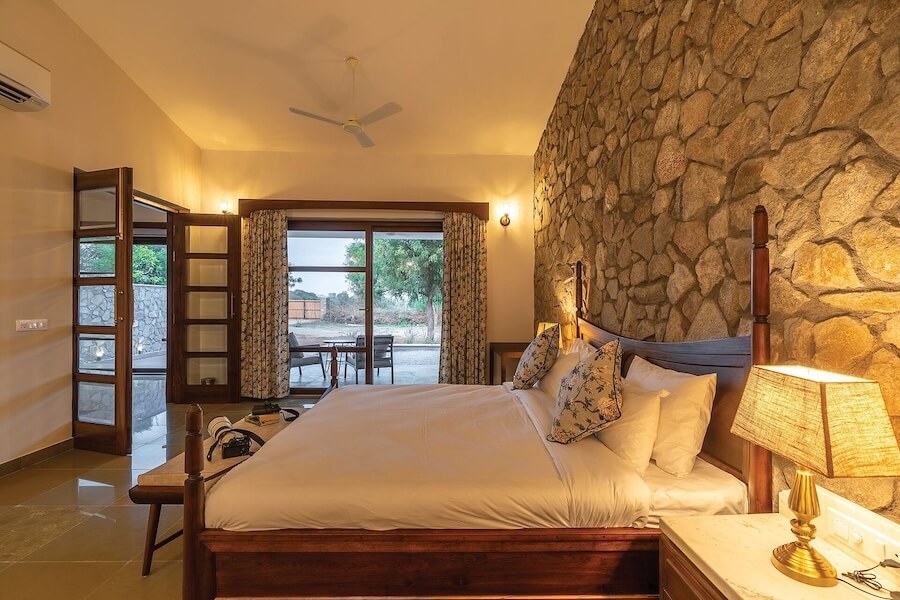
For travellers drawn to the leopards of Jawai who prefer a locally-run, less polished experience than the luxury camps offer, Bera Safari Lodge provides a direct and unpretentious alternative. Set among the granite hills with its own 4×4 vehicles and guides who know the landscape with the intimacy of people raised within it, the lodge offers the same wildlife corridors as its more expensive neighbours at a fraction of the cost. Tents are comfortable, food is locally produced and wildlife experiences are excellent. At this price point, the cultural dimension of Jawai is more directly accessible too. Village safaris, walks through pastoral fields alongside Rabari herdsmen tending their flocks, and encounters with the tribal communities whose relationship with the leopards here is foundational to their survival.
Why it's responsible: The Jawai leopard population's survival depends primarily on the Rabari community's extraordinary willingness to tolerate big cats despite livestock losses, a cultural practice sustained in part by the economic alternatives that tourism provides. Community-focused camps like Bera Safari Lodge reinforce the economic case for that tolerance, ensuring that both wildlife and local people benefit from the presence of visitors. Local staff, local food, and direct financial flows into the community are consistent practices.
From approx. £60 per night
RAAS Chhatrasagar, a luxury tented camp in Nimaj, Pali District
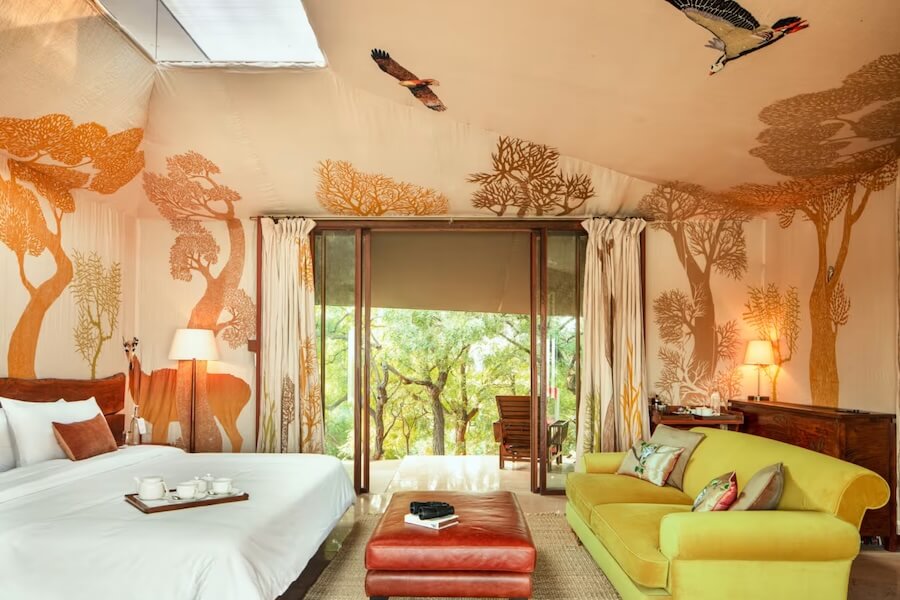
The Chhatrasagar dam was built in 1890 by Thakur Chattra Singhji of Nimaj to transform the dry scrublands of the Pali district into productive agricultural land. His great-grandchildren restored the site in 1999, pitching the first canvas tents on the dam walls in an act that felt then, and still feels now, rather inspired. The camp sits on 1,500 acres of grassland and lake edge midway between Jodhpur and Jaipur, in a part of Rajasthan that almost nobody passes through unless they are specifically looking to. The 20 tents perch directly on the dam's edge, looking out across the reservoir, each with a private veranda, skylight, plus beautiful morning light that makes getting up early feel worthwhile.
The design is contemporary rather than heritage with muted colours, Jodhpur stone, teak furniture, block-printed textiles, and the camp is one of very few in India to operate year-round. Over 250 bird species have been recorded here, and the dawn boat rides with the camp's resident ornithologist are exceptional. An astronomer leads evening stargazing sessions, there is a heated pool, a spa, and a baradari dining pavilion where menus built from the camp's own organic garden and locally-sourced produce have attracted consistent praise. It works well as a stop between Jodhpur and Jaipur, or paired with the Jawai leopard camps to the south.
Why it's responsible: The camp employs staff almost entirely from the surrounding villages, with local knowledge central to the wildlife and cultural programming. Guests are invited on farm visits and village walks to meet the farming communities whose livelihoods the dam was originally built to support. All cooking uses family recipes and locally sourced ingredients. The RAAS group's wider sustainability practices, zero single-use plastic, solar water heating, and direct community investment, apply here as at all their properties, and the rewilding of the surrounding grassland since the land was retired from cultivation in the early 2000s has been one of the more significant conservation acts in this part of Rajasthan.
From approx. £300 per night, all-inclusive
Rohet Garh, a heritage fort hotel in Rohet village, near Jodhpur
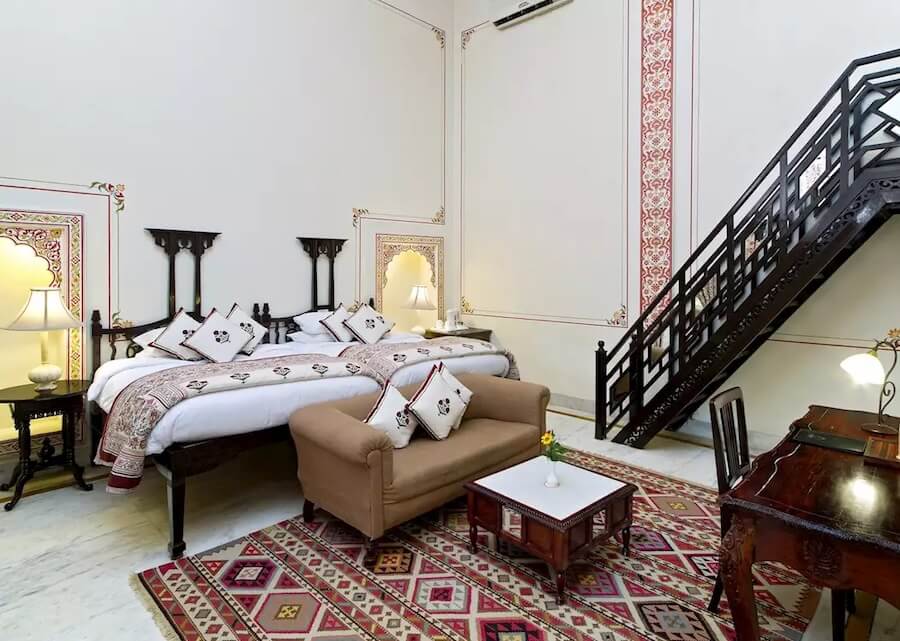
About 45 minutes south of Jodhpur, in the village of Rohet, the same family that built Mihir Garh has been running this 17th-century fort as a heritage hotel since the 1990s, making it one of the longer-standing operations of its kind in Rajasthan. The fort sits on the banks of a small lake. The 32 rooms are decorated with antique furniture, carpets, and murals that reflect the particular history and tastes of a family that still lives here.
The family's devotion to horses runs through everything. Their stable of Marwari horses, the indigenous desert breed, raised by the Rajput warriors of Marwar for centuries, known for their beauty and their distinctive inward-curling ears, is among the finest in India, and riding safaris through the surrounding countryside are the defining Rohet experience. The village safari programme, which takes guests into nearby Bishnoi settlements to meet communities that have protected wildlife and trees as a matter of religious conviction for over five centuries, has been running since the early days of the property and remains one of the best of its kind in Rajasthan. The cooking workshops, drawing on recipes from a small cookbook written by the late Thakurani Sahiba, are a highlight for those interested in traditional Rajasthani food.
Why it's responsible: All food is sourced from local farmers in the surrounding Jodhpur and Pali districts, and grey water is reused in the gardens. The Marwari horse conservation programme, run jointly with Mihir Garh, is one of the most active private efforts to preserve a breed that has faced serious pressure in the modern era. The Bishnoi village safari brings direct economic benefit to communities visited rather than treating them as a spectacle.
From approx. £90 per night
Utsav Camp, an eco wilderness camp in Tehla, near Sariska Tiger Reserve
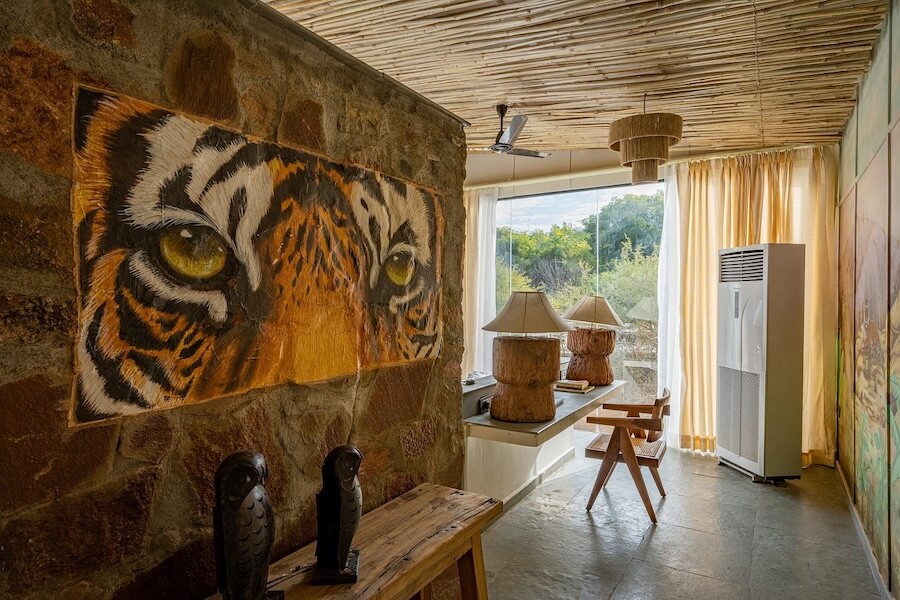
Tucked into the Aravalli foothills near the village of Tehla, on the southern edge of Sariska Tiger Reserve, Utsav Camp was developed over many years by its founder, naturalist Luv Shekhawat, and opened in stages from 2011. The design brief was literal: bring the outdoors in. Stone cottages and canvas tents are positioned to preserve existing trees, several grow between the structures, and the earthy palette of ochre, stone, and rust means the buildings sit within the landscape. Floor-to-ceiling windows frame the Aravalli boulder scenery from every room, rooftop daybeds are set up for stargazing and a rooftop pool looks out across the hills.
Activities centre on the surrounding wilderness. Morning jeep safaris into Sariska offer the chance to see tigers, leopards, and the reserve's substantial population of sambar deer and langur monkeys. Naturalist-led walks through the Aravalli boulderscape, ancient granite formations, deciduous forest, and open scrub, cover birdlife, track identification, and the specific ecology of a range that most visitors to Rajasthan never reach. Over 220 bird species have been recorded in the area. Evenings gather around campfires under skies with minimal light pollution; the kitchen's zero-mile approach produces menus built around the organic garden, a resident dairy herd, and locally-sourced produce.
Why it's responsible: Over 85 percent of the team are from Tehla and surrounding villages. Solar panels reduce carbon emissions substantially, all bio-waste is converted into compost via a vermicompost system and water recycling is comprehensive. Camera traps around the property contribute long-term wildlife monitoring data to the Sariska ecosystem.
From approx. £120 per night
Planning your visit
The best time to visit Rajasthan is October to March, when temperatures are comfortable, the landscape is at its most vivid, and both wildlife parks and outdoor activities are fully operational. The tiger reserves and leopard areas are most productive from October through May, with Ranthambore's tigers most reliably visible in April and May when animals congregate around shrinking water sources. Most heritage properties reduce operations during the monsoon months of July to September, though some remain open at reduced rates, and a Rajasthan monsoon, while dramatically hot, has its own beauty.
Rajasthan is well-connected by rail. The network between Jaipur, Jodhpur, Udaipur, and Sawai Madhopur (for Ranthambore) is comfortable and efficient, and arriving by train rather than private car reduces both carbon impact and journey stress. Within the state, hiring a local driver through your accommodation keeps money within the community and gives access to a level of local knowledge that no guidebook provides.
For responsible travellers, a few principles apply consistently across Rajasthan: avoid riding animals for tourist purposes; do not purchase products made from wild animal parts; buy directly from artisan producers rather than intermediary shops where margins go elsewhere; and contribute to community funds or charity projects recommended by your hosts rather than giving cash to individuals in the street, where the economic benefit is both unpredictable and often smaller than it appears.

Poste restante
Greater escapes in your inbox
New stays, thoughtful stories and travel ideas. Unsubscribe whenever.