
Inside the world’s first whole life net zero hotel
Founded on the 'five Rs of zero waste,' this west London hotel claims to be 89% more energy efficient than the industry average, with every plastic bottle, paper form and food scrap engineered out of the guest experience.
A collection of crisp, white towels sit neatly folded in the bathroom, a tiny bar of wrapped soap lies on the sink, two complimentary plastic bottles of water chill in the minibar. This is the familiar scene of a hotel room, but these conveniences leave a trail of waste and likely end up in landfill. The countless sheets and towels, laundered daily with vast amounts of water and chemicals, are part of a system designed for an outdated concept of luxury.
But what if this comfort didn't come at an environmental cost? This question led to the creation of room2 Chiswick, a hotel that is attempting to achieve the seemingly impossible: a whole life net zero footprint. Said to be 89% more energy efficient than the average hotel, it’s a hopeful blueprint for a better kind of hospitality. room2 Chiswick has one single, radical goal in mind: zero waste.
The visionaries behind this revolution are the Laming brothers, Robert and Luke, co-founders of the Lamington Group. With a family history in property development, they saw an opportunity to disrupt the status quo and prove that a sustainable hotel could be commercially viable, and, in the process, inspire an entire industry to follow suit. Their aim was to create a place where every element, from the materials used in construction to the towels in the bathroom, was part of a meticulously planned circular economy.
A radical rethink of hospitality
The global hospitality industry is a significant contributor to environmental degradation. A 2017 study by the UN Environment Programme found that the hotel sector accounts for 1% of global emissions, and guests can generate 1.5 to 3 times more waste per day than a local resident. From single-use plastics in amenities to massive food waste from buffets and restaurants, the linear model of take, make and dispose is deeply embedded in hotel operations.
room2 Chiswick’s approach is a total overhaul based on the five Rs of zero waste: refuse, reduce, reuse, repurpose, and rot.
- Refuse: Saying no to single-use plastics, from water bottles to cling wrap in the kitchen.
- Reduce: Minimising consumption of energy, water, and materials through smart design and technology.
- Reuse: Opting for refillable dispensers, reusable containers, and long-lasting products.
- Repurpose: Finding new uses for old materials, such as turning discarded waste into energy.
- Rot: Composting all organic matter on-site.
This philosophy was not without its hurdles. The biggest challenge was disrupting a traditional, entrenched supply chain that is built for convenience. Finding suppliers who could provide cleaning products in bulk, or toiletries without individual plastic wrapping was a massive undertaking. Convincing staff to adopt new, often more labour-intensive habits was another. And most importantly, they had to design a system that felt easy and luxurious for guests rather than a chore.
The zero waste experience
The commitment to zero waste is evident from the moment you step through the door. The check-in process is entirely digital, eliminating the need for paper forms. Instead of a plastic key card, guests receive a digital key on their phone, or a key made from repurposed wood.
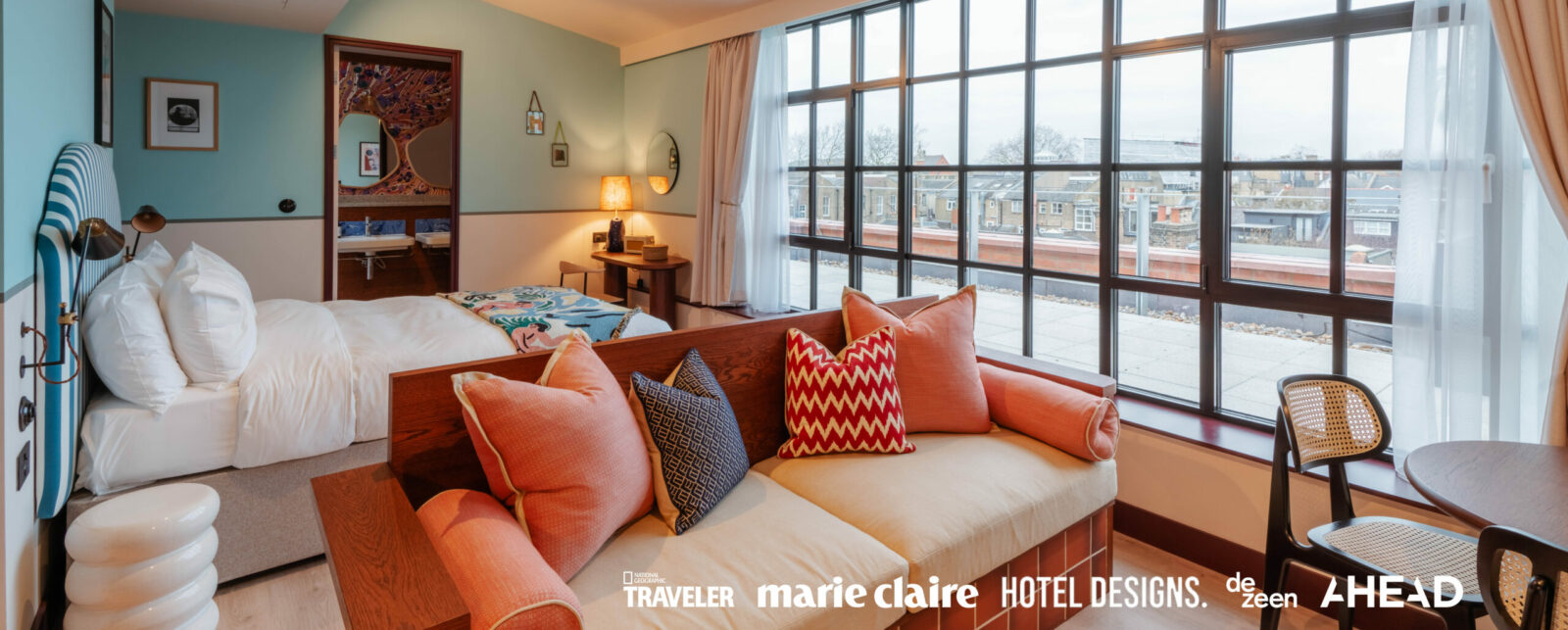
In rooms, the familiar sight of a collection of miniature plastic bottles is gone. In their place, elegant, branded ceramic dispensers are fixed to the shower wall, filled with vegan and locally sourced natural toiletries. The hand soap by the sink is a large, reusable bar. Even the toilet paper is made from recycled materials. The minibar is free of single-use items. Instead, glass bottles of locally brewed beer and snacks in reusable jars are found. Housekeeping staff use bulk-supplied, non-toxic cleaning products and reusable cloths. However, all this efficiency has not come at the expense of aesthetics. Walls are painted in soothing ochre and mustard yellow tones of low carbon clay paint. Roberts radios and rattan chairs create a homely feel and large crittall windows cast natural light throughout.
Behind the scenes room2 Chiswick has gone to extraordinary lengths to reduce its energy and water consumption. An intricate ground-source heat pump system draws warmth from 150 metres below the ground, heating and cooling the entire building and providing hot water. Solar panels on the roof generate additional energy. A custom water purification system has been installed for hotel laundry, and energy-efficient washers are used to dramatically reduce water usage. The hotel roof is covered in wildflowers and bees to increase biodiversity and help insulate the building.
The dining experience at room2 Chiswick is equally revolutionary. The kitchen operates with a whole food ethos, where every part of an ingredient is used to minimise waste. The menu is designed around seasonal, local produce to cut down on food miles. In the restaurant, you won’t find plastic straws, and napkins are made from recycled cotton. All food waste is carefully separated and then processed in an on-site composter, which turns it into nutrient-rich soil in under 24 hours. The landscaping on the hotel's grounds benefits from the composted food waste, creating a closed-loop system where the hotel's waste becomes its garden's nourishment. For guests who can't finish their meal, the humble doggy bag has been reinvented. Instead of flimsy plastic or styrofoam, room2 Chiswick provides reusable containers, encouraging a circular approach.
The business model and the broader impact
Is being this sustainable a good business model? The Laming Group would argue that it's the only viable model for the future. While the initial investment in technology like the ground-source heat pump and the on-site composter was significant, the long-term savings are substantial. They drastically reduce their utility bills, save money on waste disposal fees, and benefit from a powerful brand story that attracts a growing number of conscious travellers.
The success of room2 Chiswick has had a ripple effect. Its innovative supply chain has forced other companies to adapt, creating a market for sustainable products. Other hotels are following suit. The Zetter Townhouse in London has implemented a similar refillable toiletries system and has eliminated all single-use plastics. Soneva Fushi in the Maldives has been a pioneer in luxury sustainability for decades. Their waste-to-wealth programme is a masterclass in circular economy principles. Instead of simply recycling, they see waste as a valuable resource. All food scraps and organic matter are composted in a large-scale facility to create nutrient-rich soil for the island's extensive organic gardens, which in turn supply the resort's kitchens. The resort even has its own glass studio where they melt down bottles left by guests and locals to create beautiful, upcycled art and glassware for the villas and restaurants. This not only eliminates glass waste but also provides unique, handmade amenities that add to the guest experience. They've also implemented a plastic-free policy, bottling their own purified water in reusable glass bottles to prevent the use of an estimated 550,000 plastic bottles per year.
Ultimately, room2 Chiswick’s significance is not just in its technology but in its philosophy. For the Laming Group, luxury is not about endless, disposable convenience, it is about providing a guilt-free experience and a stay that aligns with a traveller’s values. As co-founder Robert Laming says: “We wanted to prove that you can be sustainable, you can be commercially viable, and you can give a great customer experience. This isn’t a niche. This is the future of hospitality.”


Poste restante
Greater escapes in your inbox
New stays, thoughtful stories and travel ideas. Unsubscribe whenever.