
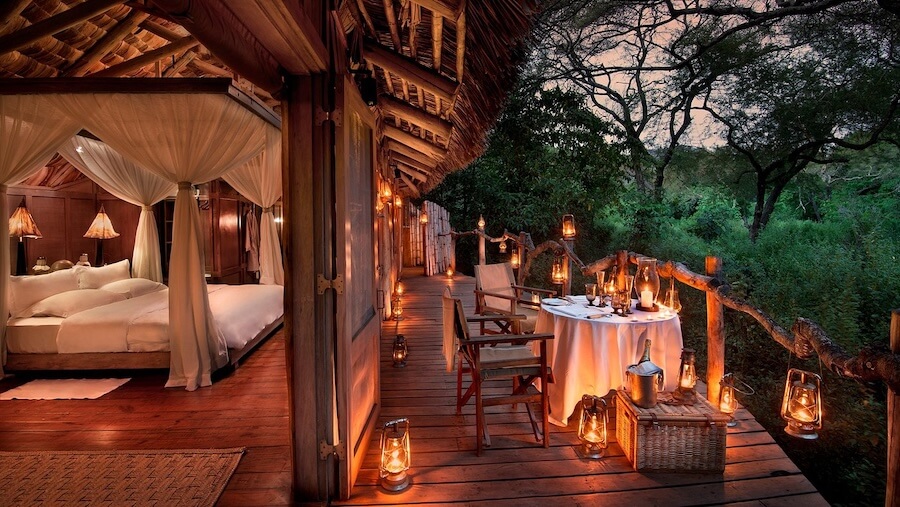
The best family safari lodges in Kenya and Tanzania
From rhino tracking on foot at Borana to a mobile camp that follows the Serengeti migration, here are 10 family-run lodges in Kenya and Tanzania that show that a family safari can be a winning experience.
Kenya and Tanzania share the greatest concentration of wildlife on earth, and between them they cover every landscape a family could want: the wide-open grasslands of the Maasai Mara and Serengeti, where the annual migration of two million wildebeest is still the most extraordinary natural event most people will ever witness, the ancient craters and highland forests of Ngorongoro and Laikipia and the dry acacia country of Samburu and Tarangire, home to species found nowhere else in Africa. The Maasai and Samburu peoples have lived alongside wildlife for centuries, and their knowledge of the land, how to read animal behaviour, navigate by stars, find water in a dry riverbed, makes them some of the finest guides in the world.
Both countries have also developed a generation of lodges that take families seriously as guests with specific needs. They feature interconnecting rooms, guides who slow down and explain, activities designed for short attention spans and high curiosity, and food that does not require an adventurous palate. The ten properties below, five in Kenya, five in Tanzania, have been chosen because they excel on rooms and unforgettable family activities as well as meaningful sustainability programmes and a warmth that makes even the smallest guest feel at home.
Kenya
Borana Lodge, Laikipia Plateau
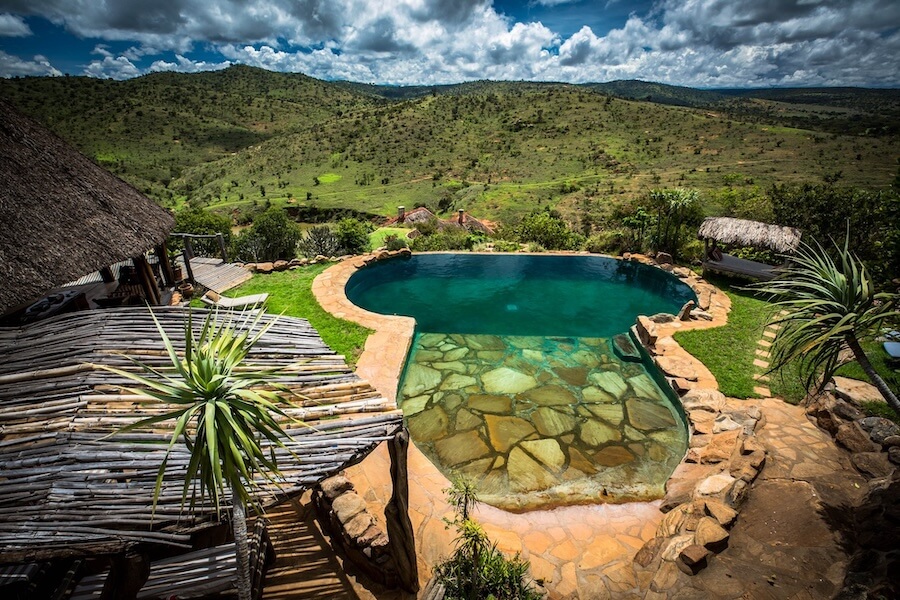
Borana's 10 stone-and-thatch cottages cling to a cedar-forested hillside above a private 35,000-acre conservancy, each one finished with handwoven textiles, local stone floors and a private veranda over the Laikipia plain. Cottages 7 and 8 are configured as family units, each with an interconnecting room, a plunge pool and views that stretch south all the way to Mount Kenya. The altitude keeps temperatures cool, and because Borana sits outside the traditional malaria belt, no prophylactics are required; a genuine relief for parents of young children.
Borana is best understood as a working conservancy that happens to run a lodge rather than the other way around. Rhino tracking on foot with armed conservancy rangers is an activity that no child forgets, while the Ngare Ndare Forest canopy walk, suspended 30 metres above an ancient groundwater forest, ending at a turquoise waterfall, will produce the sort of collective family memory that lasts a lifetime. Horseback safaris suit older children (minimum age eight), and the lodge's permaculture farm offers guided tours where younger guests can collect eggs, feed goats and learn where their supper comes from. There are no minimum age restrictions on game drives.
Borana is a certified Long Run Global Ecosphere Retreat and runs entirely on solar power with battery backup. The conservancy employs 125 rangers and has recorded zero poaching of rhino for more than six consecutive years. Ten local primary schools receive support through the Borana Community Trust, which also funds bursaries for university students from the surrounding Laikipia communities. Water from the lodge is gravity-fed, treated and recycled through the permaculture garden, and all single-use plastics have been removed from the operation.
From £600 per room per night
El Karama Lodge, Laikipia
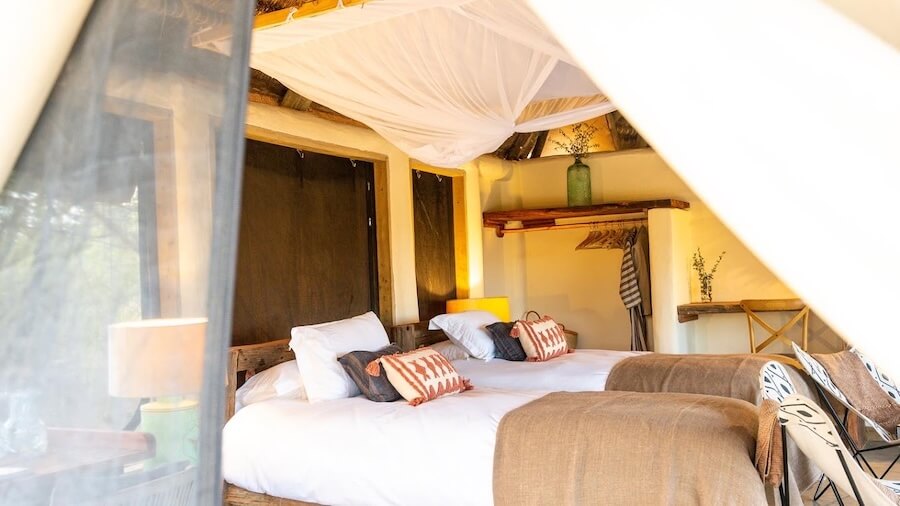
El Karama sits on a 9,500-acre private ranch in central Laikipia, and its accommodation is handmade and full of personality. The Hobbit House family cottage is the star of the show, a thatched stone building with treehouse-style mezzanine floors that children immediately adopt as their own domain. A chemical-free swimming pool fed by a spring sits at the heart of the lodge, powered entirely by solar. The main rooms are simple but carefully appointed, with hand-thrown pottery, local Kitengela glass art and views over a waterhole that draws animals to the lodge after dark.
El Karama runs a daily Bush School that is one of the finest family programmes in Kenya. Children learn to track animals, identify plants used in traditional medicine, make fire without matches, and read the landscape. The lodge also offers farm tours (El Karama grows most of its own food), clay sculpting workshops, bird-ringing demonstrations, and guided night drives. For parents, the pace is refreshingly unstructured. There is no pressure to be anywhere at any particular time, and the team is accustomed to adapting activities to the ages and interests of each family.
El Karama won the Kenya Eco Warrior Award and puts 100 per cent of its conservancy fees directly back into habitat protection and community programmes. Biogas generated from kitchen and animal waste powers the lodge's water heating. A community reforestation programme has planted more than 30,000 indigenous trees on degraded land bordering the ranch. All food waste is composted and fed back into the kitchen garden.
From £250 per room per night
Il Ngwesi Lodge, Laikipia
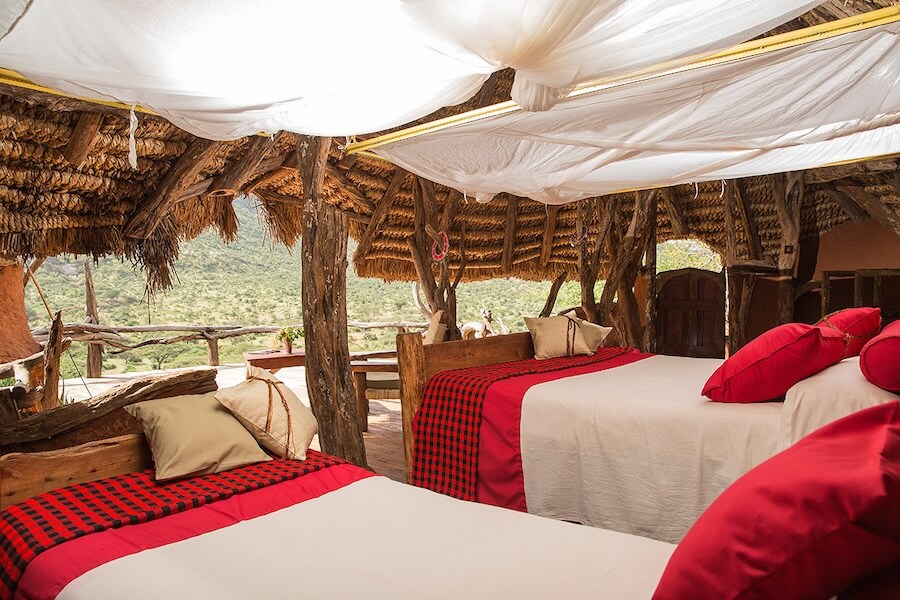
Il Ngwesi is the first lodge in Kenya to be wholly owned and managed by a Maasai community, the 5,000-strong Mukogodo Maasai. Six open-fronted bandas are stilted above a wooded hillside, each with gauze screens in place of windows, a private veranda, and a signature star bed that can be rolled out after dinner for sleeping under a near-vertical wall of equatorial stars. Two rooms connect via a shared bathroom to form a perfect family suite. The architecture draws on traditional Maasai building forms but is airier and more spacious than any homestead.
The conservancy borders the Borana and Lewa sanctuaries, giving access to a combined 100,000-acre wildlife corridor that supports elephant, lion, wild dog, giraffe and a rhino sanctuary that families can walk through with armed guides. Maasai manyatta visits are authentic. Families can spend time with elders, learn about beadwork and traditional cattle herding, and often eat a meal in the community. The star beds are a particular hit with older children who consider them the coolest bedrooms in the world. There is no formal children's programme, but the team is instinctively good with families.
All revenue from Il Ngwesi flows directly to the 5,000 Mukogodo Maasai shareholders. The community has used lodge income to fund three primary schools, pay university bursaries for local students, build and staff a dispensary, and establish a women's income-generating programme producing jewellery sold through the lodge. Before Il Ngwesi's founding in 1996, the conservancy land had been degraded by overgrazing. Today, it supports healthy populations of species that had disappeared for decades. The model has since been replicated across Kenya and is studied internationally as a template for community conservation.
From £200 per room per night
Saruni Samburu, Kalama Conservancy
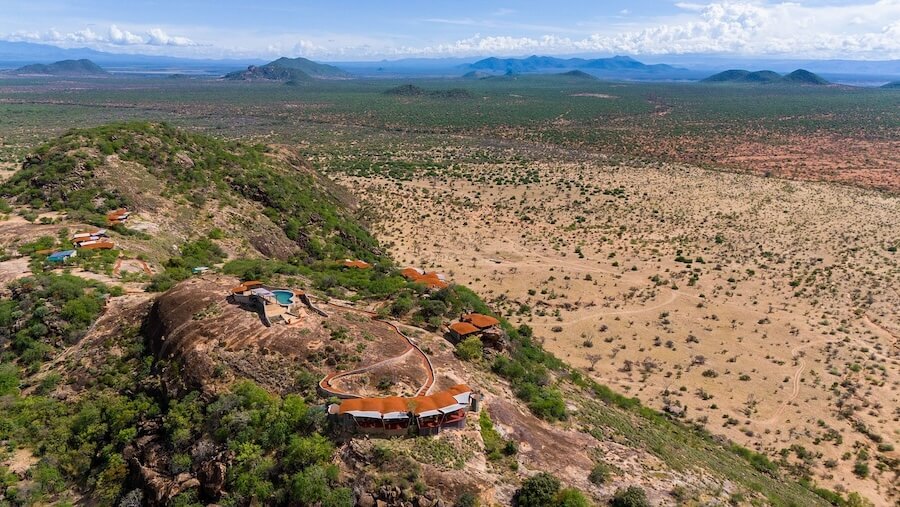
Saruni Samburu occupies a dramatic volcanic ridge inside the 180,000-acre Kalama Community Conservancy, and its six villas are architecturally striking. Each is built from local stone and hardwood, with floor-to-ceiling sliding doors that open onto a private infinity plunge pool, endless views over the dry Samburu bush and the Eastern Ewaso Nyiro riverine forest below. The family villa includes a second bedroom, a shared sitting room and its own vehicle and guide; a level of privacy that elevates the entire experience. Interiors are spare but beautifully considered, with Samburu artefacts, handwoven textiles and large stone baths.
Samburu is home to the celebrated Samburu 'Special Five', Grevy's zebra, reticulated giraffe, Somali ostrich, gerenuk and Beisa oryx, species found nowhere else in Kenya and utterly thrilling for children seeing them for the first time. The lodge's sunken photographic hide, sunk into the riverbank below a waterhole, provides a ground-level encounter with elephants and predators that is a thrilling experience. Saruni runs the Warriors Academy, a cultural programme in which families spend half a day with Samburu morans, learning to throw a spear, track animals, prepare traditional food and navigate by the stars. No other programme in Kenya comes close for genuine cultural engagement.
Sixty per cent of all bed-night revenues is paid directly to the Kalama Community Trust, making Saruni one of the most financially generous conservation lodges in East Africa. The lodge operates entirely on solar power and harvests rainwater for all non-drinking uses. A seed ball programme, in which guests and staff make native-seed balls to scatter across degraded land after the rains, has contributed to the regeneration of more than 2,000 hectares of bush since 2015. The Kalama Conservancy itself has seen lion, leopard and elephant populations increase significantly since the trust was established.
From £750 per room per night
Angama Mara, Masai Mara
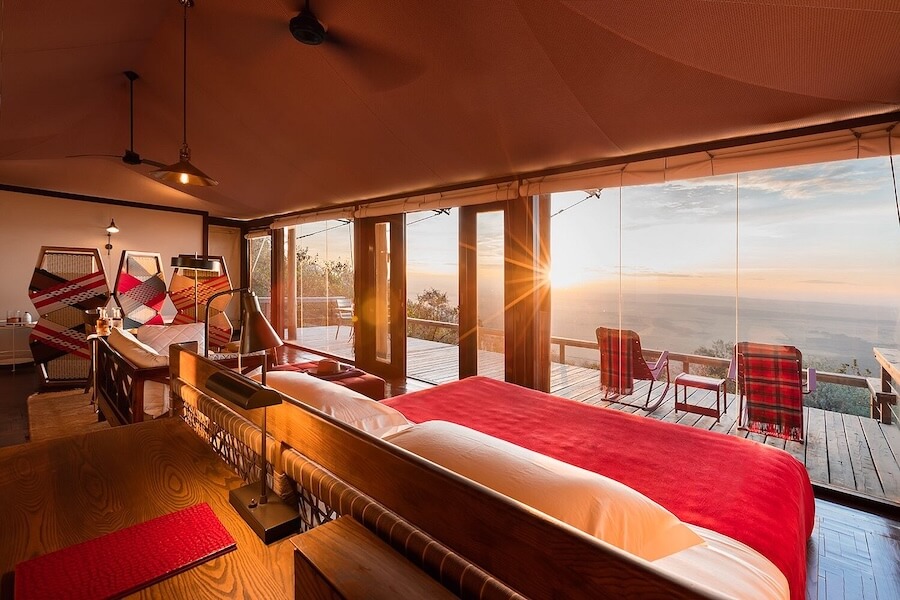
Angama Mara sits on the edge of the Great Rift Valley escarpment, 300 metres above the Masai Mara, and its two camps, each with 15 tented suites, are connected by a sky-high walkway plus a theatrical view. Tents are glass-walled on the valley side, furnished with handmade four-poster beds, copper baths and deep sofas. Family configurations connect two suites via a shared sitting room. The escarpment setting means the lodge looks down over the Mara ecosystem in its entirety. On clear mornings, the migration can be watched moving across the plain from the privacy of your bath.
Angama shares an exclusive-use conservancy with neighbouring properties, meaning all game drives take place on private land with no park regulations governing off-road driving, night drives or walking. The Angama Foundation runs Shuka Scouts, a programme that brings local Maasai children to the lodge for guided wildlife education days and turns them into committed young conservationists. Guests' families are invited to join sessions. Hot air ballooning over the Mara at dawn is one of the finest experiences in Africa and can be arranged through the lodge; the balloon drift ends with breakfast in the long grass that children find genuinely magical. Cultural visits to a working manyatta are hosted by the same Maasai families who own the conservancy land.
Angama pays Maasai landowners a fixed lease income regardless of occupancy, giving communities a reliable income independent of tourism fluctuations. The Angama Foundation supports three local primary schools, a secondary school scholarship programme, a women's enterprise cooperative, and a community beehive project that generates income while deterring elephant crop raiding. The lodge sources 80 per cent of its fresh produce from a community food garden it helped establish in the Mara North Conservancy. A green-waste composting programme and solar-supplemented power system underpin the lodge's ambition to achieve net-zero operations by 2030.
From £1,100 per room per night
Tanzania
Gibb 's Farm, Ngorongoro Highlands
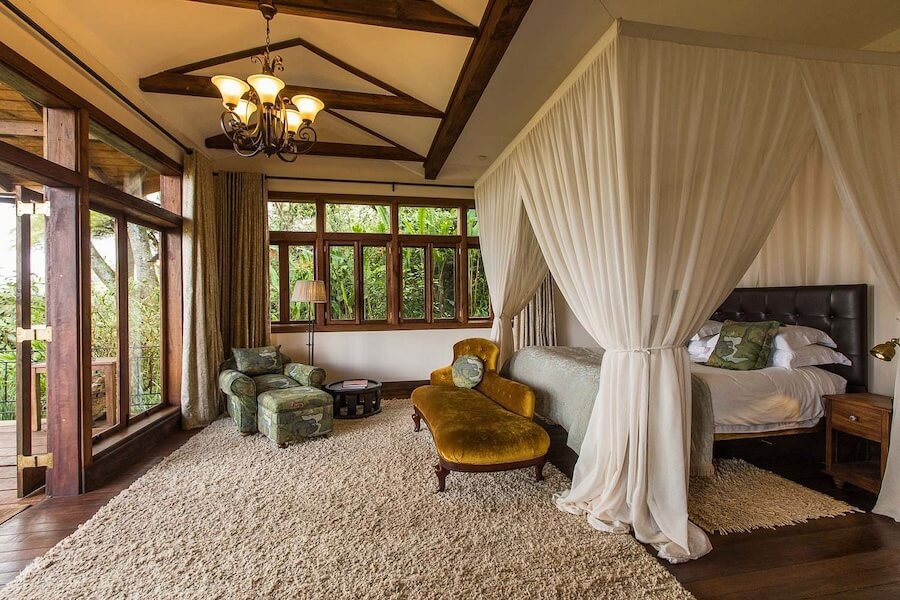
Gibb's Farm is one of the oldest and most beloved properties in Tanzania: a working organic farm on the forested slopes above the Ngorongoro Crater that began as a coffee plantation in the 1930s and has been welcoming guests since 1980. Its 17 cottages have recently been refurbished to combine farmhouse character with real comfort; think exposed stone walls, four-poster beds draped in local fabric, wood-burning stoves and verandas facing the Crater Highlands forest. The family cottage adds a second en-suite bedroom, a private sitting room and direct garden access.
The working farm is the engine of Gibb's appeal: a guided tour takes families through the dairy, coffee-processing, beehives and organic kitchen gardens where almost everything on the menu grows. Children can bottle-feed calves, collect coffee cherries, grind their own spices and return to the restaurant in time to eat lunch made from ingredients they picked that morning. The spa, mountain biking trails through Ngorongoro Forest Reserve and guided forest walks, with the possibility of spotting colobus monkeys, bushbuck and forest birds, keep adults and older children equally engaged. The Crater itself is a 90-minute drive, making Gibb's a natural base for exploring the northern circuit.
More than 90 per cent of all food served at Gibb's is grown organically on the farm, eliminating the long supply chains typical of remote lodge operations. The farm supports more than 200 local artisans through its craft shop and runs a community healthcare programme and school support initiative in the surrounding highlands villages. A tree nursery on the property propagates indigenous highland species for reforestation, and solar water heating meets the majority of the farm's hot water needs. Gibb's is a member of the Sustainable Travel and Tourism Agenda for Tanzania.
From £580 per room per night
Wilderness Usawa, Central Serengeti
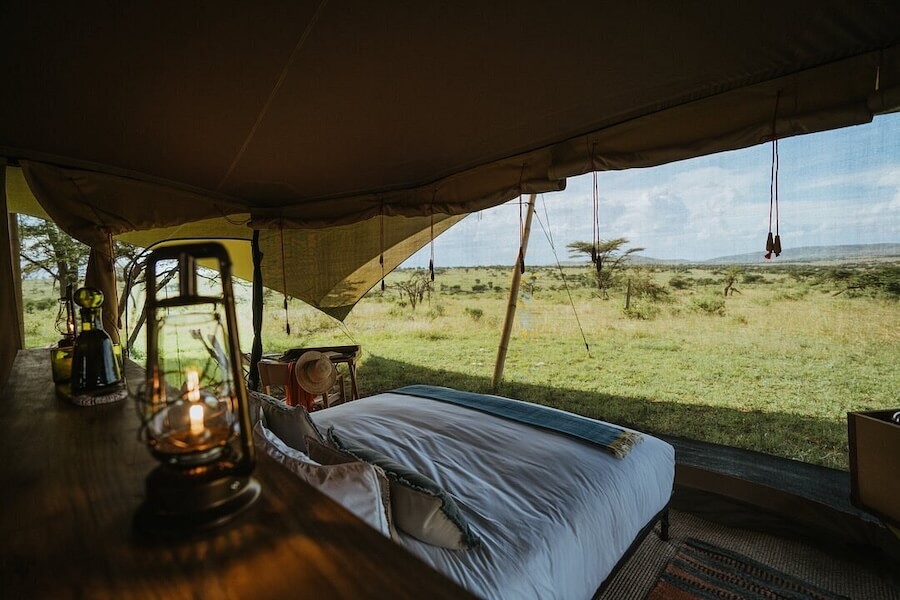
Wilderness Usawa is a mobile camp: a small, intimate collection of six tents that moves across nine different locations in the Serengeti ecosystem to follow the wildebeest migration throughout the year. The tents are made of 360-degree mesh sides that allow fresh air in while keeping out insects, and the en-suite bathroom arrangements, generous wooden flooring and considered lighting make them feel far more substantial than they appear. With a maximum capacity of 12 guests, the camp has the feel of a private house party pitched in the middle of the Serengeti. Family tents connect for groups travelling with children.
Because Usawa moves with the migration, the wildlife spectacle on offer at any moment is the most intense available in the ecosystem. The camp's small size means guides can give families genuinely individualised attention. Children get their own binoculars, their own tracker lessons and, in designated areas, their own walking safari experience alongside experienced Wilderness guides. Balloon safaris over the Serengeti plains can be arranged from any camp location, and the camp's exclusive-use option allows families to take over the entire property for a completely private experience. Meals eaten in the open air with nothing between you and the Serengeti horizon are a particular highlight.
Usawa leaves no permanent footprint: structures are fully dismantled between moves, and all materials are transported on vehicles that have been carefully assessed for their environmental load. The camp runs entirely on solar power, uses biodegradable camp consumables and sources all food from suppliers vetted for local provenance. Wilderness Safaris, the operating group, invests in landscape-scale conservation across 2.5 million hectares of protected African habitat, funds the Children in the Wilderness education programme across 12 countries, and has committed to full carbon neutrality across its camp portfolio.
From £1,100 per room per night
Dunia Camp, Central Serengeti
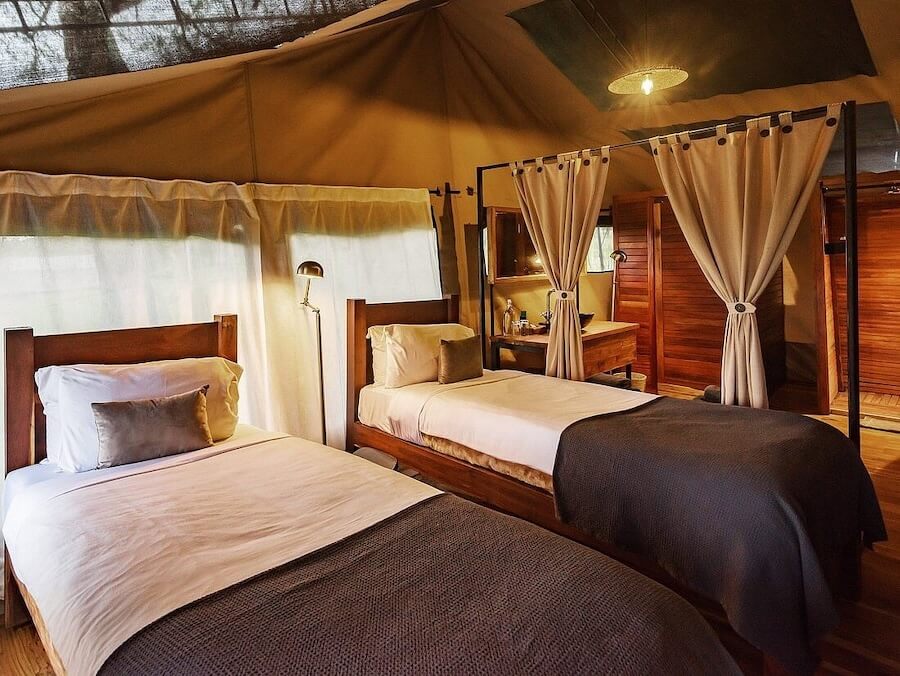
Dunia Camp is the only camp in Tanzania run entirely by women, from the management team to the guides. Eight tents are pitched near the Moru Kopjes in the centre of the Serengeti, in an area of ancient granite boulders and resident wildlife that holds action year-round regardless of migration timing. Tents are spacious and airy, with private flush bathrooms, a writing desk, good lighting for reading and a deep veranda for watching the sunrise over the kopjes. A family tent provides extra space.
The central Serengeti location ensures that resident lion prides, leopard, cheetah, elephant and hyena are present at all times of year, meaning Dunia never has an off-season. The Migration passes through between December and April and again in June and July, bringing river crossings within reach. Guides at Dunia are among the most knowledgeable in the Serengeti, and their patience and skill with younger guests is exceptional. Children old enough to understand what they are seeing find the Serengeti Rhino Project, in which the camp participates, a compelling conservation story. Balloon safaris and extended private game drives can be arranged through the camp.
Dunia is certified by both Responsible Tourism Tanzania and Fair Trade Tourism. No permanent structures are used, and all camp elements are demountable and moved seasonally to rest the land. Asilia Africa, who operates the camp, runs a desnaring project across the Serengeti ecosystem that employs community members as rangers and has removed more than 25,000 wire snares to date. Food is sourced locally wherever possible, and the camp participates in Asilia's wider 10 per cent for Conservation pledge, directing a tenth of all revenue towards conservation and community projects in Tanzania.
From £750 per room per night
Chem Chem Lodge, Tarangire-Manyara corridor
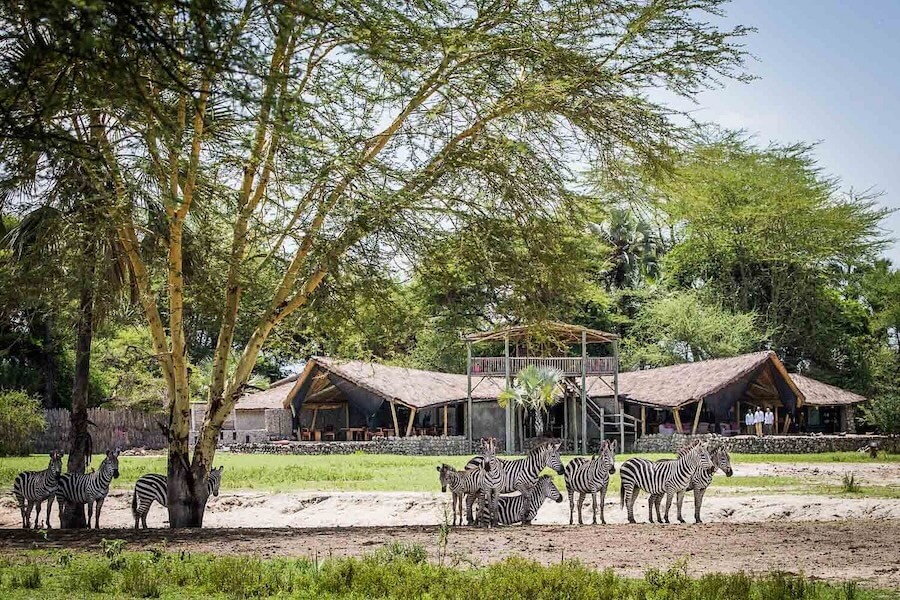
Chem Chem sits in a 10,000-acre private concession between Tarangire National Park and Lake Manyara, in a corridor through which some of the largest elephant herds in Africa move during the dry season. Eight tented suites are set on raised platforms in the bush, furnished with hand-carved beds, outdoor rain showers and private plunge pools. The family suite occupies its own wing of the property, with two bedrooms, a shared sitting room and a private vehicle allocated for the duration of your stay. Breakfast is served each morning beneath a 2,000-year-old baobab on the edge of the bush.
The private concession allows activities impossible inside the national parks: night drives, off-road game drives, walking safaris with Maasai trackers and bush picnics at locations chosen fresh each morning. Tarangire itself has some of the highest elephant densities in Africa and is far less visited than the Mara or Serengeti, giving families the rare experience of watching a 200-strong elephant herd at a waterhole with no other vehicles in sight. Lake Manyara is a day trip away, with its famous tree-climbing lions and vast flamingo flocks. Children are given their own field guide and activity pack on arrival, and the team's genuine affection for young guests is evident throughout.
Chem Chem employs more than 140 staff, 90 per cent of whom come from the 1,400 community members who depend directly on the lodge's operation. A ring-fenced conservation fee of USD$150 per adult per night funds anti-poaching patrols, habitat restoration and school building in the corridor. The presence of Chem Chem in the concession is credited with the return of elephant to Lake Manyara National Park after years of absence, a tangible demonstration of what responsible tourism investment can achieve. The lodge is a founding member of the Tanzania Conservation Fee Network.
From £950 per room per night
&Beyond Lake Manyara Tree Lodge
&Beyond Lake Manyara Tree Lodge contains 10 treehouse suites set in the canopy of a mahogany forest inside Lake Manyara National Park, connected by a network of elevated walkways that mean guests barely need to touch the ground. Each suite is built from reclaimed timber and thatch, with a large private deck, an outdoor shower and beds positioned to look directly into the forest. The suites feel genuinely arboreal. Baboons move through the canopy at dawn, and the sounds of the forest are always alive. With the park's entire 650-square-kilometre ecosystem as the lodge's backyard, there is never a morning without a reason to go out.
&Beyond's EarthChild programme, available at all its African properties, is a fantastic family conservation education initiative. Children work alongside guides to record wildlife sightings, plant trees in the forest nursery, learn about water conservation in the park and contribute data to the lodge's long-term monitoring programme. Canoe safaris on Lake Manyara, where hippos surface at arm's length and hundreds of flamingos feed in the shallows, are unlike any game drive, and forest walks guided by local naturalists reveal a world of birds, insects and reptiles. The lodge runs entirely on solar power.
&Beyond Lake Manyara Tree Lodge operates under a concession agreement that channels fees directly to the Tanzania National Parks Authority for reinvestment in the park. The lodge is 100 per cent solar powered, uses only reclaimed and certified sustainable timber in its structures, and sources food through local cooperatives vetted for sustainable farming practices. The Bhejane Trust, &Beyond's community development vehicle, funds school infrastructure, teacher training and clean water initiatives in the communities bordering the park. &Beyond has committed to measurable 2030 conservation targets across all its properties, covering wildlife, land and community outcomes.
From £900 per room per night

Poste restante
Greater escapes in your inbox
New stays, thoughtful stories and travel ideas. Unsubscribe whenever.