
The best luxury eco hotels around the world
Ten hotels around the world are proving that sustainability and luxury can go hand in hand, from a solar-powered private island in Cambodia to a Kalahari reserve where 1,200 square kilometres have been protected to keep the night sky dark.
For a long time, the travel industry treated eco-consciousness and high-end hospitality as fundamentally at odds. Luxury meant excess: air conditioning, helicopter transfers, fine linens flown in from abroad, and menus built on imported delicacies. Going green, by contrast, suggested sacrifice. Cold showers, composting toilets, and the sense that you were making do rather than indulging.
But many hotels are proving that it doesn't have to be this way. Some of the world's most compelling luxury hotels are now the ones most deeply rooted in the places they occupy. These properties protect vast wilderness, regenerate damaged ecosystems, support local communities, power themselves on solar and deep-sea energy, serve food grown within metres of the kitchen, and employ local guides whose knowledge of the land is second to none.
Sustainability does not have to diminish the luxury experience. Instead, it can create it. The flavour of a dish built from produce harvested that morning in a biodynamic garden, or the silence of a Kalahari night that only exists because 1,200 square kilometres have been protected from light pollution for example.
These ten hotels represent the finest examples of this responsible luxury.
Six Senses Krabey Island, Cambodia
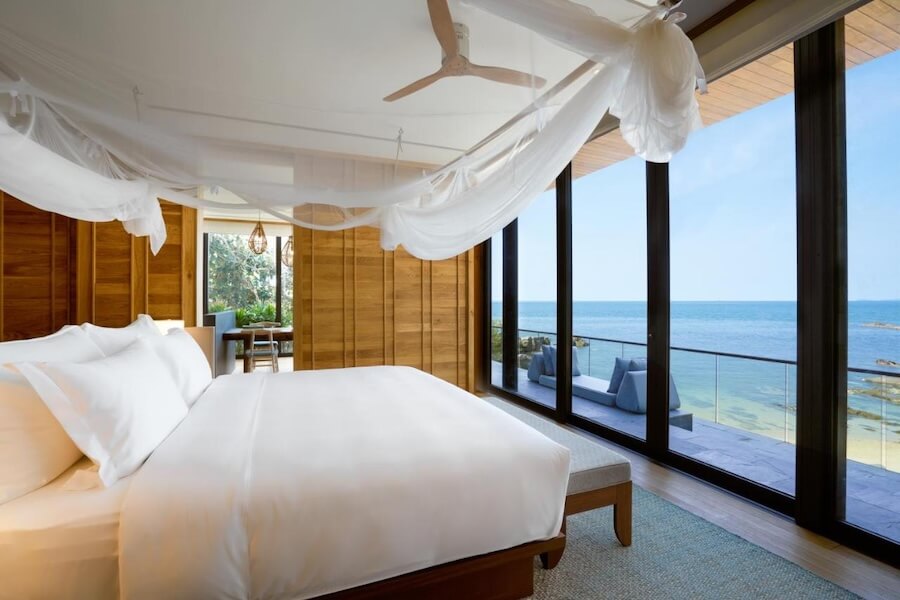
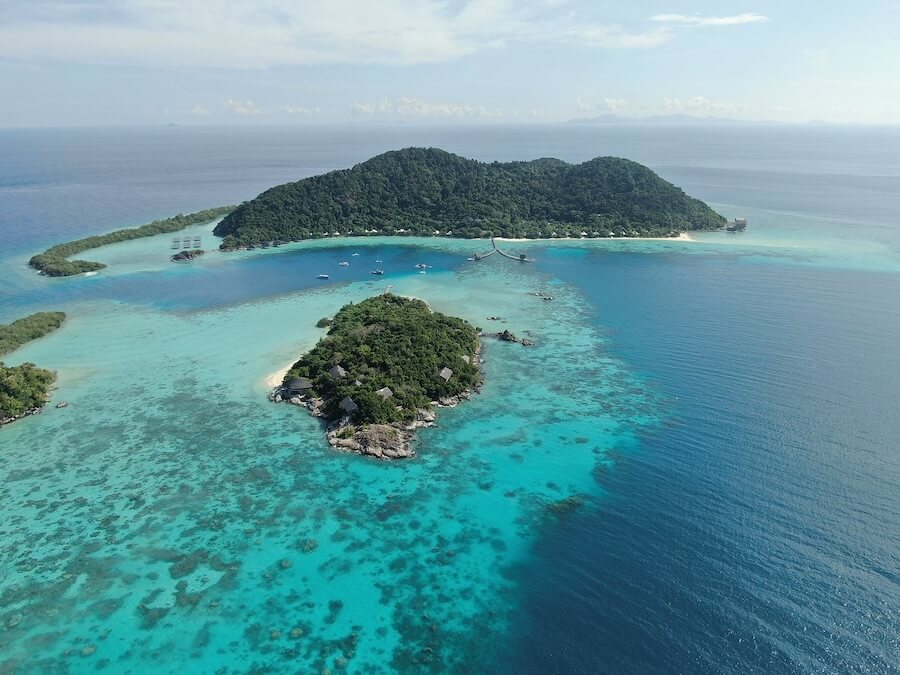
This 12 hectare private island sits just off Ream National Park in southern Cambodia. Forty free-standing pool villas are threaded into the forest canopy, each featuring green living roofs, floor-to-ceiling windows and the Six Senses signature Sleep With Six Senses programme — a sleep science approach that turns rest itself into a wellness discipline. The Spa draws on sacred Khmer healing traditions, the Kbal Spean River, and herbal steam rituals, while daily yoga and guided movement sessions encourage guests to slow down and unwind. Khmer-inspired dishes at the Aha and Tree restaurants are centred around sustainably-sourced seafood, plus organic produce grown on the resort's 3,700 sq m mainland farm. The Earth Lab invites guests to engage directly with zero-waste systems, composting, biodiversity monitoring and reef protection training, making the ecological mission something to participate in rather than merely observe. Night-time bioluminescence tours bring the reef to life in extraordinary fashion.
Six Senses Krabey Island carries credentials that go well beyond the usual eco gestures. The entire Six Senses portfolio achieved GSTC Certification in December 2024, the gold standard in global sustainable tourism. The resort has eliminated tens of thousands of single-use plastic bottles by producing its own still and sparkling drinking water on-island in reusable glass, part of the brand's wider Journey to Plastic Freedom programme, an initiative that has documented 82 proven plastic-reduction solutions now shared across the hospitality industry. Community commitment is equally concrete. The resort funds school programmes in nearby villages, supports clean water access initiatives and runs waste-awareness projects with local NGOs. Almost all staff are Cambodian, employed with above-market wages and supported through skills development.
From £550 per night (villa)
Bawah Reserve, Indonesia
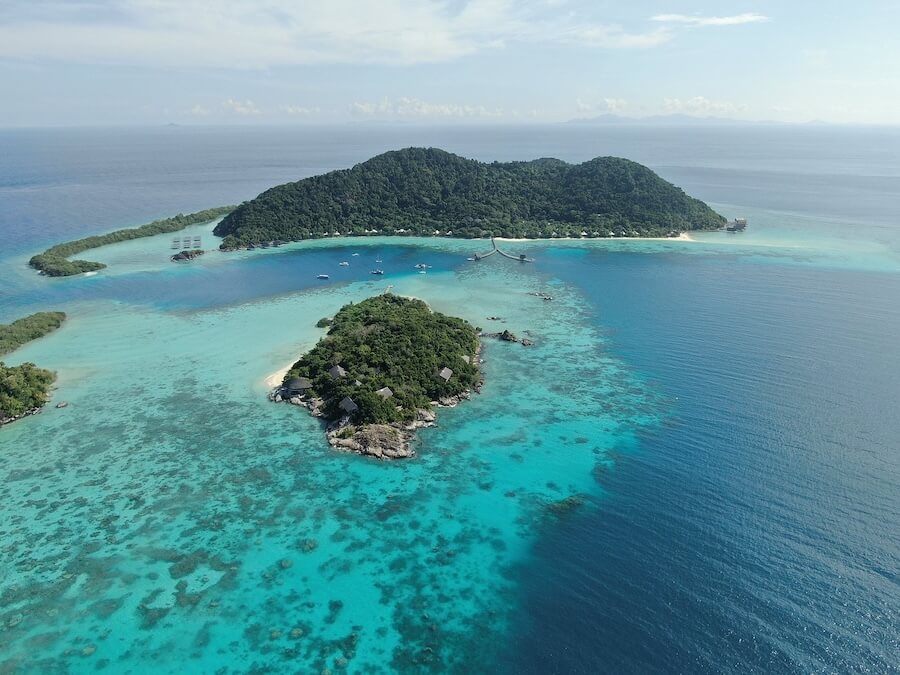
Bawah Reserve, six virgin islands, three crystal-clear lagoons, thirteen powder-white beaches and 100 hectares of primary rainforest, sits 160 nautical miles northeast of Singapore in the remote Anambas Archipelago. The 36 suites and overwater bungalows were built entirely by hand from sustainable bamboo, driftwood and recycled copper. No heavy machinery was used; a construction process that took five years. The result is accommodation that feels grown from the landscape rather than imposed upon it.
Bawah was the first island in Indonesia to be powered by a renewable microgrid, with floating solar panels generating clean electricity across the lagoon. All water is sourced and recycled on-island; glass is crushed and used to filter water; all waste is returned to Batam for processing. The all-inclusive experience covers meals, spa treatments (one per person per day, at the forest spa), yoga, snorkelling, kayaking and stand-up paddleboarding. The marine life is astonishing. Blacktip reef sharks patrol the shallow reef at the jetty, and hawksbill turtles nest on the beaches, with marine biologists relocating eggs to safe sanctuaries. Guests can join reef restoration dives or visit the Anambas Foundation's nearby island communities. The staff-to-guest ratio of five to one means service is intimate and personalised.
From £1420 per night (all-inclusive, based on double occupancy)
Lapa Rios, Costa Rica
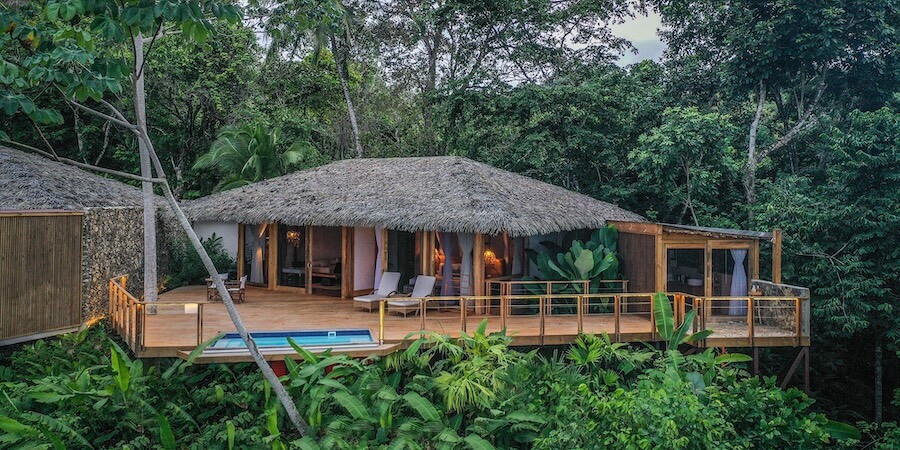
Named after the river of scarlet macaws that stream across the rainforest canopy between the lodge and the ocean, Lapa Rios is one of the original pioneers of luxury ecotourism, and after three decades, it remains one of the finest. The 17 open-sided, thatched-roof bungalows sit on three ridges overlooking the pristine point where the Golfo Dulce meets the Pacific Ocean, within a 1,000-acre private nature reserve on the Osa Peninsula. This is one of the most biodiverse places on the planet: a land that harbours 2.5% of the world's entire biodiversity within its dense canopy.
Waking up here is unlike anywhere else. Howler monkeys pierce the dawn silence. Toucans and sloths are good neighbours. The food is exceptional: a farm-to-table operation anchored in locally-grown tropical ingredients, sustainably-sourced seafood and recipes developed in partnership with local communities. The lodge's guided wildlife experiences — from canopy walks to nocturnal tours with trap-camera trails — are made possible precisely because the surrounding 1,000 acres are protected in perpetuity through a legal easement signed with The Nature Conservancy. The lodging could simply not function without its conservation mission. Lapa Rios became Costa Rica's first lodge to receive a five-leaf Sustainable Tourism Certificate, and is now part of The Long Run's Global Ecosphere Retreat programme. Guides are exclusively local, paid above-average wages and educated in both environmental conservation and wildlife science. A Conservation Fee accompanies every stay, funding ongoing research.
From £430 per night (bed and breakfast); all-inclusive from £860 per night
Segera, Kenya
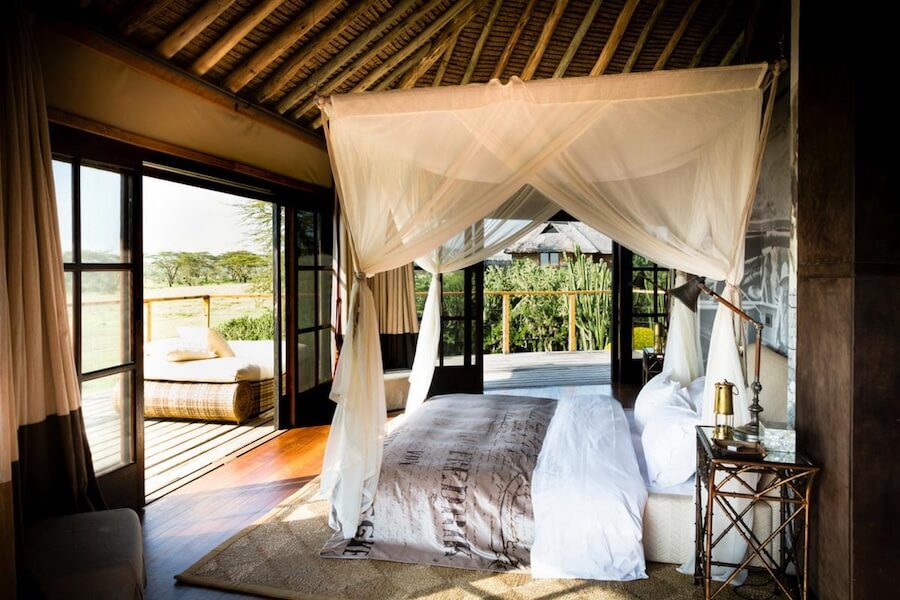
The Laikipia Plateau in central Kenya is one of Africa's great wildlife strongholds, a vast, semi-arid landscape stretching between snowcapped Mount Kenya to the east and the Great Rift Valley to the west, where elephants, lions, wild dogs and endangered black rhino move across private conservancies. Segera sits within 50,000 acres of this terrain, and it has built a safari lodge that takes the art world as seriously as the bush, with an extraordinary collection of African contemporary art woven through every space, sculpture in the gardens, paintings in the dining room, installations in the villas, curated to the same standard as a serious gallery. The ten villas, including the extraordinary Bird's Nest sleep-out, arguably East Africa's most extraordinary under-the-stars experience, are wood and thatch constructions with sunken Jacuzzis, private decks and swing beds in the shade of indigenous trees. Dining shifts location each night between boma fires, candlelit verandahs, and the Wine Tower, with food drawn from Segera's own gardens and the surrounding landscape. Camel safaris, guided walks with rangers who grew up on this land, and helicopter excursions to Lake Turkana reveal a Kenya most visitors never find.
Segera is fully solar powered, with recycled and harvested rainwater sustaining the botanical gardens. Owned by Jochen Zeitz's Zeitz Foundation, the lodge supports cheetah, wild dog and black rhino conservation and hosts East Africa's first female rangers academy. The reserve forms a vital wildlife corridor connecting Mount Kenya to the Great Rift Valley, and every guest night contributes directly to its preservation.
From £1120 per person per night (fully inclusive)
The Datai Langkawi, Malaysia
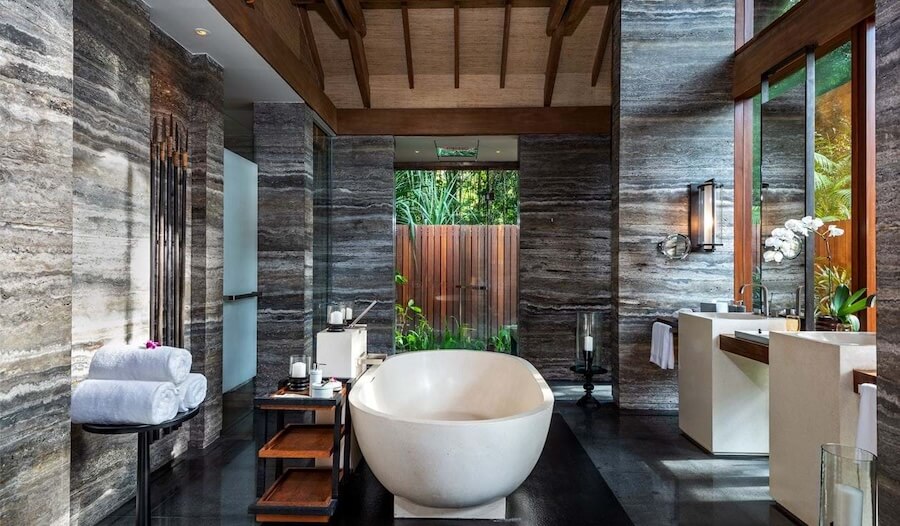
When architect Kerry Hill first encountered Datai Bay in 1993, he made a decision that defines The Datai Langkawi to this day: he placed the main building 300 metres back from the beach, elevated 40 metres above sea level, so the 10-million-year-old rainforest could remain undisturbed, and today The Datai can say that it operates within one of the oldest rainforests on Earth, on a beach National Geographic has ranked among the world's top ten. The 121 rooms, villas and suites are draped in the canopy, with views that shift between the Andaman Sea and the tropical forest. Menus are built around sustainably sourced ingredients, zero-waste kitchens and Ramuan spa treatments drawn from traditional Malay botanical knowledge.
The resident naturalist team leads morning walks, canopy explorations and marine research excursions, and thanks to the Nature Centre and The Datai Pledge sustainability programme, what guests learn about dusky langurs, sea turtles, hornbills and reef fish is inseparable from the pleasure of watching them. The spa and Datai Pledge's Permaculture Garden and The Lab turn sustainability into a tangible, hands-on part of the visit. The Datai Pledge, a comprehensive programme launched in 2020 encompassing four pillars: Pure for the Future, Wildlife for the Future, Fish for the Future and Youth for the Future, earned The Datai the EarthCheck ECO Gold Certification in 2025, the first terrestrial tourism project in the world to achieve this milestone.
From £450 per night (Canopy Deluxe room)
Heckfield Place, United Kingdom
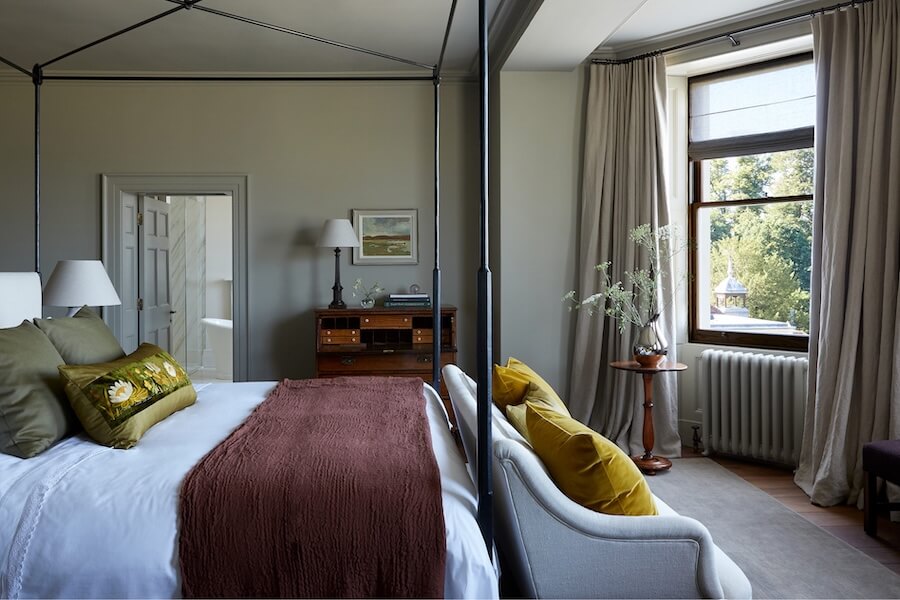
An hour southwest of London, tucked into 438 acres of Hampshire countryside, Heckfield Place occupies a Georgian manor house carefully restored to its 1790s origins. Jane Austen lived just down the road in Chawton, and the atmosphere here feels entirely continuous with that old school world. The interiors were designed by Ben Thompson, a protégé of Ilse Crawford, ugely influential British interior designer, with English oak floors, lime plastered walls and a palette of muted greens, greys and blush tones that mirror the countryside outside. Even standard rooms have freestanding bathtubs, walk-in rain showers and Wildsmith bath products; the larger suites add marble fireplaces, bay windows framing the lake and Regency chaise longues. At the heart of everything is the biodynamic Home Farm, which produces the majority of what appears on the tables at Marle and Hearth, the two celebrated restaurants. Marle holds a Michelin Green Star, one of the culinary world's most meaningful sustainability honours, under the direction of culinary director Eleanor Henson, who inherited a kitchen philosophy shaped by the extraordinary chef Skye Gyngell. The produce from Heckfield's walled garden, orchards, dairy herd and herb beds arrives daily and menus are shaped by the harvest.
The estate runs entirely on biomass boilers burning sustainably sourced wood pellets, is fully plastic-free and uses natural, locally sourced materials throughout, from rush mats to Wildsmith, the in-house skincare line named after the estate's pioneering Victorian head gardener. Beyond the restaurants, guests can lose days to The Bothy by Wildsmith, a vast spa reached through the walled garden, built around a chlorine-free pool. Thermal facilities and treatments include forest bathing to wild swimming. Falconry, estate walks, wine tastings in The Cellar and late nights in the indigo-blue Moon Bar round off a stay that feels both deeply British and entirely contemporary in its environmental ambition.
Price: From £450 per night (double room, including breakfast)
Pousada Trijunção, Brazil
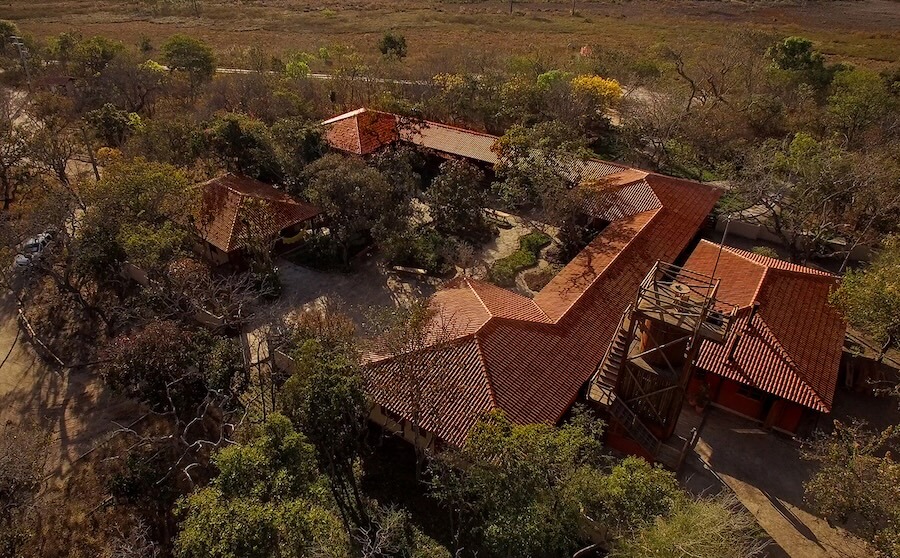
The Cerrado, Brazil's vast tropical savannah, is one of the most biodiverse places on Earth and one of the least visited. Only 50% of its original area now remains intact, and yet within the 33,000-hectare protected farmstead of Fazenda Trijunção, the savannah is still home to over 850 species of birds, 251 mammals, and an extraordinary cast of endangered creatures including the maned wolf, jaguar, ocelot, giant anteater and giant armadillo. Pousada Trijunção was founded in 1995 with a clear mission to protect this remarkable ecosystem through sustainable tourism. The lodge itself is intimate and beautifully considered: seven suites built from reclaimed demolition wood, decorated with local artisan crafts, and oriented around a courtyard garden with a pool and wooden hot tub. It sits precisely at the meeting point of three Brazilian states, Goiás, Bahia and Minas Gerais, and the food reflects the culinary traditions of all three, with organic produce from the farm's garden and recipes drawn from the literary heritage of the Cerrado, particularly the great Brazilian novelist Guimarães Rosa.
Every stay includes guided activities: Jeep safaris, nocturnal wildlife drives, kayaking on the Formoso River, expert birdwatching, spectacular stargazing and maned wolf tracking in partnership with the wildlife NGO Onçafari. A tortoise nursery and conservation breeding centre raise tapirs, emus and peccaries for reintroduction to the wild. The lodge uses solar water heating, LED lighting throughout and clay-filtered water to eliminate plastic bottles. Profits flow directly back into conservation and support over 2,000 families cultivating native fruit trees across the region.
From £670 per night (full board, including activities)
Fogo Island Inn, Canada
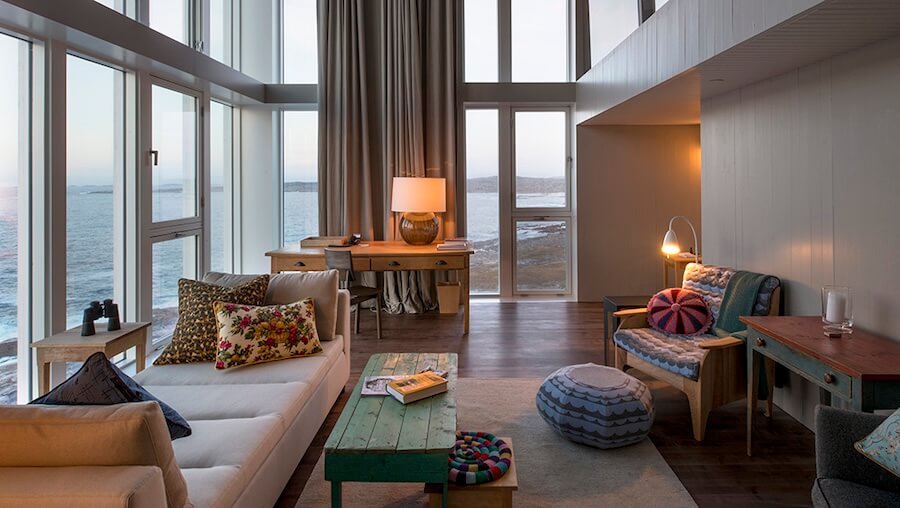
Founded by philanthropist Zita Cobb as a social enterprise under her charity Shorefast, Fogo Island Inn is built on a radical premise: 100% of operating surpluses are reinvested into the community of Fogo Island to secure a sustainable and resilient future for its 2,000 residents. The architecture, a futuristic interpretation of the traditional outport fishing buildings of Newfoundland, rises from the rocks above the churning North Atlantic, with 29 one-of-a-kind rooms featuring floor-to-ceiling windows that frame one of the wildest oceans on the planet. Guests are assigned Community Hosts, local islanders who share the history, stories and way of life of Fogo, as part of every stay. The furniture and quilts in every room are handmade by island craftspeople. The food is deeply local: wild-caught Atlantic seafood, foraged berries, home-baked bread, mustards and sausages prepared from scratch by the kitchen team. Activities span coastal hikes, geological walks, artist studio visits, whale watching, caribou tracking and foraging.
The Inn holds Three Michelin Keys and is a member of Relais & Châteaux. Its pricing is presented through the innovative Economic Nutrition label, which transparently shows guests exactly where their money flows within the community. Carbon offsets are included for the entire stay.
From £1572 per night (all-inclusive, based on double occupancy)
Tswalu, South Africa
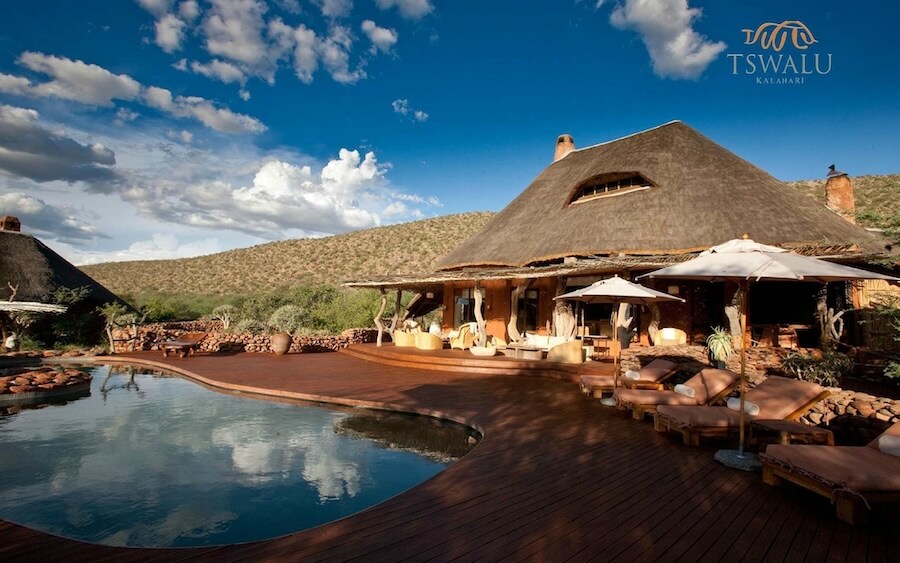
Africa's largest private game reserve, Tswalu, a Formal Protected Area sincec 2014, encompasses 1,200 square kilometres of southern Kalahari. Farmed and degraded over the past 25 years, it has now been restored. Black-maned Kalahari lions, cheetah, desert black rhino, wild dog and brown hyena move freely across landscapes of red sand dunes, grassy plains and Cathedral Acacias that were once depleted. Tswalu has three places to stay, each quite different in character. The original Motse, nine legae, or small houses, arranged around a waterhole where elephant and lion come to drink at dusk, is the heart of the reserve. Tarkuni is a private homestead sleeping 10, ideal for families or groups who want the run of their own corner of the Kalahari. And the newer Loapi takes a more contemporary approach: under-canvas living with glass-and-steel pavilions that open entirely to the bush, positioned to make the most of the reserve's extraordinary night skies. Every guest is guaranteed a private vehicle, guide and tracker, which in a reserve this size means an experience of genuine solitude. Night drives, dawn walks, meerkat encounters, horse riding and sleeping under a vast sky untouched by light pollution complete the picture.
Tswalu is a member of The Long Run and has been awarded Global Ecosphere Retreat status — one of only twelve properties worldwide to achieve this distinction under the GSTC-recognised framework. Solar energy heats all water; all food is ethically sourced from regional producers and enhanced by Michelin-starred South African chef Jan Hendrik van der Westhuizen's collaboration with the estate kitchen. The Tswalu Foundation actively funds scientific research, running the Dedeben Research Centre where scientists from leading universities study everything from puff adder ecology to climate change impacts on butterfly migrations.
From £595 per person per night (all-inclusive)
The Brando, French Polynesia
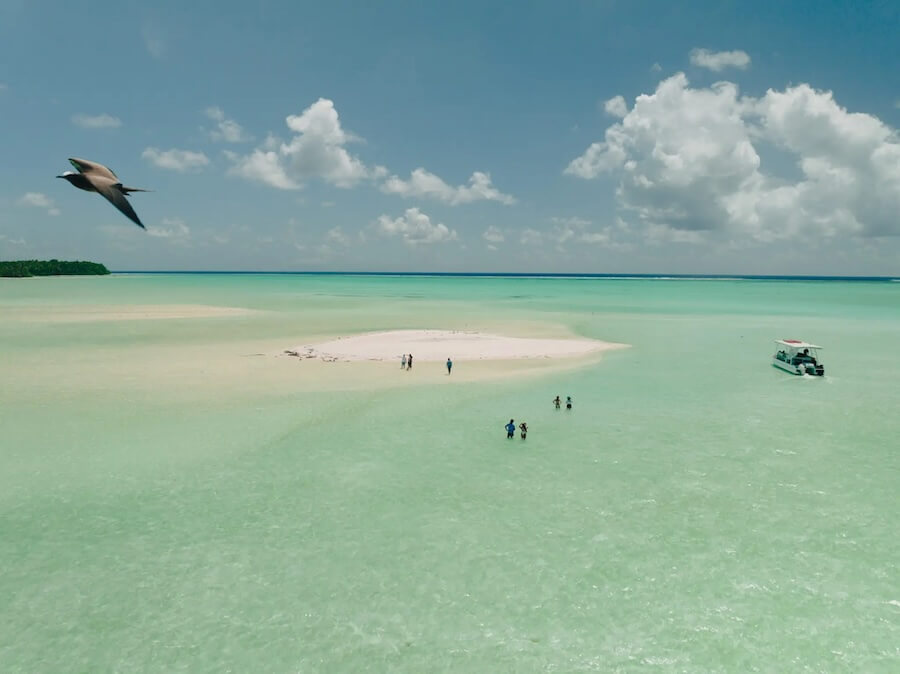
When Marlon Brando first visited Tetiaroa while filming Mutiny on the Bounty in 1962, he was so struck by its beauty that he bought the atoll and vowed to protect it forever. The resort that bears his name, which opened in 2014, a decade after his death, is the fulfilment of that promise. Thirty nautical miles north of Tahiti, The Brando sits on one of 12 pristine sandy islets encircling a luminous lagoon. It is one of the most remote luxury retreats on Earth, and arguably the most technologically advanced in its commitment to sustainability. The 35 private villas are set back from the beach within tropical vegetation, each with a private plunge pool, outdoor dining pavilion and direct beach access. Room cooling comes from a pioneering Sea Water Air Conditioning system that draws cold water from the ocean depths and circulates it through a titanium heat exchanger at 90% less energy than conventional systems. Solar panels supply most of the resort's electricity; food waste is composted within 24 hours by eco-digesters; and the entire property holds the world's first LEED Platinum Certification.
The Tetiaroa Society, an EcoStation on the atoll hosting international researchers, works on marine conservation and the preservation of Polynesian cultural heritage. Guests can assist in releasing baby turtles, join reef research expeditions and explore the island's archaeological sites. Menus are built around locally caught fish, organic produce from the resort's gardens and Polynesian culinary traditions. The Brando's celebrity guest list which includes Barack Obama, Beyoncé and Jay-Z, Leonardo DiCaprio and Oprah Winfrey, reflects its status as the world's ultimate escape.
From £2990 per night (all-inclusive, based on two guests)

Poste restante
Greater escapes in your inbox
New stays, thoughtful stories and travel ideas. Unsubscribe whenever.